Water storage and freeze protection for off-grid cabins determine whether a remote property feels reliable or fragile. In cold climates, a full tank, a burst pipe, or a frozen pump can decide if a weekend retreat stays comfortable or turns into an emergency repair project. In dry climates, poor storage planning creates shortages, contamination risk, and unnecessary hauling costs. For anyone building resilience beyond the grid, water is the first system to design well because every other system depends on it, from cooking and sanitation to hydronic heating, gardening, and fire readiness.
In practical terms, water storage means capturing, hauling, pumping, treating, and holding usable water in containers ranging from five-gallon jugs to buried cisterns. Freeze protection means keeping water, lines, valves, filters, and equipment above damaging temperatures or giving them room to expand safely when they freeze. The two topics are inseparable. A cabin can have generous capacity and still fail if the plumbing runs through an uninsulated crawlspace. It can also have careful winterization but remain vulnerable if storage is undersized, unsanitary, or exposed to summer heat and algae growth.
I have worked on cabin systems where the most expensive components were not the weak link; a forty-dollar check valve installed in the wrong orientation or an unsealed tank vent caused more trouble than the pump or solar array. The lesson is simple: resilient water systems come from layout, sizing, material choice, and maintenance discipline. This hub article covers the full off-grid and resilience picture: storage methods, freeze strategies, treatment, distribution, backup planning, monitoring, and seasonal operating modes. Whether your cabin is occupied full time, used on weekends, or left vacant through winter, the goal is the same: clean water when you need it, with a system that survives weather, power interruptions, and long periods without supervision.
Start with source, demand, and storage capacity
The best water system begins with realistic demand, not tank shopping. A conservative off-grid cabin uses roughly 15 to 30 gallons per person per day when occupants practice efficient habits, use low-flow fixtures, and avoid conventional long showers. A more comfortable setup with laundry, frequent dishwashing, and guests can reach 40 to 60 gallons per person per day. If water must be hauled, every unnecessary gallon becomes labor, fuel, and wear on roads and vehicles. If it is collected from a roof, demand must be balanced against local rainfall patterns, roof area, first-flush losses, and drought periods.
Storage capacity should cover both routine use and disruption. For a two-person cabin using 25 gallons per person per day, one week of normal use is 350 gallons. If the road becomes impassable, the well pump fails, or a cistern inlet freezes, seven days may not be enough. In resilience planning, I generally aim for at least two operating windows: a working reserve for ordinary supply gaps and an emergency reserve that remains untouched except during failure or evacuation delays. That often means 500 to 1,500 gallons for a small cabin, depending on climate, occupancy, and supply method.
Tank choice matters. Polyethylene tanks are common because they resist corrosion, handle potable water, and are available in many shapes. NSF/ANSI 61 listed potable tanks are the safer standard. Vertical tanks save floor space indoors; low-profile tanks fit beneath decks or in utility rooms; underground cisterns reduce freezing risk and preserve aesthetics but require proper bedding, traffic protection, and access risers. Metal tanks can work, especially for large-scale rainwater storage, but liners, coatings, and condensation management are critical. Any tank needs a screened vent, opaque walls or enclosure to limit algae, a drain for sediment management, and a way to inspect interior condition safely.
Choose a freeze protection strategy before installing plumbing
Freeze protection is not a single product. It is a strategy built around climate, occupancy pattern, and acceptable risk. The first question is whether the cabin will be kept above freezing continuously, intermittently, or not at all. A full-time residence may justify a heated utility room, insulated distribution lines, and automatic backup power for circulation and pressure systems. A part-time cabin often needs two modes: active use and rapid winterization. A vacant hunting cabin may be better served by a drain-down design that assumes no heat and no grid power for long stretches.
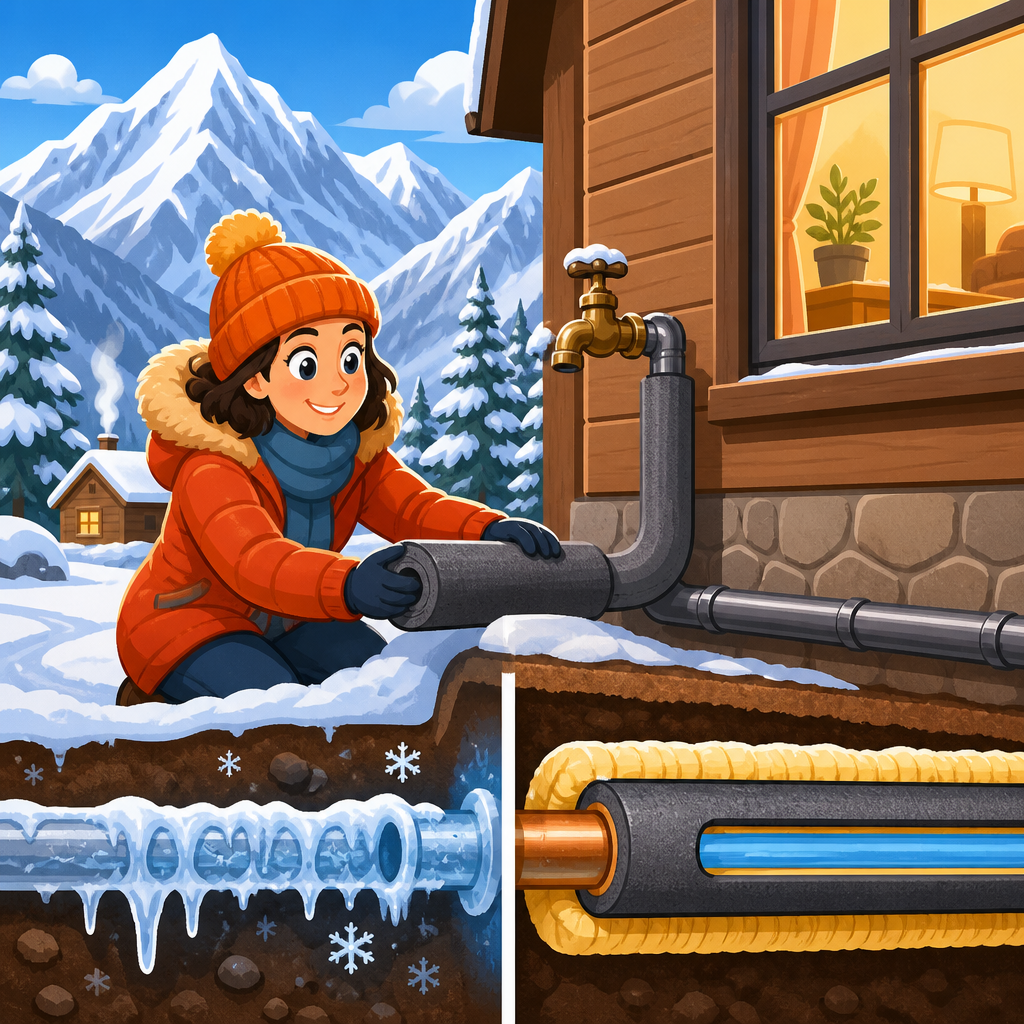
The safest principle is simple: keep all vulnerable components inside the conditioned envelope whenever possible. Tanks, pumps, pressure tanks, manifolds, and filters survive better in an insulated mechanical room than under the cabin or in an unheated shed. Every foot of pipe moved indoors lowers freeze exposure and improves maintenance access. If a line must pass through a cold zone, use the shortest run possible, maintain continuous insulation, air-seal penetrations, and eliminate sags where water can sit. PEX tubing tolerates freeze expansion better than rigid PVC or copper, but freeze tolerance is not freeze immunity. Fittings, valves, housings, pump heads, and filter canisters still crack.
Heat tape can be effective when properly listed, correctly installed, and protected by a GFCI circuit, but it should support design, not replace it. I have seen many failed systems where heat cable was wrapped incorrectly, overlapped, buried under wet insulation, or left energized on an unreliable inverter. In cold regions, passive measures outperform active ones over the long term. These include burying supply lines below local frost depth, locating cisterns below grade, insulating slab edges, building insulated chases around short exterior runs, and designing plumbing so lines can be fully drained with gravity and compressed air when needed.
Distribution design: pressure, piping, and winter reliability
Most off-grid cabins use one of three distribution approaches: direct gravity feed from elevated storage, demand pumping from a cistern, or a hybrid system with transfer pumping into an indoor day tank. Gravity systems are mechanically simple and can keep delivering water during power outages, but they require elevation and produce limited pressure. Demand pump systems are more familiar to most homeowners and pair well with pressure tanks, yet they depend on electrical reliability and freeze-safe pump placement. Hybrid layouts often offer the best resilience because they separate bulk storage from conditioned indoor use.
Pressure management is central to durability. A variable-speed pump can provide smooth pressure, but a conventional diaphragm pressure tank with a pressure switch remains easy to diagnose and repair. Common cabin settings are 30/50 or 40/60 psi, though lower pressure can conserve water and reduce pipe stress. Every system should include a sediment prefilter before sensitive treatment devices, a pressure relief valve where appropriate, shutoff valves for each branch, unions or flex connectors for serviceability, and drains at low points. Labeling valves sounds basic, but it prevents mistakes when winterizing in the dark with temperatures dropping.
| Component | Best location | Freeze risk | Resilience note |
|---|---|---|---|
| Bulk cistern | Buried or insulated enclosure | Low if below frost line | Protect vent and access lid from contamination |
| Pump and pressure tank | Conditioned utility room | High if in crawlspace | Install isolation valves and drain points |
| Main supply line | Below frost depth | Moderate at entry point | Seal and insulate where line enters cabin |
| Filters and UV unit | Indoors, serviceable wall | Very high in unheated spaces | Provide bypass for emergency operation |
| Outdoor spigot | Frost-free hydrant or isolated branch | High | Shut off and drain independently |
For cabins used only on weekends, a manifold-based plumbing layout is especially useful. Home-run PEX lines from a central manifold make it easier to isolate one fixture, trace leaks, and purge individual branches. Combine that with quarter-turn ball valves and low-point drains, and winter shutdown becomes a repeatable checklist instead of a guessing game. The more often a cabin sits empty, the more valuable simple, visible plumbing becomes.
Water treatment, tank hygiene, and safe storage
Storage solves quantity, but treatment and sanitation protect health. Water hauled from a municipal fill station is not automatically safe after weeks in a warm tank. Well water that tastes fine may still contain iron bacteria, manganese, hardness, coliform contamination, or sediment. Rainwater can be a practical source, but roof debris, bird droppings, asphalt shingle residues, and airborne contaminants require careful treatment. The right treatment train depends on the source, and the only sound starting point is laboratory testing by a certified lab.
For most cabins, treatment follows a sequence. First comes sediment removal, often with a spin-down separator or cartridge filter in the 50 to 5 micron range depending on source quality. Then source-specific treatment: activated carbon for taste and some organic compounds, softening for hardness, iron filtration for staining water, or specialized media for arsenic or sulfur. Final disinfection may be UV, chlorination, or both. UV systems work well on clear water with proper flow rate and transmittance, but they require power and annual lamp maintenance. Chlorination provides residual protection in storage tanks and plumbing, yet overdosing creates taste issues and can react with certain contaminants.
Tank hygiene is often neglected. Potable tanks should be opaque or enclosed to suppress algae, fitted with insect-proof screened vents, and sealed against dust and rodents. Inlet lines should avoid dead legs, and overflow outlets need screens and splash control. Sediment gradually accumulates in cisterns, especially with rainwater systems, so access for inspection and cleaning matters. A practical schedule is visual inspection every season, filter changes by pressure drop or manufacturer guidance, and periodic sanitizing of tanks and lines after maintenance, contamination events, or long stagnation periods. Unscented household bleach is commonly used for shock sanitation, but dosage should be calculated by actual system volume and flushed correctly.
Operating modes for full-time use, weekends, and deep winter
Resilient cabins are designed around operating modes, not one fixed condition. A full-time off-grid home usually stays in service year-round, so the emphasis is on stable indoor temperatures, redundancy, and remote alerts. In that setting, I recommend keeping the mechanical room within the insulated envelope, adding leak sensors under the pump and tank, and using temperature alarms that notify owners before a freeze event becomes damage. A small backup generator or battery reserve dedicated to water and heat controls can protect a much larger investment.
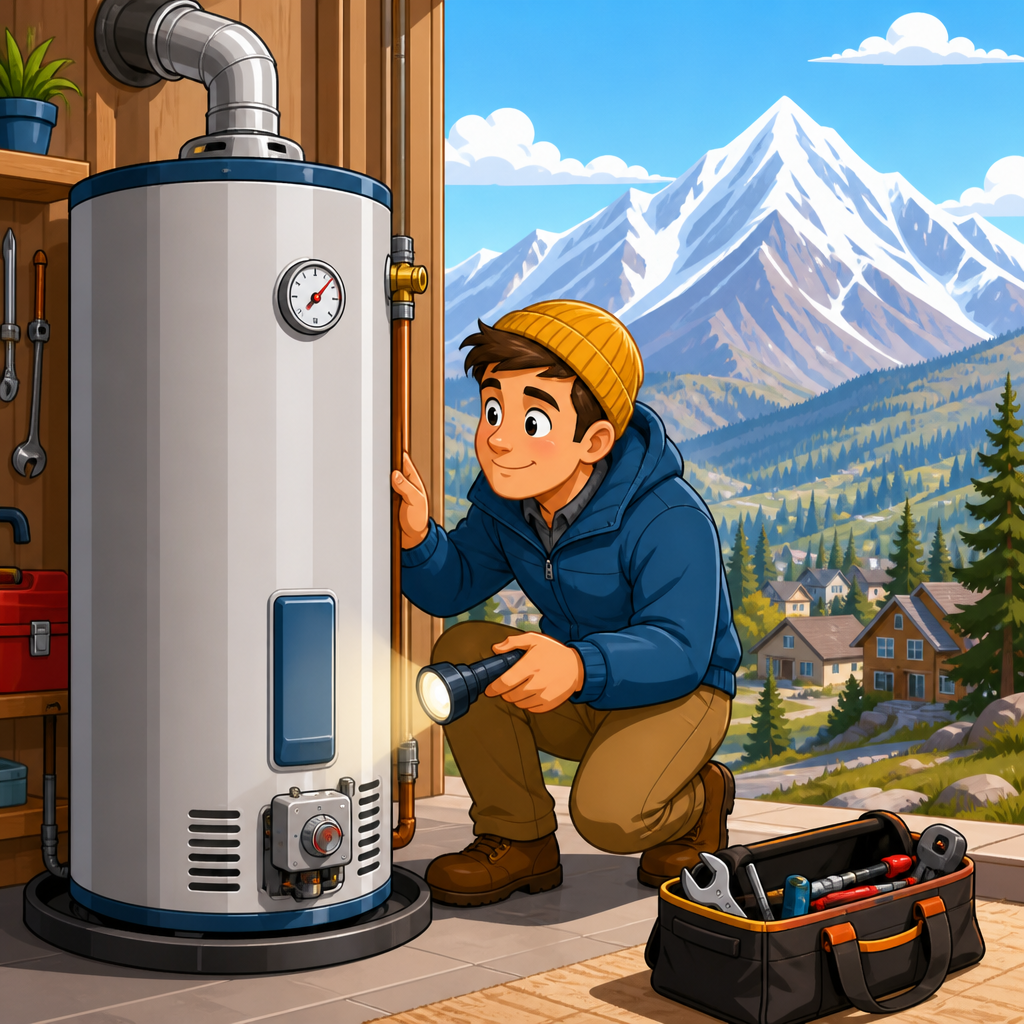
Weekend cabins need quick startup and quick shutdown. The best systems prime easily, tolerate short occupancy bursts, and drain fast. This often means a compact indoor tank, a short hot-water loop, point-of-use electric or propane water heating, and clearly marked valves for source isolation, bypass, and low-point draining. Traps still need freeze consideration, so owners may use RV antifreeze in drains and toilet bowls after draining the domestic lines. Water heaters deserve special attention because partial draining leaves them vulnerable; follow the manufacturer procedure and fully empty them when the building will freeze.
For deep winter vacancy, design for complete winterization rather than hope. Shut off source supply, open fixtures, drain low points, purge lines if necessary, empty housings and treatment devices, drain pump bodies where applicable, and protect all traps. Some owners install a drain-back arrangement so lines automatically empty when a valve is opened. Others use compressed air at moderate pressure to clear branches after gravity draining. The key is consistency. A written checklist posted in the utility room prevents missed steps when weather turns bad or a guest closes the cabin alone.
Redundancy, monitoring, and emergency resilience
Off-grid resilience means expecting component failure and supply interruption. The simplest backup is stored potable water in smaller containers separate from the main tank. Five- to seven-gallon jugs are easy to rotate and move indoors if the primary system fails. For larger backup, a secondary cistern or indoor reserve tank creates separation between raw storage and treated household supply. If one side is contaminated or frozen, the other may still keep essential uses running.
Monitoring prevents small problems from becoming structural damage. At minimum, install a pressure gauge, a tank level indicator, and visible thermometers in vulnerable spaces. Better setups add Wi-Fi or cellular sensors for low temperature, leaks, and pump runtime. Unusual pump cycling often reveals a leak, failing pressure tank, or stuck check valve before obvious water loss appears. In cabins with intermittent occupancy, remote cameras in the mechanical area can be worth the cost because they verify conditions after storms, fuel delivery issues, or battery problems.
Emergency planning also includes fire readiness and sanitation continuity. In wildfire-prone areas, a dedicated nonpotable reserve with hose connections can support initial structure defense where local regulations permit, but it should not compromise drinking water quality. For sanitation, composting toilets, low-flush fixtures, and graywater-conscious habits reduce demand and stretch reserves. The strongest systems are not the most complex; they are the ones that keep working when roads close, power drops, and temperatures stay below freezing for days.
Common mistakes and the best next steps
The most common off-grid water mistakes are predictable: undersized storage, tanks placed in sun without screening or sanitation access, pumps installed in crawlspaces, exterior plumbing with gaps in insulation, and no clear winterization procedure. Another frequent error is treating freeze events as rare surprises instead of annual design conditions. Water expands by about nine percent when it freezes, which is why rigid housings crack so easily. Good systems account for that physics from the first sketch, not after the first repair bill.
The main benefit of planning water storage and freeze protection together is reliability. A well-designed cabin water system reduces hauling trips, lowers contamination risk, protects expensive equipment, and makes seasonal use far less stressful. For this off-grid and resilience hub, the practical path is straightforward: estimate demand honestly, size storage for routine use plus disruption, keep critical equipment inside the conditioned envelope, build in drain-down capability, test and treat the water source appropriately, and add simple monitoring. Review your current layout before winter or before the next dry season. A few targeted upgrades now can prevent frozen lines, empty tanks, and avoidable emergencies later.
Frequently Asked Questions
What size water storage tank does an off-grid cabin need?
The right tank size depends on how the cabin is used, how many people visit, the local climate, and how often water can be refilled. A weekend cabin used by two people needs far less storage than a full-time off-grid home with a shower, laundry, and seasonal guests. A practical starting point is to estimate daily consumption first. Conservative off-grid use often ranges from 15 to 40 gallons per person per day, depending on fixture efficiency and habits. Drinking, cooking, dishwashing, handwashing, showers, toilet flushing, and occasional cleaning all add up quickly, so it is important to calculate real usage rather than guessing.
Once daily demand is clear, storage should be sized around both convenience and resilience. Many cabin owners aim for at least one to two weeks of normal use in reserve, and often more if access roads become difficult in winter or if water delivery is expensive. In dry climates, larger storage protects against supply interruptions and reduces the frequency of hauling. In cold climates, extra reserve can also be helpful if bad weather delays refilling. If the cabin relies on roof catchment, storage must also account for seasonal rainfall patterns, roof area, and periods of little or no precipitation.
Tank sizing is not only about volume. Placement, refill method, weight, and freeze risk matter just as much. A gallon of water weighs over eight pounds, so a large indoor or elevated tank requires structural planning. Some cabins use one main cistern and a smaller indoor day tank to balance bulk storage with freeze protection. For many off-grid properties, it is better to install slightly more storage than the minimum calculation suggests. Undersized storage creates stress, frequent hauling, and a higher chance of running short when the cabin is needed most.
How can I keep water tanks, pipes, and pumps from freezing in winter?
Freeze protection works best when it is treated as a complete system rather than a single product or trick. Tanks, supply lines, pressure tanks, filters, pumps, valves, and drain points all need to be considered together. The most reliable strategy is to keep vulnerable components inside a conditioned or insulated space whenever possible. Interior utility rooms, insulated mechanical closets, crawlspaces within the thermal envelope, or protected basements are all better than leaving equipment exposed in an unheated shed.
For tanks, the first decision is location. An indoor cistern or a tank housed in a well-insulated enclosure is inherently safer than an outdoor tank in a hard-freeze region. Outdoor storage can still work, but it usually requires insulated housing, frost-protected plumbing penetrations, and in some climates supplemental heat. Pipes should be routed below frost depth when buried, and above-ground runs should be minimized. Where pipes must pass through cold zones, they should be insulated properly and protected from wind exposure, which often makes freezing happen faster. Heat trace cable can be useful in select locations, but it should not be the only layer of protection because power outages and installation mistakes can defeat it.
Pumps and pressure systems are common failure points. A frozen pump housing or pressure switch can disable the entire cabin water supply. Install these components where temperatures stay safely above freezing, and include shutoff valves and drain points for maintenance or seasonal shutdown. If the cabin is left vacant in deep winter without reliable heat, the safest approach is often winterization: drain the system completely, empty the pump and pressure tank as required by the manufacturer, and use non-toxic RV antifreeze in traps and fixtures where appropriate. A “keep the cabin barely warm” strategy can work, but it is only dependable if the heat source and backup power are equally dependable. For remote cabins, passive protection and simple drain-down options are usually more reliable than trying to outsmart winter with electric heaters alone.
Is it better to store water indoors, underground, or outside at an off-grid cabin?
Each option can work, but the best choice depends on climate, available space, budget, and how the cabin is used. Indoor storage offers the strongest freeze protection and usually makes system maintenance easier. Tanks placed in a basement, utility room, or insulated service area are easier to inspect, clean, and connect to the plumbing system. The downside is that indoor tanks take up valuable space, add major weight loads, and may require careful planning for access and spill containment. Still, in very cold climates, indoor storage is often the simplest way to avoid winter emergencies.
Underground storage can be an excellent middle ground, especially where freezing conditions are serious but indoor space is limited. Burial below frost depth stabilizes temperatures and protects tanks from sunlight, impact, and weather exposure. However, underground systems require good installation practices. Soil conditions, drainage, tank type, backfill requirements, access risers, and groundwater pressure all affect long-term performance. Maintenance access matters too. A buried tank that is hard to inspect or sanitize can become a hidden problem. Underground systems also cost more to install than simply setting a tank in a shed or utility room.
Outdoor above-ground tanks are often the easiest and least expensive to install, and they are common in mild climates or seasonal-use cabins. They can work well for rainwater collection and hauled water storage, but they are the most vulnerable to freezing, UV exposure, and contamination if not protected carefully. In freezing regions, outdoor tanks generally need an insulated enclosure and thoughtful plumbing layout. In hot, sunny climates, opaque UV-resistant tanks help prevent algae growth and material degradation. The decision should not be made on convenience alone. The ideal location is the one that balances temperature stability, sanitation, structural support, maintenance access, and operational reliability throughout the year.
How do I keep stored water clean and safe in an off-grid cabin system?
Clean water storage starts with the source and continues through every part of the system. Whether water comes from a well, delivery truck, spring, or rain catchment setup, the tank itself must be made from potable-water-safe materials and protected from contamination. The storage vessel should be sealed against insects, rodents, dust, and surface runoff. Vents and overflows should be screened, access hatches should close securely, and all fittings should be weather-tight. Sunlight should also be limited, because warm, bright conditions encourage algae growth and degrade water quality over time.
It is also important to think about what happens before water reaches the tank. Rainwater systems should include first-flush diversion and debris screening to reduce leaves, bird droppings, and roof sediment entering storage. Hauled water should come from a known potable source, and the transfer hose, pump, and fill connection must be kept sanitary. Even a clean tank can be contaminated by a dirty hose left lying on the ground. Wells and springs require their own testing and treatment plans based on local water conditions. Sediment filters, carbon filters, UV disinfection, chlorination, or a combination of treatment methods may be appropriate depending on whether the concern is grit, taste, bacteria, or broader microbiological safety.
Routine maintenance is what keeps a water system trustworthy. Tanks should be inspected periodically for sediment buildup, biofilm, damage, and pest intrusion. Water testing should be performed at sensible intervals, especially if the source changes seasonally or the cabin sits vacant for long periods. Stagnation is another issue in low-use cabins, so occasional flushing can help keep water fresher in the lines. If the system is shut down seasonally, cleaning and sanitizing before reopening is often wise. The goal is not just storing water, but storing water in a way that remains safe, pleasant to use, and ready when the cabin is occupied.
What is the best water system layout for a reliable off-grid cabin in both cold and dry climates?
The most reliable layout is usually simple, serviceable, and designed around local risks. In dry climates, the priority is often maximizing storage, protecting quality, and reducing waste. In cold climates, the priority shifts toward freeze protection, drainability, and keeping critical components inside the thermal envelope. A strong off-grid design often uses a main storage tank or cistern, a transfer or pressure pump, a pressure tank, shutoff valves, filtration as needed, and clearly planned fill, overflow, drain, and winterization points. The layout should allow each section of the system to be isolated and serviced without shutting down everything or creating confusion during an emergency.
For many cabins, a dependable configuration includes bulk storage in the most temperature-stable location available, then a short, protected run to an indoor pump and pressure system. If the primary tank must be outside or underground, bringing water into a compact insulated mechanical space for distribution improves reliability. Lines should be routed efficiently, with unnecessary loops and exposed runs avoided. Every vulnerable section should have a purpose-built drain path. If the cabin is seasonal, winterization should be quick and obvious, not a complicated procedure that people are tempted to skip.
Dry-climate resilience often means installing more storage than expected, capturing roof runoff where practical, and using efficient fixtures to stretch reserves. Cold-climate resilience means reducing the number of places water can sit and freeze. In both cases, thoughtful monitoring helps: sight gauges, tank level sensors, pressure gauges, and easy-access valves make it far easier to notice problems before they become expensive failures. The best off-grid water system is not necessarily the most complex one. It is the one that remains understandable, maintainable, and dependable in the exact conditions the cabin faces