Water filters that perform well in cold alpine conditions are not just convenience items; they are critical safety equipment for winter hikers, ski tourers, alpinists, snowmobile travelers, and emergency planners who may need reliable drinking water when temperatures stay below freezing. In this sub-pillar guide to Travel & Emergency Preparedness within Gear, Monitoring & Safety, I will explain which water filters work in cold alpine environments, why many common models fail there, and how to choose, use, protect, and supplement a filtration system when snow, ice, altitude, and limited fuel complicate hydration. Cold alpine conditions generally mean sustained near-freezing or subfreezing temperatures, frozen surface sources, gloved operation, and the constant risk that water left inside a filter cartridge can expand into ice and permanently damage the media. That matters because dehydration accelerates fatigue, impairs judgment, worsens altitude symptoms, and raises cold injury risk. A strong alpine water strategy is therefore broader than a single product choice: it combines filter type, backup treatment, insulated storage, source selection, and emergency contingencies. Travelers often ask a simple question: can any backpacking water filter be trusted below freezing? The correct answer is no. Hollow-fiber membrane filters dominate the lightweight market, but once they freeze after use, microscopic cracks may form and compromise pathogen removal even if flow seems normal afterward. In the field, I treat every accidental freeze as a possible failure unless the manufacturer explicitly provides a verification protocol or replacement guidance. That is why cold-weather performance must be judged not only by filtration speed or weight, but by freeze tolerance, ease of handling with gloves, maintenance demands, field-cleaning reliability, and compatibility with melting snow as a primary water source.
What makes alpine water treatment different
Alpine water treatment differs from three-season backpacking because the environment changes both the water source and the failure modes of your gear. In summer, hikers often collect from flowing streams and use squeeze filters with little thought beyond protozoa and bacteria. In winter or at high elevation, accessible liquid water may be limited to thin trickles under snow bridges, partially frozen tarns, hut taps, or snow that must be melted. You may also need to collect water while wearing insulated gloves in wind, darkness, or avalanche terrain where stopping for long periods is unsafe. Those realities make speed, simplicity, and insulation far more important than marketing claims about gallons per minute.
The microbiological risk profile also changes, but it does not disappear. Many high alpine sources are relatively clean compared with lowland livestock drainages, yet Giardia, Cryptosporidium, Campylobacter, norovirus from heavy-use areas, and contamination around huts or camps are still credible concerns. In glaciated areas, sediment load can be extreme, and silt quickly clogs fine membranes. Mineral-rich snowmelt can be very cold but still contaminated where wildlife concentrates. Good judgment about source quality remains your first line of defense, because cleaner water preserves your filter and reduces treatment burden.
The defining technical issue is freeze vulnerability. Hollow-fiber systems such as the Sawyer Squeeze, Platypus QuickDraw, and Katadyn BeFree filter well at moderate temperatures, but manufacturers consistently warn that freezing after the element has been wetted may damage the membrane. In practice, that means you must sleep with the filter, carry it inside your jacket during the day, and prevent it from sitting in a freezing vestibule, pack lid, or sled bag. Ceramic, activated carbon, UV, and chemical treatments each respond differently to cold, so an alpine-ready setup starts by understanding those tradeoffs rather than assuming every filter behaves the same way.
Best filter categories for cold alpine conditions
The best water filters for cold alpine conditions usually fall into three practical categories: protected hollow-fiber filters, pump filters with robust housings and prefilters, and purifier-style systems or treatment combinations used with melted snow. Protected hollow-fiber filters remain popular because they are light and fast. If you can keep the cartridge above freezing at all times after first use, they still offer excellent field performance. I have used squeeze filters successfully on multi-day ski traverses by storing the wet element in a zip bag inside my sleeping bag overnight and in an inner jacket pocket while moving. The system works, but discipline is nonnegotiable.
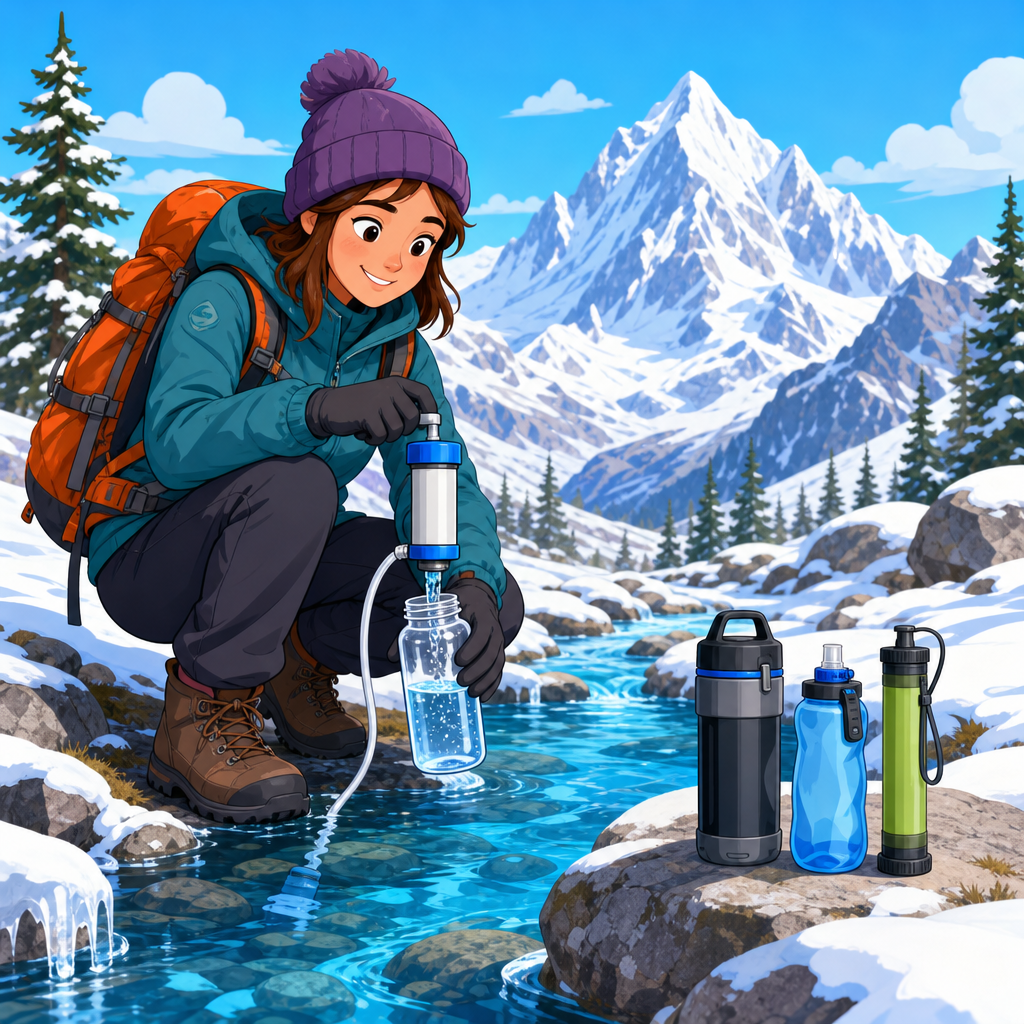
Pump filters often make more sense when water access is awkward. Models like the MSR Guardian Purifier and Katadyn Pocket can draw from shallow seeps, icy margins, or narrow holes chopped into lake ice without requiring a clean squeeze pouch. The Guardian is particularly notable because it is designed to meet purifier-level claims against viruses as well as bacteria and protozoa, and its self-cleaning mechanism helps in silty water. The Katadyn Pocket uses a silver-impregnated ceramic element that is field maintainable and has a long service life, though it is heavier and slower. In truly cold travel, many professionals accept extra weight to gain reliability and easier collection.
Gravity filters are less appealing in freezing weather because hoses, reservoirs, and cartridges cool quickly, setup takes longer, and hanging the system in wind or blowing snow is inconvenient. Straw-style filters are likewise poor primary tools in alpine conditions because they require direct access to liquid water and offer little flexibility for filling insulated bottles. UV purifiers such as SteriPEN can work if batteries are warm and the water is clear, but treatment slows in cold routines and does nothing for particulates. Chemical treatments, especially chlorine dioxide, remain essential backups because tablets do not freeze easily and weigh almost nothing, although contact times increase significantly in cold water.
How leading systems compare in winter travel
Choosing among proven systems is easier when you compare them by alpine-specific criteria rather than generic backpacking specs. Weight still matters, but freeze sensitivity, collection method, field serviceability, and treatment spectrum matter more. The table below reflects how I evaluate commonly used options for winter hiking, mountaineering, hut-to-hut travel, and emergency kits.
| System | Type | Cold-weather strengths | Main limitations | Best use case |
|---|---|---|---|---|
| Sawyer Squeeze / Platypus QuickDraw | Hollow-fiber squeeze filter | Light, fast, easy to pair with soft bottles | Must not freeze after wetting; harder at shallow sources | Fast-and-light trips with strict body-heat storage |
| Katadyn BeFree | Hollow-fiber flask filter | Very fast flow, simple drinking setup | Freeze sensitive; flask durability varies; less ideal for silty water | Short alpine pushes with reliable liquid sources |
| MSR Guardian | Pump purifier | Handles poor water, treats viruses, self-cleans, durable housing | Heavy, expensive, bulkier in small packs | Expeditions, international travel, emergency preparedness |
| Katadyn Pocket | Ceramic pump filter | Field maintainable, long cartridge life, robust | Heavy, slower than modern squeezes, not a virus purifier | Long trips, guides, organizations, repeated use |
| Chlorine dioxide tablets | Chemical treatment | Ultralight backup, no mechanical freeze damage | Slow in cold water; taste; less useful with turbid water | Redundant treatment and emergency reserve |
| UV purifier | Ultraviolet treatment | Effective in clear water, no pumping | Battery dependence, cold reduces convenience, no sediment removal | Travel where power management is controlled |
For most winter backpackers in North America or Europe, the practical answer is a protected squeeze filter plus chemical backup, or a pump system if the route involves poor sources, group use, or expedition consequences. For emergency preparedness, especially vehicle kits, mountain huts, or disaster bags stored in cold garages, I favor a pump or unopened chemical treatment reserve because a previously wetted hollow-fiber filter sitting through a freeze cycle cannot be assumed safe.
How to prevent freeze damage and maintain flow
Freeze prevention is the single habit that determines whether a cold-weather filter remains trustworthy. Once a hollow-fiber cartridge has processed water, assume any trapped moisture can freeze. Carry the filter close to your core during the day, ideally in an inside pocket. At night, seal it in a bag to control drips and place it in your sleeping bag or quilt footbox. Do not leave it in a backpack outside the shelter, inside a frozen car overnight, or in a hut porch where temperatures drop below zero. These mistakes are common because the filter seems dry from the outside even when the membrane remains wet internally.
Flow management matters too. Cold water is more viscous than warm water, and glacial sediment or organic fines can slow filtration dramatically. Prefilter whenever possible by letting silty water settle in a pot, pouring through a bandana or coffee filter, or selecting clearer inflow away from stirred-up margins. With squeeze filters, backflushing restores performance, but field backflushing can be awkward when syringes are left at home. The Platypus QuickDraw has a practical integrity check feature, while Sawyer relies more on backflush performance and freeze-avoidance discipline. Learn the maintenance method before the trip, not during a stormy camp routine.
If a hollow-fiber filter might have frozen, the conservative move is to retire it from primary use and switch to backup treatment. That backup can mean boiling, chemical disinfection, or using a purifier that has not been compromised. Boiling remains the gold standard where fuel is available; at altitude, the lower boiling temperature still inactivates common pathogens if water reaches a rolling boil, though guidance varies on boil duration. The larger constraint is fuel planning. Melting snow and then boiling drinking water consumes far more stove fuel than many newcomers expect, which is why experienced alpine travelers calculate water production as part of daily energy and safety planning.
Choosing a complete alpine and emergency water kit
The most dependable alpine water plan is a kit, not a single device. For solo winter hiking on routes with occasional flowing water, a light hollow-fiber squeeze filter, two soft bottles, one wide-mouth insulated bottle, and chlorine dioxide tablets create a balanced system. The filter handles routine treatment, the tablets cover suspected freeze damage or overnight mistakes, and the insulated bottle prevents immediate refreezing. For ski touring groups, add a pump filter or assign one person a high-capacity purifier if the route includes huts, livestock valleys, or international destinations where viral contamination is plausible.
In vehicle-based emergency preparedness, think about storage temperatures and shelf life. A wet squeeze filter forgotten in a trunk through winter is not a reliable asset. Unopened tablet packs, a robust metal pot for boiling, and a pump filter stored dry indoors are better foundations. If your preparedness plan covers power outages in mountain communities, include fuel, ignition redundancy, collapsible containers, and water source maps. Travelers also benefit from related hub topics in Gear, Monitoring & Safety: navigation and communication tools, cold-weather clothing systems, avalanche safety equipment, first-aid kits, and power management for headlamps and satellite messengers all interact with water planning because delays, injuries, and route changes increase hydration needs.
When choosing a filter, ask five direct questions. Can I keep it from freezing after use? Can I collect water easily from the sources on my route? Can I maintain flow when water is silty or near freezing? Do I need virus protection, or are bacteria and protozoa the realistic concern? What is my backup if the primary system fails? If you can answer those clearly, you are already making better decisions than most buyers comparing only weight and online ratings. The main benefit of the right cold-weather water filter is confidence: you drink enough, move more efficiently, and preserve a safety margin when conditions become unforgiving. Review your current kit, add a redundant treatment method, and test your routine before the next alpine trip.
Frequently Asked Questions
What makes a water filter suitable for cold alpine conditions?
A water filter that performs well in cold alpine conditions must do more than remove contaminants effectively; it also needs to keep working when temperatures hover around or below freezing. In alpine environments, the biggest issue is that many common backpacking filters rely on hollow-fiber membranes or other elements that can be permanently damaged if any trapped water inside freezes. Once that happens, the filter may look normal from the outside but no longer provide reliable protection. That is why cold-weather suitability is less about advertised flow rate and more about freeze resilience, field maintainability, and system design.
The best cold-weather options are usually filters that can be closely managed against freezing, have durable housings, and are easy to dry, inspect, and carry inside clothing or a sleeping bag when temperatures drop. Pump filters with robust construction are often favored because they can process icy water from streams, meltwater pools, or containers without relying on gravity in sluggish cold conditions. Some purifier-style systems and select squeeze filters can also work well, but only if the user is disciplined about keeping the wet filter element above freezing at all times.
Another important factor is usability with gloves, numb hands, and limited daylight. In winter, fine motor tasks become harder, so a filter that is easy to assemble, backflush, or protect during transitions is a major advantage. A suitable alpine filter should also integrate well with winter water strategies such as melting snow, collecting water in bottles before filtering, and storing components in insulated pouches. In short, the right filter for cold alpine use is one that not only treats water effectively, but can be trusted after exposure to repeated cold, transport, and field handling in harsh mountain conditions.
Why do many common water filters fail in freezing temperatures?
Many popular backcountry water filters fail in freezing temperatures because of how their internal filtration media is built. Hollow-fiber filters, which are widely used because they are lightweight and fast, contain thousands of tiny tubes with microscopic pores. When these fibers are wet and the trapped water freezes, it expands. That expansion can create microcracks or ruptures in the fibers, allowing untreated water to bypass the filter barrier. The dangerous part is that this damage is often invisible. A filter may still pass water, but its ability to block bacteria, protozoa, or sediment has been compromised.
This is why manufacturers frequently warn users that if a hollow-fiber filter has frozen after use, it should be replaced. In warm-weather backpacking, this is less of a concern because overnight lows may stay above freezing. In alpine winter travel, however, the filter may be exposed to freezing air all day, left in a pack during transitions, or forgotten in a tent vestibule where temperatures quickly drop below zero. Even a short period of freezing can be enough to create damage if the element is still wet internally.
Performance issues in the cold are not limited to freeze damage alone. Flow rates often decrease in near-freezing water, seals can stiffen, hoses can become brittle, and cartridges may be harder to operate with gloves. Sediment from glacial or slushy sources can also clog filters faster. All of this means that a filter that feels excellent on a summer trail can become slow, fragile, or unsafe in a winter alpine setting. That is why cold-weather water treatment requires a different mindset: you are not just picking the lightest filter, you are choosing a system that can survive freezing exposure and still deliver safe water when mistakes carry higher consequences.
Are pump filters better than squeeze or gravity filters for winter alpine travel?
In many cases, yes. Pump filters are often the most practical choice for winter alpine travel because they offer better control in cold, awkward conditions and can pull water from sources that are difficult to access. In alpine terrain, open water may be limited to narrow stream openings, partially frozen seeps, or water pooled under ice shelves. A pump filter can reach into these sources more easily than a gravity setup, and it does not require hanging bags or waiting for flow that may become painfully slow in low temperatures. For ski tourers, mountaineers, and winter trekkers who need dependable treatment at short stops, that convenience can matter a lot.
Pump filters also tend to have sturdy bodies and more mechanically protected elements, which can make them feel more confidence-inspiring in rough travel. Some ceramic or field-cleanable pump filters have a long-standing reputation for reliability because they can be inspected, scrubbed, and maintained in camp. That said, they are not automatically freeze-proof. If the internal filter element is wet and freezes, many pump filters can still be damaged, so they must be treated with the same care as other systems. The difference is often in durability, source versatility, and ease of use, not immunity to freezing.
Squeeze filters can still work very well if you prioritize low weight and understand their limitations. They are compact and efficient, but in winter they demand stricter freeze management because many use hollow-fiber media. Gravity filters are often the least convenient in alpine cold because setup is slower, bags can stiffen, hoses may freeze, and flow rates can drop sharply. For users who mostly melt snow in camp, a separate filter may not always be the primary tool; boiling or chemical purification may be part of the system instead. Overall, pump filters usually offer the best balance for cold alpine use, but the best choice depends on how you travel, how often you access liquid water, and how disciplined you are about protecting the filter from freezing.
How should I protect a water filter from freezing during a trip?
The single most important rule is simple: once a filter has been used and water is inside it, assume it can be damaged if it freezes. During the day, carry the filter somewhere warm, such as in an inner jacket pocket, a chest pocket, or close to your body inside your pack where it benefits from retained heat. Do not leave it in an outer mesh pocket, strapped to a sled, or exposed on a snowmobile where wind chill and ambient cold can freeze it quickly. If you stop for lunch or transitions, keep the filter with you rather than setting it on snow or ice.
At night, the filter should usually go inside your sleeping bag or at least into an insulated area where temperatures stay above freezing. Many experienced winter travelers place the filter in a sealed bag to prevent moisture from wetting gear, then keep that bag near their core. This may feel inconvenient, but it is a standard and necessary step in true winter conditions. The same principle applies in huts, unheated shelters, vehicle cabins that cool overnight, and tent vestibules. A vestibule is often cold enough to ruin a wet filter by morning.
It also helps to minimize how much residual water remains in the system. After use, shake out excess water if the manufacturer allows it, disconnect hoses, and store components so they dry as much as possible without contaminating the clean side. Use insulated bottles for treated water so you are not forced to re-filter constantly. In very cold conditions, many people reduce dependence on filtering by melting snow and then purifying with heat or chemicals, using the filter only when liquid sources are readily available. If you ever suspect your filter froze while wet, the conservative and safety-focused decision is to stop relying on it unless the manufacturer clearly states otherwise. In alpine travel, uncertainty about filter integrity should never be ignored.
What is the best backup plan if my filter stops working in cold alpine conditions?
The best backup plan is to carry a second water treatment method that does not depend on a vulnerable wet filter element. In cold alpine environments, redundancy is essential because water treatment failure can quickly become a survival problem. A reliable backup often means chemical treatment tablets or drops, plus the ability to melt snow and boil water if needed. Each method has tradeoffs, but together they create a much stronger safety margin than relying on a single filter alone.
Chemical treatment can be lightweight and effective, especially as an emergency option, but users need to remember that treatment times are often longer in very cold water. If you are disinfecting near-freezing water, the contact time may increase significantly compared with summer conditions, so always follow the product instructions carefully. Boiling remains one of the most dependable methods if you already carry a stove and sufficient fuel. For many alpine travelers, snow melting is part of the daily routine anyway, and bringing water to a rolling boil provides strong biological protection without depending on delicate membranes. The tradeoff is fuel consumption, time, and the effort required to produce enough water for a group.
A strong backup strategy also includes prevention and logistics. Carry extra fuel, know where liquid water is likely to be found, insulate your bottles, and avoid waiting until you are already dehydrated to deal with water. In severe winter terrain, hydration problems escalate quickly because cold suppresses thirst even while exertion and dry air increase fluid loss. The most prepared travelers think in layers: primary filter, secondary purification method, and a plan for snow melting if everything else becomes slow or questionable. That approach is what turns a water treatment setup from a convenience into true alpine safety equipment.