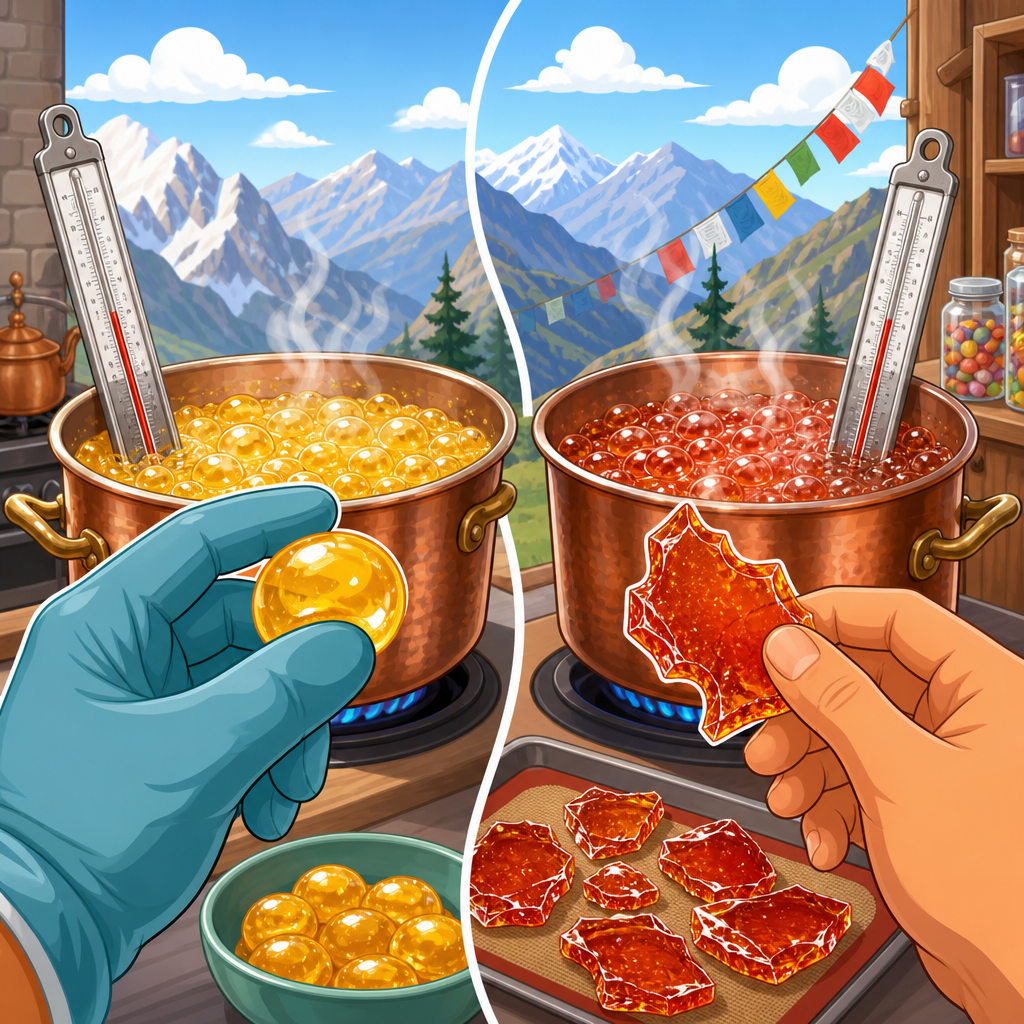
Candy making at altitude changes because water boils at lower temperatures as elevation rises, which shifts every classic sugar stage from thread to hard crack and affects preserves, syrups, jams, jellies, caramels, marshmallows, brittles, and home canning. In practical terms, a recipe written for sea level will often overcook if you chase the printed temperature in Denver, Santa Fe, or Leadville. I have tested confection formulas in both low and high elevations, and the pattern is consistent: understanding the boiling point of water is the foundation for reliable results. For cooks building a dependable candy making at altitude routine, this topic matters because a difference of only a few degrees can separate a creamy fudge from a dry, crumbly mass or a glossy brittle from a scorched pan.
The key terms are straightforward. Sugar stages describe the concentration of sugar in a boiling syrup, traditionally identified by temperature and by how a drop behaves in cold water. Soft-ball stage usually supports fudge, fondant, Italian meringue, and some frostings. Hard-crack stage produces brittles, lollipops, and glassy toffee structures. At altitude, the target concentration is reached at lower thermometer readings because atmospheric pressure is lower. Preserves and canning are linked to the same principle. Fruit spreads gel based on sugar concentration, acid balance, and pectin structure, while boiling-water canning depends on temperature limits that become more restrictive as elevation increases. If you preserve peaches, cook caramel, or make marshmallows in the mountains, you are managing the same physics.
This hub page covers Candy, Preserves & Canning comprehensively so readers can use it as a starting point for every altitude adjustment in this subtopic. The central rule is simple: first determine your local boiling point of water, then adjust target temperatures accordingly rather than assuming a universal chart. The common field guideline is to subtract about 2°F for every 1,000 feet above sea level, but I prefer calibrating with an actual boiling-water test on the day of cooking because barometric pressure and thermometer accuracy both matter. That one habit improves consistency across fudge, caramels, pralines, jams, jellies, fruit butters, candied citrus, and safe canning workflows.
Why sugar stages shift as elevation rises
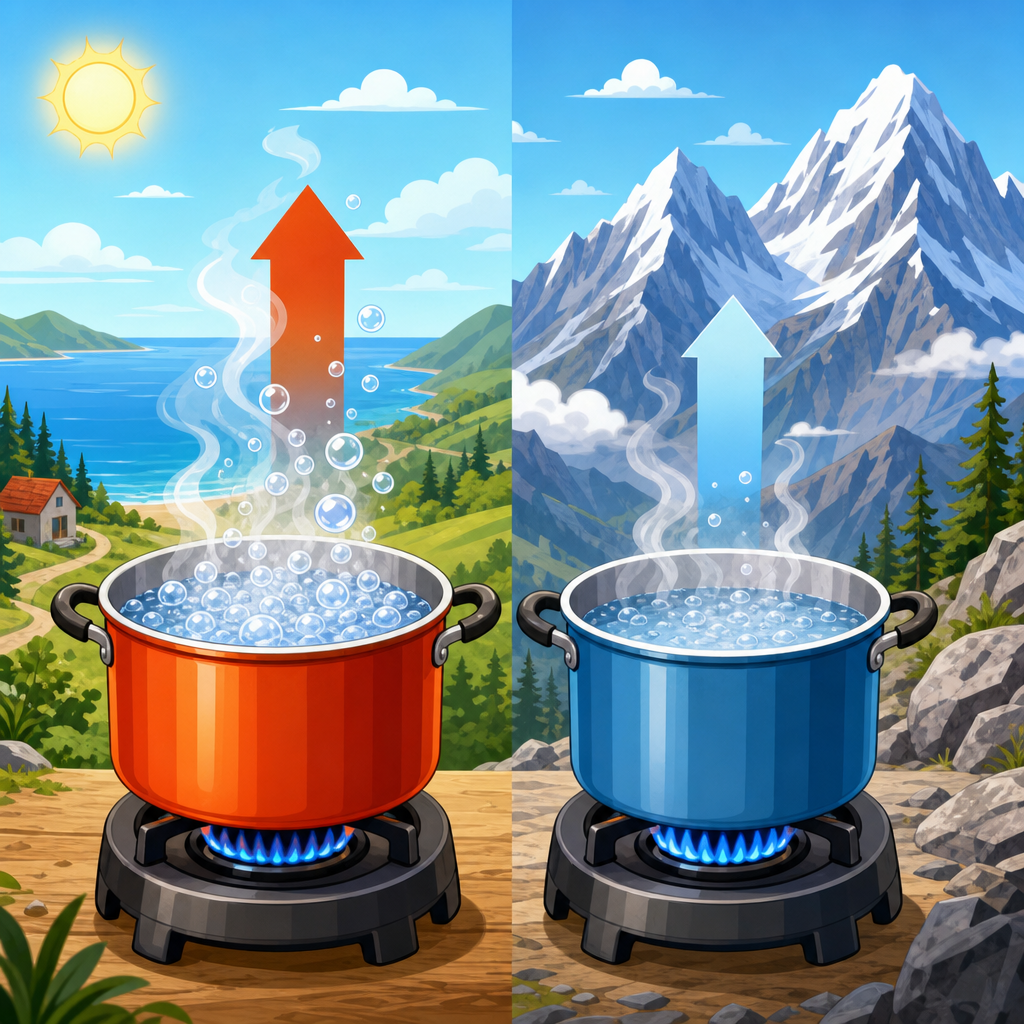
At sea level, water boils at 212°F, but at 5,000 feet it boils closer to 202°F, and that lower boiling point changes how quickly water leaves a sugar solution. Sugar stage temperatures are not magical numbers; they are practical markers for concentration. When enough water has evaporated, the syrup reaches a given texture stage. Because evaporation behavior changes with pressure, the same concentration occurs at a lower temperature at altitude. That is why sea-level formulas routinely overshoot in mountain kitchens when cooks pursue unadjusted published temperatures.
The most reliable method is relative measurement. Test boiling water with the same thermometer you will use for the candy. If your water boils at 203°F instead of 212°F, your thermometer-and-location difference is 9°F. Subtract that same 9°F from the recipe’s sugar-stage target. A sea-level fudge recipe calling for 238°F should be cooked to about 229°F under those conditions. A brittle targeting 300°F would finish around 291°F. This method works better than memorizing generalized charts because it accounts for local weather and instrument error at the same time.
Cold-water tests still matter because they verify texture directly. At altitude, the thermometer gives you the adjusted target, while the water test confirms that concentration matches the intended stage. For soft-ball, a syrup drop forms a pliable ball that flattens when lifted. For hard-crack, threads become brittle and snap. In professional practice, I use both checks for any batch that matters, especially when a recipe includes interfering ingredients such as cream, corn syrup, honey, cocoa, butter, or fruit puree, all of which can slightly alter boiling behavior and visual cues.
Soft-ball, firm-ball, and hard-crack at altitude
Soft-ball stage is usually listed around 235 to 240°F at sea level. At 5,000 feet, many cooks succeed closer to 225 to 230°F, depending on that day’s boiling point. This stage is critical for fudge because too little concentration leaves it runny and unable to set, while too much concentration creates coarse crystals and a dry bite. Altitude also affects cooling. Mountain climates are often drier, which can increase surface evaporation after cooking and subtly push texture firmer than expected. That is one reason a fudge that seemed perfect in the pan can become stiff during beating.
Firm-ball and hard-ball stages matter for caramels, nougat, divinity syrup, and some marshmallow formulas. Caramels are especially sensitive because dairy solids brown as water evaporates, and many recipes rely on a narrow window where the syrup is concentrated enough for chew but not so far cooked that it turns tough. In a high-altitude kitchen, using an adjusted target temperature is essential, but pan size and burner output matter too. A broad pan increases evaporation rate. If you use a heavy 4-quart saucepan one day and a wide saute pan the next, the same thermometer number may deliver different flavor and texture because the heating curve changed.
Hard-crack stage, commonly 300 to 310°F at sea level, produces brittles, spun sugar bases, and lollipops. At altitude, the practical finish may be 8 to 15 degrees lower. The risk here is not only overcooking but scorching. Once water is mostly gone, temperature rises fast. I advise clipping a calibrated digital probe to the pot and reducing heat as the syrup approaches the adjusted endpoint. For peanut brittle, for example, reaching the right hard-crack concentration before the nuts darken too much is easier if you control the final minute carefully and add baking soda off heat only when the batch is exactly where you need it.
Altitude candy temperature guide
These ranges are working references, not absolutes. Always verify with your own boiling-water test and the recipe’s ingredients.
| Stage | Sea-level range | Approximate target at 5,000 ft | Typical uses |
|---|---|---|---|
| Thread | 230 to 235°F | 220 to 225°F | Syrups, glazes, candied fruit starts |
| Soft-ball | 235 to 240°F | 225 to 230°F | Fudge, fondant, Italian meringue |
| Firm-ball | 245 to 250°F | 235 to 240°F | Caramels, soft nougat |
| Hard-ball | 250 to 266°F | 240 to 256°F | Marshmallows, divinity |
| Soft-crack | 270 to 290°F | 260 to 280°F | Taffy, butterscotch |
| Hard-crack | 300 to 310°F | 290 to 300°F | Brittle, lollipops, toffee shells |
The table shows why a sea-level candy thermometer chart can mislead mountain cooks. The exact shift varies with elevation and weather, but the direction never changes: lower atmospheric pressure means lower working temperatures. If your brittle repeatedly tastes burnt before it snaps cleanly, or your fudge sets grainy despite careful beating, the first troubleshooting step is almost always checking the adjusted target and recalibrating your thermometer.
Best practices for fudge, caramel, brittle, and marshmallows
For fudge, control crystallization as aggressively as you control temperature. Use a clean pan, dissolve sugar completely before boiling, brush down stray crystals with water, and cool undisturbed before beating. At altitude, undercooking and overbeating are common together because cooks compensate for a soft batch by stirring too long. If a chocolate fudge recipe still seems loose at the adjusted soft-ball stage, look at formulation before raising the final temperature. Extra butter, inverted sugar, marshmallow creme, or high cocoa percentages can all change set behavior.
For caramel, rely on both endpoint temperature and cold consistency. A caramel for sauce should stop lower than a caramel for wrapped candies. In mountain kitchens, I often test a spoonful on a chilled plate after the adjusted target is reached. If it firms to the intended chew as it cools, I stop. If not, I continue in one-degree increments. This is safer than adding five degrees at once. Dairy-based caramels can split if aggressively boiled late, so steady heat and frequent scraping of the bottom with a heatproof spatula are worth the effort.
For brittle and hard candies, humidity is an equal partner to altitude. A perfect hard-crack batch can turn sticky within hours during a storm. Store finished candy with desiccant packets or in airtight tins separated by parchment. Use silicone mats or lightly oiled marble for spreading, and premeasure baking soda, extracts, and nuts before the syrup reaches its endpoint. At high altitude, the finish is rapid enough that a ten-second delay changes color and flavor noticeably.
For marshmallows and divinity, the syrup stage determines structure, but whipping conditions matter just as much. Low humidity can actually help finished texture, yet the syrup can cool faster while pouring, causing stringy incorporation. Keep the mixer running at a moderate speed and pour in a thin stream down the bowl wall. If gelatin-based marshmallows set too firmly at altitude, lower the syrup endpoint slightly before changing the gelatin quantity.
Preserves and canning at altitude: jam, jelly, and safety fundamentals
Altitude affects preserves in two ways: cooking concentration and canning safety. For jams and jellies, overcooking is common because fruit mixtures reach gel concentration at lower temperatures than sea-level recipes imply. Many sea-level references mention the gel point around 220°F, which is roughly 8°F above water’s boiling point at sea level. The better rule is relative: gel point is usually about 8°F above your local boiling point, assuming the sugar, acid, and pectin balance is correct. If water boils at 203°F, many jellies will gel near 211°F, not 220°F. This single correction saves countless batches from becoming stiff, dark, or overly sticky.
Pectin type also matters. High-methoxyl pectin needs sufficient sugar and acid, while low-methoxyl pectin relies more on calcium. If you reduce sugar heavily, use the pectin designed for that formula instead of forcing a traditional jam recipe to work. I have seen altitude blamed for failed strawberry jam when the real issue was a sugar reduction that broke the pectin system. Use tested formulas from sources such as the USDA Complete Guide to Home Canning, the National Center for Home Food Preservation, or Ball. Those sources account for both chemistry and microbiological safety.
For canning, the main issue is that boiling-water canners never exceed the local boiling point, so higher elevations provide less heat lethality unless processing time is increased. That is why tested recipes require altitude adjustments for water-bath processing and pressure adjustments for pressure canning. Low-acid foods must be pressure canned, and the target pressure depends on canner type and elevation. Dial-gauge and weighted-gauge canners follow different adjustment rules. This is not optional fine-tuning; it is a safety requirement tied to controlling pathogens, including Clostridium botulinum in low-acid foods.
Fruit butters, pickled fruits, marmalades, candied peels, and syrup-packed fruit all sit at the intersection of candy technique and preserving technique. They reward careful concentration control and punish guesswork. Build your workflow around tested formulas, local boiling point, calibrated tools, and storage conditions, then branch into recipe-specific guides for fudge, caramel, brittle, jam, jelly, preserves, marmalade, and home canning. Master those fundamentals, and candy making at altitude becomes predictable rather than mysterious. Start by testing your boiling point today, note the adjustment on your thermometer, and use it on every batch.
Frequently Asked Questions
Why do soft-ball, firm-ball, hard-ball, soft-crack, and hard-crack stages change at higher altitude?
They change because the boiling point of water drops as elevation increases. Candy stages are really markers of sugar concentration, and the temperatures associated with those stages were originally established under sea-level conditions. At higher altitude, water evaporates and boils off at a lower temperature, so the same sugar concentration is reached sooner and at a lower thermometer reading. That means a syrup that would hit soft-ball at one temperature near sea level may reach the same actual stage several degrees lower in Denver, Santa Fe, or Leadville.
In practical kitchen terms, this is why candy makers at altitude often run into overcooked fudge, grainy fondant, tough caramels, or brittles that darken before they should. If you follow a sea-level target temperature exactly, you may continue cooking beyond the point where the proper sugar concentration has already been achieved. The result is not just a small difference in texture. It can completely change the finished candy, turning a creamy candy into a dry one or a crisp candy into a scorched one. Once you understand that the stage has shifted downward with altitude, the behavior of the syrup makes much more sense and your results become far more repeatable.
How much should I lower candy temperatures when cooking at altitude?
A reliable working rule is to reduce the target temperature by about 2 degrees Fahrenheit for every 1,000 feet above sea level. This is a practical confectionery adjustment used by many experienced candy makers because it tracks closely with the lower boiling point of water at elevation. For example, if a recipe gives a sea-level soft-ball target of 240 degrees Fahrenheit and you are cooking at 5,000 feet, a good starting point would be around 230 degrees Fahrenheit. If hard-crack is listed at 300 degrees Fahrenheit at sea level, the adjusted target at that same elevation would be closer to 290 degrees Fahrenheit.
That said, treat this as a starting point rather than an absolute law. Thermometer calibration, weather, pan shape, batch size, and ingredient differences can all affect your final result. The best approach is to combine the altitude adjustment with direct observation. Use classic candy tests when appropriate, such as dropping syrup into cold water to confirm the stage, and calibrate your thermometer in boiling water before you start. If your water boils lower than expected on a given day, that confirms you should expect your sugar stages to land lower too. In repeated testing, this combination of math plus observation is what produces the most dependable results.
What is the best way to test candy stages accurately at high elevation?
The most dependable method is to use both a properly calibrated thermometer and a visual or cold-water stage test. Start by checking your thermometer in boiling water. At sea level, water boils at 212 degrees Fahrenheit, but at altitude it will be lower. If you know the actual boiling point in your kitchen that day, you have a more trustworthy baseline for all your candy work. This matters because even a small thermometer error can push a sugar syrup past the intended stage, especially in candies where just a few degrees separate creamy from crumbly or chewy from brittle.
Then back up your thermometer with traditional stage testing. For soft-ball, a spoonful of syrup dropped into cold water should form a soft, pliable ball that flattens easily. For hard-crack, it should separate into hard, brittle threads that snap cleanly. These physical cues matter because they reflect the syrup’s actual concentration and structure, not just the number on the dial. At altitude, where standard printed temperatures can be misleading, this double-checking system is especially valuable. It is the closest thing to insurance against overcooking, and it helps you learn what each stage looks and feels like in your own kitchen conditions.
Which candies and preserves are most affected by altitude-related stage changes?
Any recipe that depends on boiling sugar to a precise concentration is affected, but some categories are especially sensitive. Fudge, fondant, divinity, marshmallows, nougat, caramels, toffee, brittles, lollipops, syrups, jams, jellies, and preserves can all behave differently at elevation. Fudge and fondant often become dry or grainy when overcooked. Caramels can turn firmer than intended. Brittles and hard candies may darken too much before they reach the proper texture if you chase sea-level temperatures. Syrups can become too thick, and fruit preserves may overset or lose freshness if boiled too aggressively.
This effect also extends into canning and fruit work because sugar concentration and boiling behavior are closely tied to texture, gel formation, and shelf stability. While altitude adjustments for canning usually focus on processing time and pressure, the cooking phase before jars are filled can still be influenced by lower boiling temperatures. That is why old-fashioned preserve recipes sometimes fail when moved from low elevation to mountain kitchens without any other changes. The more a recipe relies on boiling off water to reach a target consistency, the more likely altitude will matter. In short, if the recipe depends on a specific sugar stage, assume elevation is part of the equation.
What practical steps help prevent overcooking candy at altitude?
First, stop treating sea-level temperatures as fixed universal endpoints. Adjust them downward for your elevation and verify your thermometer before every serious candy session. Second, watch the syrup itself, not just the number. Look for changes in bubble size, viscosity, color, and how the syrup behaves in a cold-water test. Third, use a heavy pan and moderate heat so the syrup climbs steadily rather than surging past the target. High heat can make it much harder to stop at the right moment, especially once the water content gets low and the temperature begins rising quickly.
It also helps to keep notes on your exact elevation, the day’s boiling point of water, the recipe target, your adjusted target, and the final texture. After one or two batches, patterns become obvious. You may find that a caramel is best a degree or two below the calculated adjustment, while a brittle lands perfectly right on it. Humidity can matter too, especially for hard candies and crack stages, because sugar is hygroscopic and can pull moisture back from the air. The most successful high-altitude candy makers are methodical: they calibrate, adjust, observe, and record. Once you do that, candy making at altitude stops feeling unpredictable and starts feeling precise.