Fudge at altitude without graininess depends on controlling water loss, sugar concentration, and crystal size more precisely than most sea-level recipes require. In mountain kitchens, lower air pressure changes the boiling point of water, which means candy syrups reach target temperatures faster while still holding more moisture than a thermometer reading may suggest. That mismatch is why high-altitude fudge can turn sandy, dry, crumbly, or stubbornly soft. In practical terms, “graininess” means large sugar crystals that you can feel on the tongue instead of the fine, tightly packed crystals that make great fudge taste smooth and creamy. This matters beyond one pan of candy, because the same principles drive success across candy, preserves, and canning: temperature, concentration, pectin behavior, and safe processing all shift with elevation. I have tested fudge, caramel, jam, and fruit butter in mountain climates, and the pattern is consistent. Recipes that seem foolproof near sea level often fail unless you adjust boiling targets, cooling stages, pan size, and agitation. This hub explains how to make smooth fudge at altitude and how that knowledge connects to the broader world of high-altitude candy making, jam setting, and home canning.
Why altitude changes fudge texture
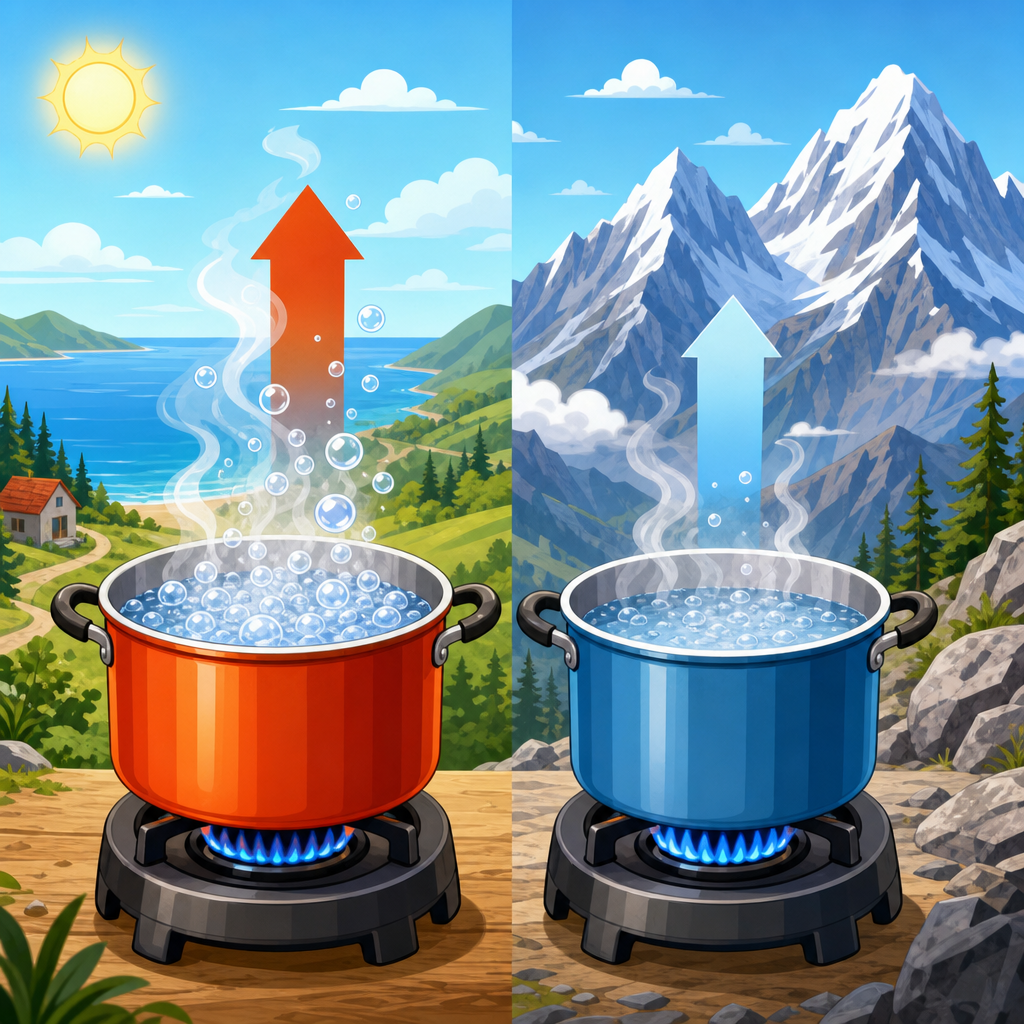
At higher elevations, water boils at a lower temperature. A common working rule is that the boiling point drops by about 1 degree Fahrenheit for every 500 feet above sea level, though exact numbers vary slightly with barometric pressure and weather. For fudge, that matters because traditional recipes rely on boiling syrup to a precise concentration before cooling and beating. If you use an unadjusted sea-level target such as 234 to 238 degrees Fahrenheit, the syrup may be overcooked relative to your local boiling point. Overcooking drives off too much water, creating a supersaturated syrup that forms larger crystals quickly. That is the classic route to dry, crumbly, grainy fudge.
The standard adjustment is simple and reliable: determine your local boiling point of water, then subtract the difference from 212 degrees Fahrenheit and reduce the recipe’s final cooking temperature by the same amount. If water boils at 202 degrees Fahrenheit in your kitchen, you are 10 degrees below sea level, so a sea-level target of 236 degrees becomes 226. This “boiling point difference” method is more accurate than using elevation charts alone because it reflects your actual conditions that day. In my own batches, calibrating the thermometer in boiling water before every candy session eliminates more failures than any other single step.
Texture is also shaped by pan geometry and batch size. A wide saucepan increases evaporation, which can push a carefully adjusted recipe back toward overconcentration. Thin pans create hot spots that scorch milk solids and encourage uneven crystal formation. Heavy-bottomed stainless steel or enameled pans distribute heat better. Small batches are easier to control, especially above 5,000 feet, because the syrup moves through temperature stages quickly. Corn syrup, glucose syrup, marshmallow creme, and invert sugar each help limit crystallization by interfering with sucrose molecules, but they cannot rescue a syrup that was cooked well past its correct endpoint.
How to make smooth fudge at altitude every time
The most dependable method starts before the stove turns on. Use a tested formula with dairy, sugar, chocolate, and a crystallization inhibitor such as corn syrup or marshmallow creme. Measure by weight when possible. Clip a calibrated digital thermometer so the tip sits in the liquid without touching the pan. Stir only until the sugar dissolves, washing down any crystals on the side with a wet pastry brush. Once the syrup boils, stop stirring. Agitation during boiling can seed unwanted crystals that later create a rough texture. Cook to your adjusted target temperature, not the printed sea-level number.
Cooling is the step many home cooks rush, and at altitude it is where graininess often begins. After cooking, remove the pan from the heat and let the mixture cool undisturbed to about 110 degrees Fahrenheit, or until the pan feels just warm. Do not scrape the sides into the batch. If crystals formed on the wall of the pan, leave them there. Beating too early causes coarse crystals because the syrup is still too hot and mobile. Beating too late can make the mass set before it is spreadable. The ideal point is when the gloss begins to dull and the mixture thickens slightly but still flows.
Ingredient choice matters. Full-fat dairy produces a creamier matrix than low-fat milk because fat coats forming crystals and softens texture. High-quality chocolate with cocoa butter melts more evenly than chips packed with stabilizers. A little butter improves mouthfeel, but too much can cause greasy separation. Nuts should be warm, not cold, before they are folded in, or they can trigger premature setting. Vanilla should go in after cooling, because alcohol-based extracts can flash off in hot syrup. For peanut butter, maple, or brown sugar fudge, the same crystal rules apply, though brown sugar and maple products add invert sugars and minerals that can slightly alter set.
| Altitude factor | What changes | Best correction |
|---|---|---|
| Lower boiling point | Syrup reaches stage at lower temperature | Lower final cook temperature by your local boiling-point difference |
| Faster evaporation in wide pans | Moisture loss becomes harder to control | Use a heavy, medium-width saucepan and smaller batches |
| Dry mountain air | Surface moisture escapes quickly during cooling | Cool undisturbed and cover loosely only if needed |
| Cold add-ins | Premature crystallization and streaking | Warm nuts and room-temperature flavorings before mixing |
If fudge turns grainy, diagnose the cause before changing everything. Large crystals usually mean either overcooking or agitation at the wrong time. Dry, crumbly fudge points to excessive water loss. Soft fudge that never firms often means undercooking, inaccurate thermometer placement, or beating too little. A humid day can also slow setting, though humidity affects fondant and divinity more dramatically than classic chocolate fudge. If needed, many failed batches can be salvaged by adding a small amount of water or cream, reheating gently until fully dissolved, and recooking to the corrected target. Reboiling once is common in professional candy work and often restores texture.
Beyond fudge: altitude rules for candy making
Fudge is part of a larger family of sugar confections, and the same altitude logic applies to caramels, toffee, fondant, pralines, marshmallows, divinity, brittles, and penuche. Each candy depends on a balance of heat, water, sugar concentration, and sometimes proteins or gelatin. Caramel is less about controlled crystallization and more about caramelization plus dairy solids, yet it still needs a corrected temperature target. Too high, and high-altitude caramel becomes hard and chewy instead of soft and sliceable. Brittle and toffee are cooked to higher stages, so even a few degrees of error can turn a pleasant snap into a tooth-breaking slab.
Crystallization management differs by candy type. Fudge and fondant intentionally create many tiny crystals. Caramel and toffee aim to suppress crystal growth almost entirely. Marshmallows rely on sugar syrup concentration plus gelatin structure. Divinity adds whipped egg whites and is strongly affected by humidity and syrup precision; in mountain conditions it can set too quickly or become porous. I recommend mastering three benchmark tests for all of them: thermometer calibration, local boiling-point calculation, and visual confirmation of syrup behavior. Those three habits matter more than collecting dozens of recipes.
Equipment affects consistency. A fast, accurate digital thermometer such as a Thermapen is useful for spot checks, while a clip-on candy thermometer tracks the cook. An induction burner can help because it offers responsive heat changes, although gas works fine with a heavy pan. Silicone spatulas are better than wooden spoons for scraping corners clean before boiling, but once the boil starts, hands off unless the recipe specifically calls for stirring. Sheet pans lined with parchment help cool toffee and brittle evenly. For fudge slabs, an 8-inch square metal pan gives better edge definition than glass, which cools more slowly and can alter final texture.
Preserves and jam setting at elevation
High-altitude cooks often notice that jam either refuses to set or turns stiff and sticky. The reason is similar to fudge trouble: concentration changes happen differently when boiling temperatures are lower. In preserves, the key network comes from pectin, sugar, and acid. Commercial pectin products from brands such as Sure-Jell and Pomona’s Pectin are designed to create a predictable set, but they still require correct timing and, sometimes, adjusted processing times. Overcooking jam to chase a gel point can darken fruit flavor and create a tough texture. Undercooking leaves syrupy spreads that weep on toast.
A more reliable approach is to use tested pectin formulas or verify gel with temperature and sheet tests rather than intuition alone. At sea level, many jams gel around 220 degrees Fahrenheit, or roughly 8 degrees above the boiling point of water. At altitude, use that same differential. If water boils at 204 in your kitchen, look for a gel point near 212. This mirrors the fudge rule exactly and is one reason candy makers often become better jam makers. Fruit choice also matters. Apples, citrus peel, cranberries, currants, and underripe grapes are naturally high in pectin, while strawberries, cherries, peaches, and blueberries usually benefit from added pectin or blended high-pectin fruit.
For preserves, altitude also influences headspace behavior and boil intensity during water-bath processing. Rapid boiling can force product out of jars, reducing headspace and weakening seals. Use the processing times from trusted sources such as the USDA Complete Guide to Home Canning, the National Center for Home Food Preservation, or Ball canning guides, because these account for altitude increases. Unlike fudge, where texture is the issue, canning introduces a safety issue. You do not adjust sugar concentration casually in tested jam or jelly canning recipes unless the formula specifically allows it. Set quality and preservation both depend on the tested ratio.
Safe canning and syrup concentration in mountain kitchens
Canning at altitude requires different adjustments from candy making, but the same scientific mindset applies. Water-bath canning needs longer processing as elevation increases because water boils below 212 degrees Fahrenheit, so jars are exposed to less heat unless time is extended. Pressure canning often requires higher pressure settings for the same reason. These are safety-critical changes, not optional refinements. If you can fruit butters, preserves, chutneys, or syrups, use only tested processes from extension services, Ball, or the National Center for Home Food Preservation. Family recipes may taste excellent yet still be unsafe if acid level, density, or jar size has changed.
Syrups for peaches, pears, and cherries behave differently at altitude too. Because concentration can drift quickly, syrup that seems thin in the pot may thicken after cooling in jars. For flavored syrups used in cocktails or sodas, the ratio of sugar to water determines shelf life and viscosity more than the finishing temperature alone. Rich syrup, commonly 2:1 sugar to water by weight, resists spoilage better than simple syrup, but refrigeration is still prudent unless the syrup is canned using a tested method. For fruit butters, prolonged cooking in dry mountain air can intensify flavor beautifully, but scorching risk rises as the puree thickens, so wide pans and constant final stirring are essential.
Building a complete high-altitude candy and preserves workflow
The most effective way to avoid grainy fudge and inconsistent preserves is to build repeatable kitchen habits. Record your elevation, local boiling point, thermometer accuracy, pan type, batch size, humidity, and final results in a notebook. Use the same saucepan for repeat candy work so evaporation stays consistent. Preheat jars, prepare pans, warm mix-ins, and measure every ingredient before cooking starts. For hub topics like candy, preserves, and canning, the connecting principle is simple: concentration controls texture, structure, and storage behavior. Once you understand that, recipes stop feeling mysterious.
Fudge at altitude without graininess is absolutely achievable when you treat temperature targets as local, not universal. The payoff is bigger than one smooth square of chocolate candy. You gain a working model for caramel, toffee, jam, jelly, fruit butter, syrup, and safe home canning. Start by calibrating your thermometer in boiling water, adjust every target by your local difference, and use tested recipes from trusted sources. Then practice the cooling and agitation cues that create fine crystals instead of coarse ones. If this page is your starting point in cooking and baking at altitude, use it as your foundation and move next into specific guides for fudge formulas, jam setting, and altitude-safe canning methods.
Frequently Asked Questions
Why does fudge get grainy more easily at high altitude?
Fudge gets grainy at altitude because the balance between evaporation, sugar concentration, and crystallization becomes much less forgiving. At higher elevations, water boils at a lower temperature, so the syrup can appear to reach a familiar candy-stage temperature while still containing more water than you would expect at sea level. That creates a confusing situation: the thermometer gives you a number, but the actual moisture level and sugar concentration may not match what that number would mean in a lower-altitude kitchen. If the syrup is under-concentrated when it comes off the heat, the finished fudge may stay too soft. If it is pushed too far trying to compensate, it can become dry, crumbly, or promote uncontrolled crystal formation.
Graininess itself is really about crystal size. Smooth fudge contains countless tiny sugar crystals that are too small to feel on the tongue. Grainy fudge contains larger crystals that formed because the syrup was disturbed at the wrong time, cooled improperly, or seeded with stray crystals on the side of the pan. At altitude, the narrower margin for error means even small mistakes matter more. Stirring too early, scraping down crystallized sides of the pan, overbeating during the cooling stage, or relying on an unadjusted sea-level recipe can all encourage big crystals. In mountain kitchens, smooth fudge usually comes from tighter control of temperature, careful cooling, and beating only after the syrup has cooled enough to form fine crystals instead of coarse ones.
How should I adjust fudge temperature for high altitude so it stays smooth instead of sandy or dry?
The most reliable approach is to reduce the target finishing temperature slightly as altitude increases, because standard candy temperatures are based on sea-level boiling behavior. A common starting point is to subtract about 2 degrees Fahrenheit for every 1,000 feet above sea level, although exact results vary with weather, thermometer accuracy, recipe composition, and your cookware. For example, if a fudge recipe says to cook to 234 to 236 degrees Fahrenheit at sea level, a cook at 5,000 feet might begin testing results around 224 to 226 degrees Fahrenheit lower than the sea-level target by roughly 10 degrees total. That said, this is only a starting framework, not an absolute rule. The best adjustment comes from knowing your local boiling point of water and calibrating your thermometer regularly.
What matters most is consistency. If your fudge turns out dry and crumbly, it was probably cooked too far for your conditions. If it remains overly soft and does not set properly, it likely needed a little more concentration. A smart method is to test in small batches and take notes on altitude, weather, exact finish temperature, cooling temperature before beating, and final texture. Over time, you can identify the temperature range that gives you a creamy set in your kitchen. Many experienced candy makers at altitude trust a combination of adjusted thermometer readings, visual cues, and cold-water tests rather than depending on a printed number alone. That combination is often the difference between velvety fudge and a batch that turns rough or sandy.
What causes sugar crystals to grow too large in fudge, and how can I prevent that at altitude?
Large sugar crystals usually form when the syrup is given an opportunity to crystallize before the entire batch is ready to do so in a controlled way. The biggest triggers are stirring during boiling, crystals stuck to the sides of the pan, undissolved sugar at the beginning of cooking, and agitation before the mixture has cooled enough. At altitude, these problems become more pronounced because the syrup moves through stages differently and can become unstable more quickly. If even a few crystals survive on the pan wall or spoon, they can act like seeds that encourage the rest of the sugar to organize around them, leading to a gritty texture throughout the finished fudge.
To prevent this, start by dissolving the sugar thoroughly over moderate heat before the mixture comes to a full boil. Once boiling begins, avoid stirring unless the recipe specifically requires it. Use a clean, wet pastry brush to wash any sugar crystals from the sides of the pan, or cover the pan briefly so steam dissolves them. After cooking, let the fudge cool undisturbed to the recommended temperature before beating. Do not scrape the pan sides into the batch when transferring or mixing, because those edges may contain unwanted crystals. Corn syrup, marshmallow creme, butter, and dairy can also help interfere with crystal growth, but they do not replace good technique. At altitude, careful handling matters just as much as ingredient choice if you want a creamy, fine-grained result.
When should I beat fudge at high altitude, and how does timing affect graininess?
Beating fudge at the correct moment is one of the most important steps in controlling texture. If you beat too soon, while the syrup is still too warm, crystals can form early and grow too large, producing a coarse or sandy texture. If you wait too long, the batch may thicken abruptly, lose gloss, and set before it is properly spreadable. At altitude, this timing window can feel even tighter because the syrup may retain moisture differently than expected, even if the thermometer says you hit the usual target. That is why many high-altitude candy makers pay close attention not just to the cooking temperature, but also to the cooling temperature before beating.
In many traditional fudge methods, the mixture is cooled undisturbed until it reaches a specific range, often around 110 to 115 degrees Fahrenheit, before beating begins. That cooling period allows the syrup structure to stabilize so that when you do agitate it, many tiny crystals form at once instead of a smaller number of large ones. As you beat, the fudge should gradually lose its shine, thicken, and become slightly less fluid. Stop as soon as it reaches that stage, then spread it promptly. Overbeating can make it stiff, dull, and crumbly. Underbeating can leave it too soft or uneven in texture. In a mountain kitchen, learning this visual and textural transition is often more useful than following a fixed stirring time, because altitude affects how quickly the batch moves from glossy syrup to finished fudge.
What are the best practical tips for making smooth, creamy fudge at altitude every time?
Start with precision. Use a heavy saucepan, a reliable candy thermometer, and measured ingredients. Calibrate the thermometer by checking the boiling point of water in your kitchen, since that gives you a real-world reference for your altitude and conditions. Choose a recipe designed for fudge rather than a generic chocolate candy formula, because true fudge depends on controlled crystal formation. Dissolve sugar fully before boiling, avoid unnecessary stirring during cooking, and keep the sides of the pan free of crystals. If your recipe includes butter, corn syrup, chocolate, or marshmallow creme, understand that these ingredients help with texture, but they still need proper temperature control to work well at elevation.
Just as important, control the cooling and finishing stages. Let the syrup cool undisturbed before beating, and do not scrape the pan sides into the batch. Beat only until the mixture thickens and loses some gloss, then spread it immediately. Pay attention to weather as well: very dry air can increase evaporation, while storms can subtly affect boiling behavior. If a batch fails, diagnose the direction of the problem. Dry, crumbly, or overly firm fudge usually means overcooking or overbeating. Soft fudge that will not set often means undercooking or insufficient beating. Sandy fudge points to uncontrolled crystallization. Keeping a batch log is one of the most effective professional habits you can adopt. Once you record your best finish temperature, cooling point, and beating stage for your altitude, smooth, creamy fudge becomes far more repeatable.