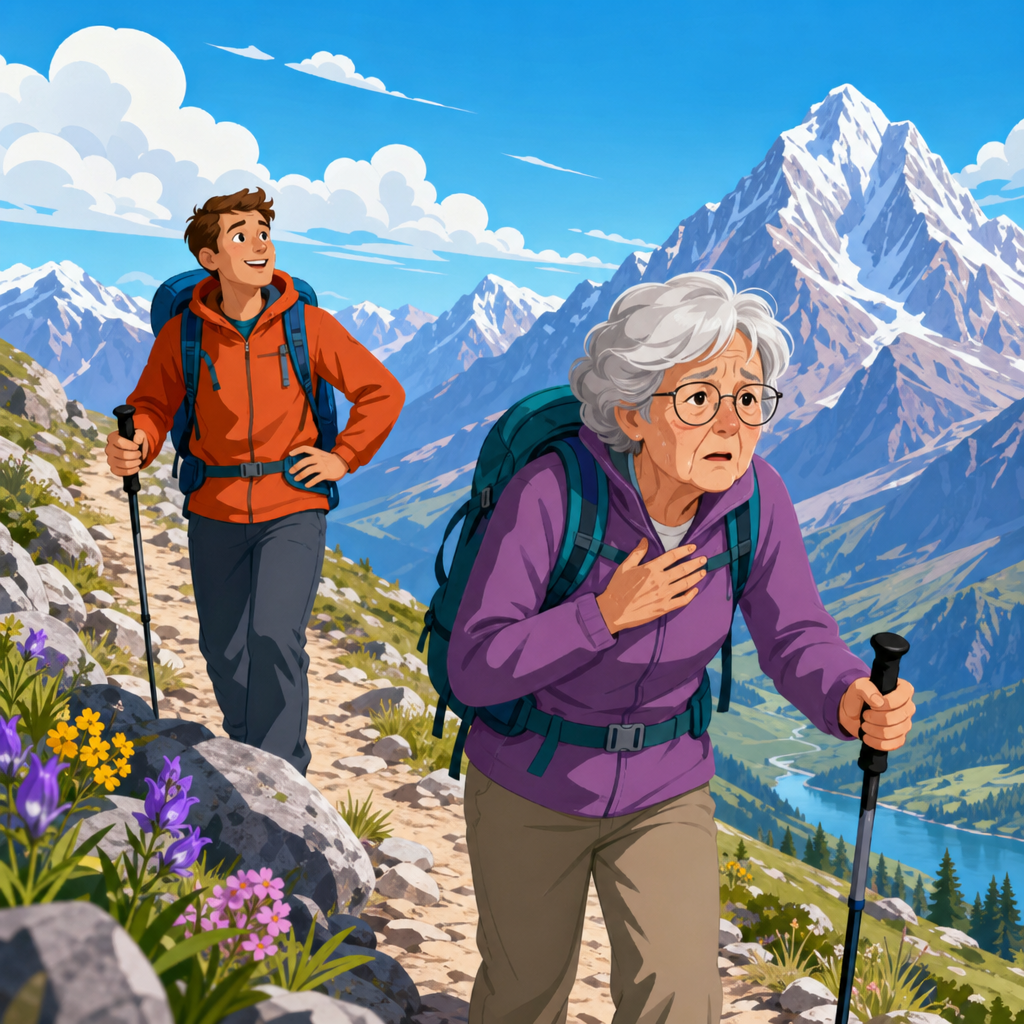
Older adults can acclimate to high altitude, but the process is often less predictable because aging changes ventilation, cardiovascular reserve, sleep, hydration, and the way symptoms are recognized and reported. In practice, I have seen healthy people in their late sixties adjust smoothly at 2,500 to 3,000 meters while younger, fitter travelers developed acute mountain sickness after ascending too fast, which is why the better question is not simply whether age slows acclimatization, but how age interacts with pace of ascent, prior altitude exposure, medications, and underlying disease. High altitude usually refers to elevations above 1,500 meters, with common symptom-producing travel beginning around 2,500 meters. Acclimatization is the set of short-term physiologic adjustments that improve oxygen delivery in thinner air, including increased breathing rate, fluid shifts, and later a rise in red blood cell production. Acute mountain sickness, or AMS, is the most common altitude illness; its hallmark features are headache plus symptoms such as nausea, fatigue, dizziness, or poor sleep after recent ascent. This matters because older adults now make up a growing share of trekkers, skiers, pilgrims, and mountain tourists, and many are traveling rapidly by car, gondola, or aircraft to sleeping elevations where the margin for error is small.
AMS basics and risk factors deserve a hub page because altitude illness is often misunderstood. People commonly assume that physical fitness protects them, that age alone determines risk, or that mild symptoms can safely be pushed through. Those assumptions are wrong. The strongest consistent risk factor is rapid ascent to a high sleeping altitude, especially above 2,500 meters, and the next most important is a personal history of altitude illness. Exertion, alcohol, sedatives, dehydration, respiratory infection, and poor sleep can worsen the picture, but they do not replace ascent profile as the main driver. Older adults add another layer: they may have lower maximal aerobic capacity, take medications that affect breathing or fluid balance, and interpret fatigue or dizziness as “just travel” rather than altitude-related. At the same time, some research has suggested that older age is not an independent major risk factor for AMS and may even be associated with slightly lower reported rates in some groups, possibly because older travelers often ascend more conservatively. For clinicians, trip leaders, and travelers, the practical goal is direct: recognize risk early, ascend in a controlled way, prevent symptoms when appropriate, and know when descent is the correct treatment.
How acclimatization works and where age may slow it
Acclimatization begins within minutes of arriving at altitude. Lower oxygen pressure stimulates peripheral chemoreceptors, which increase ventilation. Breathing faster raises blood oxygen but also blows off carbon dioxide, producing respiratory alkalosis. Over the next day or two, the kidneys compensate by excreting bicarbonate, allowing ventilation to remain elevated. Heart rate rises, plasma volume drops, and tissues adjust how they extract oxygen. With longer stays, erythropoietin increases red blood cell production, although that takes days to weeks rather than hours. In older adults, each step can be affected by normal aging. Ventilatory responsiveness may be blunted, sleep is often more fragmented, and cardiac output reserve is lower. None of this means acclimatization fails; it means the response may be less efficient and symptoms may appear at lower exertion levels.
The most important nuance is that altitude tolerance is highly individual. I have reviewed trip logs where a 72-year-old with good blood pressure control slept comfortably at 3,200 meters after a careful ascent, while a 32-year-old endurance athlete developed headache and nausea after flying directly to 3,400 meters and hiking hard the same afternoon. Age changes physiology, but ascent rate still dominates. For older adults, the concern is not only a possibly slower physiologic response; it is also reduced reserve if things go wrong. Mild AMS can limit appetite and fluid intake, which then worsens weakness and balance. Sleep-disordered breathing can intensify nighttime desaturation. Preexisting coronary disease, chronic lung disease, anemia, or frailty can reduce the body’s margin for adaptation. That is why individualized planning matters more than age labels.
What the evidence says about age and AMS risk
Research on whether older adults acclimate more slowly at high altitude is mixed, but several findings are consistent. Age alone is not a reliable predictor of AMS. Studies in trekkers and mountain visitors have often found no clear increase in AMS incidence with older age after accounting for ascent profile and prior exposure. Some datasets even report lower AMS rates in older groups, though that may reflect behavior rather than physiology; older travelers frequently pace themselves better, hydrate more deliberately, and avoid extreme exertion on arrival. The Lake Louise Scoring System, widely used to assess AMS, does not include age because symptom-defined illness depends more on recent altitude gain and individual susceptibility than on years lived.
Still, older adults deserve special attention because studies that focus only on AMS can miss other altitude-related problems. A person may avoid classic AMS yet still struggle with exertional hypoxemia, unstable angina, medication side effects, or severe insomnia. In my experience, this is where risk discussions become more useful. Instead of asking whether age causes AMS, ask whether the traveler can increase ventilation effectively, sleep adequately, maintain nutrition and hydration, and tolerate the itinerary without pushing past early warning signs. The answer depends on functional status, disease control, and the route. A gradual trek from 1,800 to 3,000 meters is different from landing at 3,500 meters for a ski vacation. Evidence supports that distinction strongly.
Core AMS risk factors every traveler should know
The main risk factors for acute mountain sickness are straightforward. Rapid ascent is first. Sleeping above 2,500 meters after a quick gain from low altitude sharply increases risk. Previous AMS is second; a person who had symptoms on an earlier trip is more likely to have them again under similar conditions. High sleeping altitude, large daily elevation gains, and intense exertion in the first twenty-four to forty-eight hours also matter. Alcohol and sedative-hypnotics can worsen sleep and ventilation. Viral illness, inadequate calorie intake, and dehydration can make symptoms harder to interpret and manage. Fitness does not prevent AMS, and overconfidence in fit travelers is a common reason for poor decisions.
Older adults often carry additional modifiers rather than unique altitude risk factors. Diuretics can increase dehydration risk. Beta blockers may limit heart-rate response during exertion, making effort feel strangely difficult. Opioids, benzodiazepines, and some sleep aids can suppress breathing and worsen nighttime oxygen drops. Chronic obstructive pulmonary disease, interstitial lung disease, pulmonary hypertension, and significant anemia reduce oxygen reserve. Heart failure raises concern because altitude increases sympathetic activity and can exacerbate fluid and pressure changes. These realities do not forbid altitude travel, but they change preparation. Pre-trip medication review, realistic route planning, and attention to overnight altitude are more important than buying gadgets or relying on willpower.
| Risk factor | Why it matters | Practical example |
|---|---|---|
| Rapid ascent | Leaves little time for ventilatory and renal adaptation | Flying from sea level to 3,400 meters and sleeping there the same night |
| Prior AMS history | Strong predictor of recurrence on similar itineraries | A traveler who had headache and nausea at 3,000 meters last year |
| High sleeping altitude | Symptoms are driven more by where you sleep than where you briefly hike | Day trip to 4,000 meters is often safer than sleeping at 3,500 meters immediately |
| Early heavy exertion | Raises oxygen demand before acclimatization catches up | Hard uphill hike on arrival day |
| Respiratory depressant drugs | Can worsen nighttime hypoxemia and sleep quality | Using benzodiazepines to sleep after ascent |
| Cardiopulmonary disease | Reduces physiologic reserve and complicates symptom interpretation | Traveler with COPD mistaking worsening breathlessness for ordinary fatigue |
How AMS presents in older adults
Acute mountain sickness usually starts within six to twelve hours after ascent, though onset can vary. The defining symptom is headache in a person recently arrived at altitude, accompanied by one or more of the following: nausea, loss of appetite, fatigue, dizziness, or sleep disturbance. Older adults can present with the same pattern, but the interpretation is often less obvious. A traveler may call it indigestion, dehydration, jet lag, or poor sleep from an unfamiliar hotel. Family members may attribute slowed walking or irritability to age. That delay matters because continued ascent with early AMS increases the risk of more serious illness.
Severity exists on a spectrum. Mild AMS may mean a dull headache, reduced appetite, and low energy but preserved function. Moderate illness interferes with walking pace, eating, and normal activity. Severe illness can evolve toward high-altitude cerebral edema, marked by confusion, ataxia, altered mental status, or extreme lassitude. High-altitude pulmonary edema is different and may occur with or without clear AMS; warning signs include shortness of breath at rest, cough, declining exercise tolerance, chest tightness, and low oxygen levels out of proportion to altitude. Older adults with balance issues, hearing impairment, cognitive decline, or chronic shortness of breath require especially careful observation because dangerous changes can be missed until they are advanced.
Prevention strategies that work
The single best prevention strategy is gradual ascent. Above about 2,500 to 3,000 meters, increasing sleeping altitude by roughly 300 to 500 meters per night with a rest day every three to four days is a practical rule used in trekking medicine. If rapid ascent is unavoidable, prophylaxis deserves consideration. Acetazolamide is the standard preventive medication because it accelerates acclimatization by promoting bicarbonate excretion and stimulating ventilation. In adults, common preventive dosing is 125 milligrams twice daily, started a day before ascent and continued for the first couple of days at altitude or longer if ascent continues. Higher doses are sometimes used, but lower dosing often balances benefit and side effects well, especially in older travelers.
Prevention also means controlling variables that mimic or worsen AMS. Keep the first day easy. Prioritize meals with adequate carbohydrates if appetite is low. Maintain hydration without forcing excessive fluid intake. Avoid alcohol on arrival day, and be cautious with sedatives. Review chronic medications before travel, especially diuretics, glucose-lowering drugs, sleep agents, and blood pressure medications. Travelers with significant cardiopulmonary disease may need formal pre-travel evaluation, sometimes including pulse oximetry, exercise assessment, or a hypoxia altitude simulation test, though that test has limitations and is not required for most healthy people. Portable pulse oximeters can be useful for trends, but symptoms and function matter more than a single number.
What to do when symptoms begin
If a traveler develops headache, nausea, unusual fatigue, dizziness, or poor coordination after ascent, the first rule is simple: do not ascend farther until symptoms clearly improve. Rest, light activity only, oral fluids as tolerated, and symptom treatment may be enough for mild cases. Acetazolamide can help if not already started. Analgesics such as ibuprofen or acetaminophen may relieve headache, but pain relief does not prove the problem is solved. Dexamethasone is effective for moderate to severe AMS and for cerebral edema risk, yet it treats symptoms more than acclimatization and should be used with a clear plan. Oxygen and portable hyperbaric bags are expedition tools for remote settings, not substitutes for judgment.
Descent is the definitive treatment for worsening AMS, high-altitude cerebral edema, and suspected high-altitude pulmonary edema. Even a descent of 500 to 1,000 meters can make a dramatic difference. Older adults should be encouraged to descend earlier rather than later because reserve is often lower and falls, dehydration, and medication errors accumulate quickly when people push through symptoms. After any significant event, review what happened: sleeping altitude, pace, appetite, fluid intake, exertion, weather, and medications. That debrief improves the next itinerary. If you are planning an altitude trip with an older traveler, build in acclimatization days, know the nearest lower sleeping option, and discuss symptoms before departure so no one mistakes early AMS for normal aging or stubbornness.
Older adults do not inevitably acclimate more slowly at high altitude, but they often acclimate less forgivingly, which is the distinction that matters for safe travel. Age by itself is a weak predictor of acute mountain sickness; rapid ascent, high sleeping altitude, and prior AMS history remain the major drivers. What changes with aging is physiologic reserve, sleep quality, medication complexity, and the chance that subtle symptoms are ignored or mislabeled. That is why the smartest altitude plan for an older traveler is not fear-based avoidance. It is disciplined preparation built around a conservative ascent profile, realistic daily effort, and an early response to symptoms.
As the hub for AMS basics and risk factors, this page should guide every next step in altitude planning. Know the core definition of AMS, learn the warning signs of cerebral and pulmonary complications, and understand that fitness does not cancel altitude risk. Use gradual ascent whenever possible, consider acetazolamide when the itinerary is aggressive, and review chronic conditions before departure. Most important, do not ascend with symptoms that are getting worse. If you are organizing a trek, ski trip, pilgrimage, or mountain road journey, use this guidance to build a safer itinerary and discuss altitude plans with a qualified clinician before you go.
Frequently Asked Questions
Do older adults really acclimate more slowly at high altitude?
Not always. Older adults can absolutely acclimate well at high altitude, and many do just as successfully as younger travelers when the ascent is gradual and the overall plan is sensible. What changes with age is not simply the speed of acclimatization, but how predictable the process is. Aging can affect breathing response, cardiovascular reserve, sleep quality, hydration, and even how symptoms are noticed and described. That means two people of the same age can respond very differently at the same elevation, and a healthy person in their late sixties may do better than a younger, fitter person who ascends too quickly. In practical terms, age alone is a weak predictor. A person’s recent altitude exposure, pace of ascent, activity level, medical conditions, medications, and willingness to rest matter far more than the birth date on a passport.
Why can acclimatization feel less predictable in older adults?
Several age-related factors can make the adjustment process more variable. Ventilation may respond differently, so the body’s drive to breathe harder at altitude is sometimes less robust. Cardiovascular reserve may also be reduced, which can make exertion feel harder and recovery slower, especially during the first few days. Sleep is another major issue: altitude commonly disrupts sleep for anyone, but older adults may already have lighter or more fragmented sleep, making nighttime symptoms more noticeable and daytime fatigue worse. Hydration can become more challenging as well, because thirst perception may be less reliable and some medications can influence fluid balance. On top of that, symptoms of altitude illness may not be reported in the classic way. Instead of saying “I have a headache and nausea,” an older traveler may mainly describe unusual fatigue, poor appetite, weakness, dizziness, confusion, or trouble keeping up. That is why careful observation and conservative planning are so important. The process is not necessarily slower, but it may be less straightforward and require more attention to subtle warning signs.
What altitude-related symptoms should older adults watch for?
Older adults should watch for the same core symptoms everyone monitors at altitude, but with extra awareness that symptoms may appear in less typical ways. Classic acute mountain sickness often includes headache, nausea, reduced appetite, dizziness, unusual fatigue, and poor sleep. Those symptoms deserve attention at any age, especially if they worsen after further ascent. More serious warning signs include shortness of breath at rest, a persistent cough, chest tightness, confusion, severe weakness, trouble walking straight, or a noticeable decline in alertness or coordination. In older adults, these serious problems can sometimes be mistaken for “just being tired” or “not sleeping well,” which is risky. It is also important to consider that preexisting heart disease, lung disease, anemia, dehydration, infection, or medication side effects can mimic or worsen altitude symptoms. If symptoms are significant, the safest response is to stop ascending, rest, reassess, and descend if symptoms do not improve or if any red-flag signs appear. The key point is that subtle symptoms still count, and delayed recognition is one reason altitude problems can become more complicated in older travelers.
How can older adults improve their chances of acclimating safely?
The most effective strategy is a gradual ascent. Giving the body time to adjust is far more important than trying to “push through” because someone feels strong at sea level. A conservative itinerary with rest time, especially after sleeping above roughly 2,500 meters, is one of the best protections against altitude illness. It also helps to keep physical effort modest during the first day or two at a new elevation, stay regularly hydrated without overdoing fluids, eat consistently even if appetite drops a little, and avoid excess alcohol or sedatives that can worsen breathing and sleep. Good preparation matters too: older adults should review their medications and health conditions with a clinician before travel, especially if they have heart, lung, kidney, or sleep-related conditions. Some travelers may also benefit from preventive medication, depending on their history and itinerary. Just as important is traveling with a plan for symptom monitoring. Daily check-ins about headache, sleep, appetite, energy, balance, and breathing can catch early problems before they escalate. Safe acclimatization is usually less about age itself and more about pacing, planning, and paying attention to the body’s signals.
Does being fit protect an older adult from altitude sickness?
No. Fitness helps with general endurance and may make hiking or climbing feel easier, but it does not reliably protect against altitude illness. This is a common misconception. Highly trained athletes can develop acute mountain sickness if they ascend too fast, while less athletic but cautious travelers may acclimate smoothly. For older adults, this distinction is especially important because good daily function and regular exercise do not erase age-related changes in breathing, circulation, sleep, or fluid balance. Fitness is valuable, but it should not create false confidence. The factors that matter most are rate of ascent, sleeping altitude, prior altitude experience, personal susceptibility, underlying medical issues, and how quickly symptoms are recognized and addressed. An older adult who is active, medically stable, and following a gradual itinerary may do very well. On the other hand, a very fit person of any age can get into trouble if they ignore early symptoms or push too hard too soon. The safest mindset is to respect altitude, even when overall fitness is excellent.