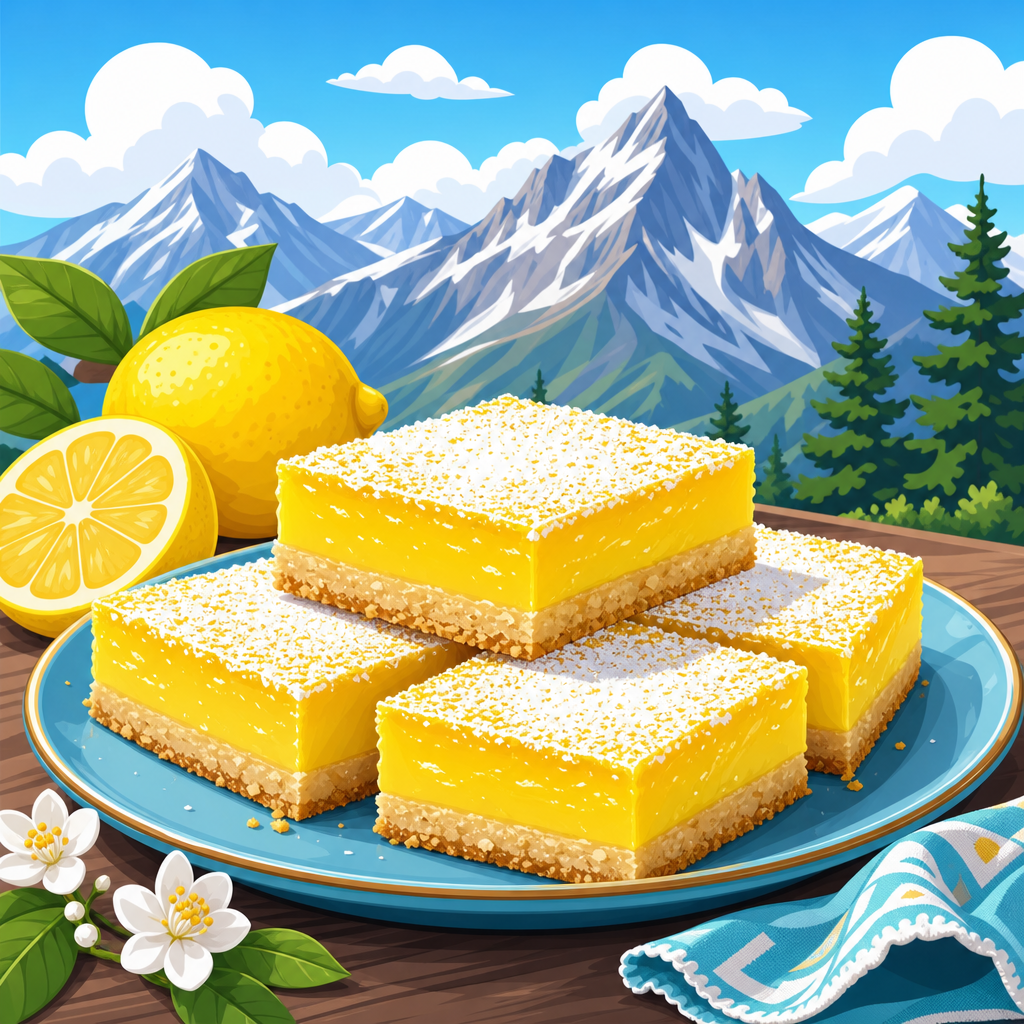
High altitude lemon bars without a soggy crust require more than a standard recipe adjustment; they depend on understanding how elevation changes evaporation, sugar concentration, protein setting, and crust structure. In mountain kitchens, “high altitude” usually means 3,000 feet and above, where lower air pressure allows water to boil at a lower temperature and baked goods to lose moisture faster while also rising and setting differently. Lemon bars sit in a tricky category of cookies and bars because they combine a shortbread-style base with a fluid, acidic custard topping. That combination makes them especially vulnerable to common altitude problems: underbaked centers, weeping fillings, cracked tops, and the dreaded soggy crust. I have baked bar cookies professionally and at elevation, and lemon bars are one of the clearest examples of why small formula changes matter. This hub explains the core techniques for reliable high altitude lemon bars and also frames the broader “Cookies & Bars” category for altitude bakers who want transferable rules. If your goal is a crisp base, clean slices, and bright lemon flavor, the answer is to control moisture from the start, not to simply bake longer at the end.
At sea level, many lemon bar recipes work because the crust sets before the filling has time to soak in. At altitude, faster evaporation and delayed structural setting can disrupt that balance. Sugar may become more concentrated, eggs can foam and expand more aggressively, and a filling that looked perfect in the oven can sink or separate while cooling. The fix is not one magic trick. It is a system: choose the right pan, parbake thoroughly, manage the filling temperature, use enough starch or protein to stabilize the custard, and cool the bars in a way that prevents trapped steam from softening the base. These principles apply across altitude cookie bars, from brownies and blondies to cheesecake bars and fruit crumb squares. Once you understand why lemon bars fail, you can use the same logic to improve an entire bar-cookie lineup.
Why lemon bars go soggy at altitude
A soggy crust usually starts with excess water and weak boundaries between layers. Lemon juice contains a lot of water, eggs add more, and many classic fillings are poured directly onto a hot crust. At altitude, the pressure difference encourages more rapid bubbling, which can create tiny channels in the crust. If that crust was not fully baked or sealed by melted fat and coagulated proteins, the filling seeps in. Overmixing can make the problem worse by adding air to the custard; those bubbles rise, burst, and leave uneven pockets where liquid settles. I see this often when bakers whisk the filling until frothy instead of smooth. A properly mixed lemon filling should look fluid and cohesive, not foamed like beaten eggs.
Pan choice also matters. Glass bakes more slowly than metal and holds heat longer, which sounds helpful but often causes the filling edges to overcook before the center fully sets. For lemon bars, a light-colored aluminum pan is the most dependable option because it conducts heat evenly and gives the crust a head start. Dark pans can overbrown the base before the custard is done. Lining the pan with parchment creates easy removal, but if parchment bunches into corners, condensation can collect there during cooling. Press it neatly and keep the corners tight.
Acidity is another factor. Lemon juice lowers pH, and that affects how proteins in the eggs set. With too little structure from flour or cornstarch, the filling may curdle at the edges or stay loose in the center. Recipes built for sea level often need modest altitude tuning: slightly less sugar, a touch more flour in the crust, and often an extra yolk or a little more starch in the filling. None of these adjustments should be extreme. Lemon bars succeed when the crust and filling are balanced, not when one element is forced to compensate for the other.
Build a crust that stays crisp
The crust is your moisture barrier, so treat it like the foundation of the dessert rather than an afterthought. For high altitude lemon bars, I prefer a shortbread ratio that is slightly sturdier than a tender tea-cookie dough. That means enough butter for flavor, but also enough flour to keep the base from slumping. Powdered sugar gives a delicate texture, yet too much can make the crust fragile. Granulated sugar produces a firmer bite. A practical formula for an 8-inch square pan is 140 to 150 grams all-purpose flour, 35 to 50 grams sugar, 85 to 100 grams unsalted butter, and 2 to 3 grams fine salt. At 5,000 feet and above, adding 5 to 10 grams extra flour helps the crust hold.
Press the dough firmly and evenly into the pan, including slightly up the sides if you want extra protection against seepage. Docking with a fork is optional; in my testing, lightly docked crusts bake evenly, but too many holes can become pathways for filling. The more important step is parbaking until the surface looks dry, the edges are lightly golden, and the center no longer appears greasy. Many soggy crust complaints come from underbaking here. If a sea-level recipe says 15 minutes, altitude bakers often need closer to 18 to 22 minutes at around 325 to 350 degrees Fahrenheit, depending on pan size and oven accuracy. Use visual cues, not the clock alone.
Some bakers brush the hot crust with egg white to create a seal. This can help, but it is not mandatory if the crust is well baked. A more reliable move is to let the crust rest for two or three minutes after parbaking so surface bubbling settles, then pour on a smooth filling. That brief pause reduces steam turbulence. If your oven runs unevenly, rotate the pan during the crust bake and verify temperature with a ThermoWorks or Taylor oven thermometer. Altitude magnifies small temperature errors.
How to adjust the lemon filling for clean slices
High altitude lemon bar filling should be bright, stable, and sliceable. The classic base is eggs, sugar, lemon juice, and a small amount of flour. At elevation, I usually reduce the sugar by 5 to 10 percent compared with sea-level formulas because faster evaporation can make the filling taste sweeter and feel looser before it finally sets. Too much sugar also interferes with protein coagulation. If a recipe uses 200 grams sugar, try 180 to 190 grams first. For structure, use either all-purpose flour or cornstarch, but understand the tradeoff. Flour gives a slightly opaque, old-fashioned filling with dependable body. Cornstarch yields a clearer gel but can turn rubbery if overused. Many bakers get the best result from a combination of both.
Egg proportion matters even more than starch. Whole eggs provide structure, while extra yolks add richness and help the custard set smoothly. For a standard 8-inch pan, 2 large eggs plus 1 yolk often perform better at altitude than 2 eggs alone. Whisk gently until combined. Do not beat until pale or aerated. Strain the filling before pouring to remove chalazae and any bits of zest if you want a perfectly even top. Fresh lemon juice is worth using here; bottled juice produces flatter flavor and can vary in acidity.
Zest adds aroma without extra liquid, so it is one of the smartest ways to intensify lemon flavor at altitude. Rub zest into the sugar before mixing the filling and you will release more citrus oil. If the filling browns before it sets, lower the oven temperature by 10 to 15 degrees and extend the bake slightly. The target is a center that no longer ripples like liquid when the pan is nudged. It should wobble gently as one mass, like a set custard.
Altitude baking rules that apply to all cookies and bars
Lemon bars are the hub example, but the same altitude mechanics shape the broader cookies and bars category. Lower air pressure speeds expansion, moisture escapes faster, and sugar becomes concentrated sooner. In practical terms, bar cookies often need one or more of these changes: slightly more flour, slightly less sugar, an extra egg yolk, a lower oven temperature, or a longer bake to drive off moisture without scorching the edges. The exact combination depends on whether the dessert relies on spread, chew, or custard setting.
Brownies at altitude often need reduced leavening and careful sugar control to prevent collapse and gummy centers. Blondies usually benefit from a bit more flour and thorough baking because brown sugar holds moisture. Cheesecake bars need slower baking and gradual cooling to avoid cracks. Fruit bars and crumb bars need thickened fillings because juicy fruit releases more free moisture than many bakers expect. In every case, the question is the same: what is the structure, and what threatens it at altitude?
| Bar type | Common altitude problem | Most useful adjustment |
|---|---|---|
| Lemon bars | Soggy crust, loose center | Parbake longer; add slight extra starch or yolk |
| Brownies | Sunken middle, gummy texture | Reduce leavener; bake at slightly lower temperature longer |
| Blondies | Dense, underbaked center | Add a little flour; verify pan size and doneness |
| Cheesecake bars | Cracks, curdled edges | Lower oven temperature; cool gradually |
| Fruit crumb bars | Wet bottom layer | Cook or thicken fruit filling before baking |
These adjustments are not guesses. They reflect the same underlying variables used by serious baking references such as King Arthur Baking guidance, university extension resources, and classic altitude baking cookbooks. Keep notes on elevation, humidity, flour brand, pan material, and bake time. That data is how experienced bakers become consistent.
Mixing, baking, and cooling workflow that prevents failure
The best workflow for high altitude lemon bars starts before mixing. Weigh ingredients with a digital scale so flour and sugar stay consistent from batch to batch. Preheat fully for at least 20 to 30 minutes. If your oven has convection, use it carefully; convection can help the crust dry and brown, but it can also set the top too fast. For most lemon bars, conventional heat is safer unless you know your oven well.
Make the crust first and bake it until genuinely set. While it bakes, mix the filling just until smooth. Do not let the filling sit for too long because sugar starts drawing liquid from the lemon juice and eggs immediately. Once poured onto the hot crust, bake the bars on the center rack. Avoid opening the oven repeatedly. Temperature drops can delay custard setting and encourage the filling to sink into the crust. If the top develops bubbles, a gentle tap on the counter right after removal can release some of them.
Cooling is where many promising pans are lost. Lemon bars need to cool first at room temperature so carryover heat can finish setting the custard. Moving them directly to the refrigerator traps steam under the filling and softens the crust. I cool them on a wire rack for about one hour, then chill until firm. Once cold, lift them out with parchment, wipe the knife between cuts, and dust with powdered sugar only right before serving. Powdered sugar dissolves quickly on moist surfaces, especially in dry mountain climates where temperature swings are common between kitchen and refrigerator.
Serving, storing, and linking your bar-cookie repertoire
Because this page serves as a cookies-and-bars hub within altitude baking, it helps to think in clusters. Lemon bars connect naturally to shortbread bars, jam bars, brownie variations, blondies, and citrus cookies because they share methods: creaming or rubbing fat into flour, balancing sugar against structure, and choosing bake times that suit shallow pans. If you are building an internal recipe collection, group content by base type, filling type, and moisture risk. A reader searching for high altitude lemon bars often also needs guidance on parchment slings, metal versus glass pans, or how to adapt a family brownie recipe for 5,000 feet.
Storage follows texture goals. For the crispest crust, refrigerate bars uncovered until fully cold, then store in a single layer or with parchment between layers in an airtight container. They keep well for about three days refrigerated. Freezing works, but the crust will soften slightly on thawing. To minimize that, freeze fully chilled bars uncut or in large slabs, wrap well, and thaw in the refrigerator rather than on the counter. For bake sales or gifting, transport them cold and dust with sugar at the destination.
The larger lesson across cookies and bars is that altitude baking rewards precision and observation. A pan that looks done can still contain too much free moisture. A recipe that tastes balanced at sea level can become cloying at 7,000 feet. Yet once you learn how crusts, custards, and sugar behave, the process becomes predictable. Start with a solid pan, a well-baked base, a gently mixed filling, and a cooling routine that avoids condensation.
High altitude lemon bars without a soggy crust are absolutely achievable, and they make an ideal starting point for mastering altitude cookies and bars. The key takeaways are straightforward: use a sturdy shortbread crust, parbake until dry and lightly golden, choose a metal pan, keep the filling smooth rather than foamy, and give the custard enough starch or yolk to set cleanly. Bake until the center wobbles as one piece, then cool at room temperature before chilling. Those steps solve the specific lemon-bar problem and teach the broader logic behind successful bar baking at elevation.
As you expand within the cookies-and-bars category, apply the same framework to brownies, blondies, cheesecake bars, and fruit bars. Identify the main source of moisture, strengthen the structure just enough, and adjust time and temperature with intention. That approach produces better flavor, cleaner slices, and more confidence every time you bake. Use this hub as your foundation, then test one variable at a time in your own kitchen and keep careful notes. Your next pan of lemon bars should come out crisp on the bottom, bright on top, and ready to prove that altitude is a variable, not a barrier.
Frequently Asked Questions
Why do lemon bars get a soggy crust at high altitude?
At high altitude, a soggy crust usually comes from a combination of faster moisture loss, altered baking times, and filling-to-crust imbalance rather than one single mistake. In mountain baking, lower air pressure changes how quickly water evaporates and how batters and fillings set. Lemon bar filling is especially sensitive because it contains eggs, sugar, and acidic lemon juice, all of which respond differently under altitude conditions. The crust may bake quickly on the edges but still lack enough overall structure to resist the moisture from the filling. Once the lemon layer goes on top, that partially set crust can absorb liquid, soften, and lose its crisp texture.
Another common issue is underbaking the shortbread base before adding the filling. At elevation, bakers sometimes shorten the crust bake because the edges seem done early, but color alone is not always a reliable sign. The center needs enough time to dry slightly and develop structure before it can support the custard-like topping. If the filling is poured onto a crust that is still too tender or warm and underbaked, seepage is more likely.
Sugar concentration also matters. Because moisture evaporates more readily at altitude, the filling can behave unpredictably if the recipe is not adjusted. Too much sugar may delay setting, while too much liquid from lemon juice can overwhelm the eggs’ ability to firm up cleanly. The result is a filling that stays looser longer and transfers excess moisture downward. The best prevention is to pre-bake the crust thoroughly, avoid overloading the filling with extra juice, and bake the bars until the center is fully set rather than just barely jiggly.
What recipe adjustments help lemon bars bake properly above 3,000 feet?
Above 3,000 feet, lemon bars usually benefit from several small, strategic adjustments instead of one dramatic change. First, strengthen the crust. That may mean adding a little more flour, reducing the butter slightly, or extending the pre-bake by a few minutes so the base is more fully cooked before the filling is added. A sturdy shortbread layer is your first defense against sogginess. If the crust is too rich and delicate, it can soften quickly once the lemon mixture hits it.
For the filling, slight reductions in sugar and small increases in flour or another starch can help the custard set more reliably. Sugar can interfere with protein coagulation, and at altitude, where evaporation and setting happen differently, a filling with too much sugar may remain too loose. A modest amount of extra thickener helps balance the liquid from the lemon juice. It is also important not to overdo the juice. Bright lemon flavor is essential, but too much liquid can overwhelm the eggs and create a filling that never quite firms up.
Eggs are crucial because they provide structure. Some high-altitude bakers find that using an extra egg yolk or slightly increasing the egg content improves the final texture, making the lemon layer less prone to weeping or sliding. Oven temperature can also be adjusted slightly upward in some kitchens to help the filling set before too much moisture is lost, but this works best when done carefully. In practice, the most reliable approach is to test one recipe in your own kitchen, then fine-tune the crust bake time, filling thickness, and total bake time based on your altitude, oven behavior, and pan type.
Should I bake the crust first, and how do I know when it is ready for the lemon filling?
Yes, you should absolutely pre-bake the crust, and at high altitude this step is even more important. Lemon bar crust is typically a shortbread-style base, and it needs to be sufficiently set before the filling goes on top. Without that initial bake, the crust does not have a chance to dry out slightly, firm its structure, and create a barrier against the wet lemon layer. In a mountain kitchen, where evaporation and baking dynamics shift, skipping or underdoing the pre-bake almost guarantees a softer, less defined bottom crust.
The crust is ready when it looks lightly golden around the edges and matte rather than glossy in the center. It should no longer appear raw or greasy on the surface. If you gently touch the middle, it should feel set, not squishy or loose. Be careful not to rely only on edge color, since high-altitude ovens can produce faster browning before the center is fully baked. The middle section is what matters most because that is where sogginess tends to develop first.
Some bakers also like to dock the crust lightly before baking or brush it with a very thin layer of beaten egg white during the last minute or two of the pre-bake to create extra protection from the filling. That is optional, but it can help if your lemon bars have a history of soft bottoms. Once the crust is properly pre-baked, pour the filling over it while the base is still hot or very warm, then return the pan to the oven promptly. That sequence helps the layers bond while still preserving the crust’s structure.
How can I tell when high-altitude lemon bars are fully baked without overbaking them?
Fully baked lemon bars should have a filling that looks set across the surface with only the slightest movement in the center when the pan is gently nudged. You do not want a liquid ripple, and you do not want deep browning. The filling should appear smooth, cohesive, and no longer wet or foamy. At high altitude, this can be tricky because bars may seem done around the edges while the middle still needs a little more time. Pulling them too early is one of the main reasons for loose filling and eventual crust sogginess.
The key is to look for structural set, not just elapsed time. Recipes written for sea level often give a broad time range, but mountain bakers should expect visual cues to be more reliable. The center should no longer look shiny and undercooked. If you insert a thin knife near the center, it should come out mostly clean or with a little soft curd, not raw liquid. The bars will continue to firm as they cool, but they still need enough oven time for the eggs and starches to do their job before cooling begins.
Overbaking, however, creates its own problems. The filling can become rubbery, the top can crack, and the lemon flavor may taste flatter or more eggy. To avoid that, start checking slightly before the expected finish time, especially if you have increased the oven temperature or are using a metal pan, which conducts heat efficiently. Cooling is just as important as baking. Let the bars cool completely before chilling and slicing. Cutting too soon can make even properly baked bars seem underdone and can pull steam and moisture into the crust.
What pan, ingredients, and storage methods help keep the crust crisp after baking?
A metal baking pan is usually the best choice if your goal is a crisp, well-defined crust. Metal conducts heat more efficiently than glass or ceramic, helping the shortbread base bake evenly and develop structure before the filling has a chance to soak in. Lining the pan with parchment can still be helpful for easy removal, but make sure the parchment lies flat so it does not interfere with even baking along the corners and bottom. Pan size also matters. If the recipe is spread too thin in a larger pan than intended, both crust and filling can bake differently than expected, often leading to dryness in one area and sogginess in another.
Ingredient selection matters more than many people realize. Fresh lemon juice gives the best flavor, but it should be measured carefully so the filling is not too liquid-heavy. Flour in the crust should be measured accurately, preferably by weight, because too little flour creates a fragile base that softens easily. Butter should be well distributed but not excessive. In the filling, a modest amount of flour or starch improves stability and helps prevent weeping. Eggs should be fresh and fully incorporated, since they are the backbone of a clean, sliceable lemon layer.
Storage can either preserve your texture or ruin it. Once baked, cool the lemon bars completely at room temperature so steam can escape. Then chill them uncovered or lightly tented until fully cold before covering tightly. If you seal them while still warm, condensation forms and that trapped moisture migrates directly into the crust. For longer storage, keep them refrigerated in a single layer or with parchment between layers. If your kitchen is very dry, the bars may hold texture well for a day, but in most cases refrigeration is safest. For the crispest possible base, serve chilled bars soon after they are fully set rather than storing them for several days.