High-altitude bakers learn quickly that cupcakes behave differently above roughly 3,000 feet, where lower air pressure changes how batter rises, sets, and loses moisture. A domed top can look appealing, but an exaggerated dome followed by a crack usually signals that the batter expanded too fast before the structure had time to stabilize. In practical terms, altitude magnifies every leavening reaction, speeds evaporation, and can throw off the balance among flour, sugar, eggs, fat, and liquid. That is why a recipe that produces level, tender cupcakes near sea level may create peaked centers, tunnels, dry crumbs, or split tops in Denver, Santa Fe, Calgary, or Cusco.
When bakers ask why cupcakes dome and crack at altitude, they are really asking a broader cakes and cupcakes question: how do pressure, heat, ingredients, and pan fill interact? I have tested the same vanilla and chocolate batters across elevations, and the pattern is consistent. Gas bubbles from baking powder, baking soda, creamed butter and sugar, or whipped eggs expand more aggressively in thinner air. Meanwhile, the batter surface and edges set under oven heat while the center is still climbing. If the rise outpaces the setting of starches and proteins, the pressure forces the top upward until it splits at the weakest point.
This matters because cupcakes are small-format cakes, and small cakes are less forgiving. They bake quickly, so even slight formula errors become obvious. A few extra grams of leavener, an oven that runs hot, or liners filled too full can transform a smooth crown into a jagged peak. For home bakers and professionals alike, understanding cupcake doming at altitude improves texture, appearance, consistency, and yield. It also serves as the foundation for the wider cakes and cupcakes category, including layer cakes, loaf cakes, snack cakes, muffins that bake like cakes, and filled cupcakes. Once you understand the mechanism, troubleshooting becomes systematic instead of frustrating guesswork.
What causes cupcakes to dome and crack at altitude
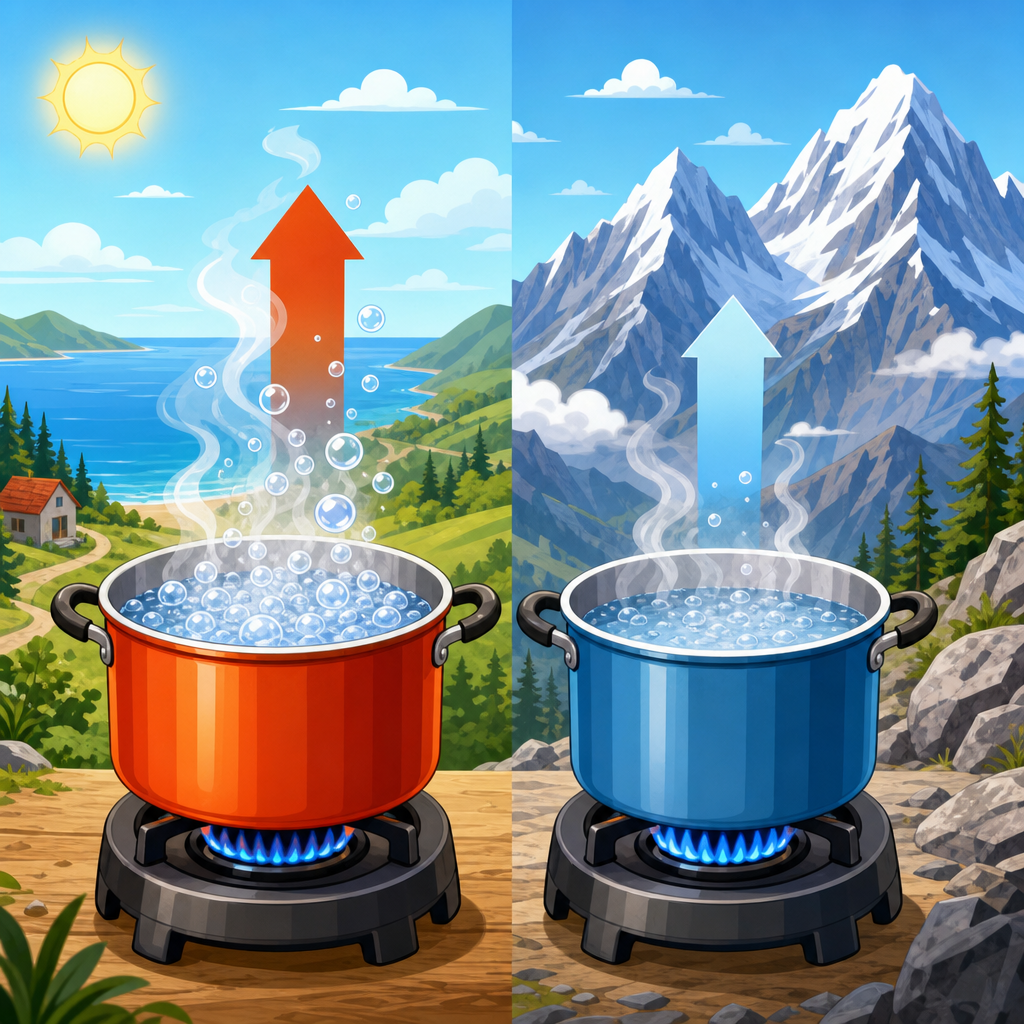
The direct cause is rapid expansion followed by premature surface setting. At altitude, atmospheric pressure is lower, so gases in the batter expand more readily. Chemical leaveners release carbon dioxide, air incorporated during mixing enlarges, and steam forms sooner because water boils at a lower temperature. At 5,000 feet, water boils around 202 degrees Fahrenheit rather than 212. That means moisture turns to vapor earlier in the bake, adding lift before the crumb has fully set. If the oven is even slightly too hot, the outer layer firms quickly while the center continues to expand, producing a pronounced dome and then a crack.
Several recipe variables increase the risk. Too much baking powder is the most common problem I see when adapting sea-level cupcake recipes. Many formulas already push leavening hard to guarantee a fluffy result; at altitude, that extra push becomes excessive. High sugar can also contribute because sugar weakens structure and delays setting, allowing more rise before stabilization. Low liquid does the opposite of what many bakers expect: it often worsens cracking because altitude accelerates evaporation, thickening the batter and making the crumb set unevenly. Overmixed batter can further intensify doming by building excess gluten and trapping large air cells that expand into peaks.
Pan fill matters as much as formulation. Cupcake liners filled beyond about two-thirds full create a taller column of batter, so the center has farther to climb before heat penetrates. The result is a strong upward push and a high dome. Thin, dark, or uneven pans also affect heat transfer. In convection ovens, airflow can set tops fast and create asymmetry if trays are crowded. These effects are not unique to vanilla cupcakes; they appear in chocolate cupcakes, red velvet cupcakes, oil-based cakes, butter cakes, and even gluten-free formulas, although each style responds differently because starches, fats, and proteins behave differently under heat.
How altitude changes cake science
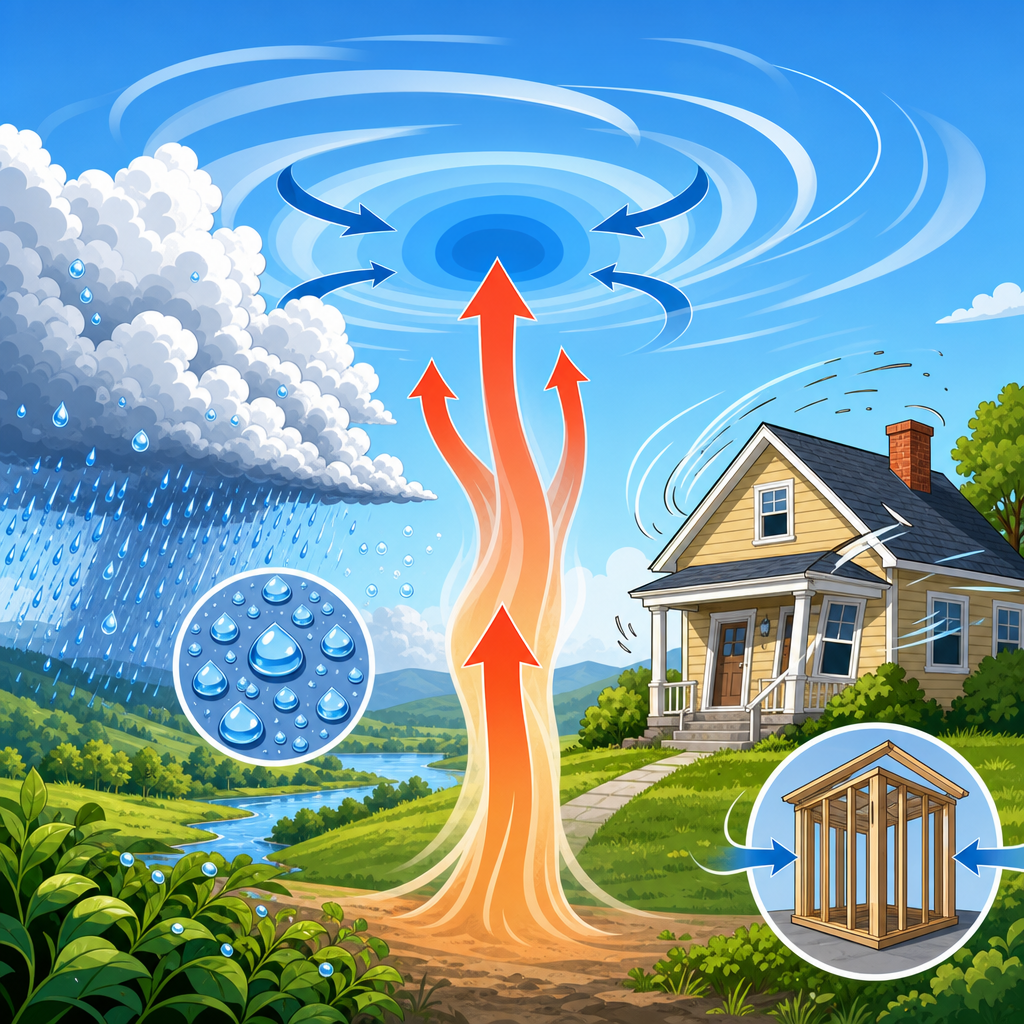
Altitude baking is driven by four linked physical changes: lower air pressure, faster gas expansion, earlier boiling, and quicker moisture loss. Lower pressure means bubbles formed during mixing and leavening face less resistance, so they enlarge faster. Earlier boiling means water converts to steam sooner, increasing lift but also drying batter earlier in the process. Faster moisture loss concentrates sugar and dissolved solids, which can weaken emulsions and alter how starch gelatinization and egg protein coagulation occur. In cakes and cupcakes, those setting reactions determine whether the final structure is flat and tender, gently rounded, or sharply domed and cracked.
Standard baking references such as Colorado State University Extension and New Mexico State University guidance consistently recommend reducing leavening, increasing liquid, and slightly raising oven temperature for many high-altitude cakes. That combination may sound contradictory at first, but it works because each adjustment targets a different phase of baking. Less leavening slows expansion. More liquid offsets faster evaporation and keeps the batter flexible long enough to rise evenly. A modest oven increase, often 15 to 25 degrees Fahrenheit, helps the crumb set before overexpansion collapses the structure. The exact balance depends on elevation and recipe style, but the principle is reliable.
Cakes and cupcakes differ from breads because they rely on a delicate balance rather than a strong gluten network. In yeast bread, controlled gluten strength can support larger gas cells. In cupcakes, too much strength makes the crumb tough, but too little strength allows the top to rupture. That is why cake flour, all-purpose flour, eggs, emulsified fats, and sugar ratios matter so much. Chocolate formulas are especially tricky because cocoa powder absorbs water and can make the batter feel thicker, prompting bakers to add too much leavener or overfill liners. At altitude, a thick chocolate batter plus aggressive rise often produces the most dramatic cracks.
Ingredients that most affect cupcake shape
Leaveners come first. Baking powder is double acting, releasing gas both when hydrated and when heated, while baking soda reacts with acidic ingredients such as buttermilk, yogurt, brown sugar, or natural cocoa. At altitude, reducing total leavener by roughly one-eighth to one-quarter teaspoon per teaspoon in a standard batch is a common starting point, though exact adjustments vary by height and formula. If a cupcake tastes soapy or rises fast then sinks, the soda may be excessive. If it domes hard but stays dry and peaked, the powder may be too high. Small gram-level changes can make the difference between smooth tops and broken ones.
Sugar, flour, eggs, and fat form the structural framework. Extra sugar increases tenderness and moisture retention, but too much delays setting and can promote overflow or cracking. Flour provides starch and, depending on protein level, some structural strength. Many high-altitude bakers add 1 to 2 tablespoons of flour per dozen cupcakes when adapting a loose sea-level batter. Eggs supply proteins that coagulate and emulsify; an extra egg white can strengthen structure in some formulas without adding too much fat. Fat, whether butter or oil, coats flour particles and limits gluten development. Oil-based cupcakes often rise with a softer crumb, while butter-based batters can trap more air during creaming.
Liquid is crucial because high altitude dries batter quickly. Water, milk, buttermilk, coffee, and sour cream all contribute differently. Milk adds proteins and lactose, buttermilk brings acidity for soda reaction, coffee deepens chocolate flavor, and sour cream adds fat plus water. When cupcakes dome and crack, I often test a small liquid increase before making larger changes. A tablespoon or two in a standard batch can smooth the rise if dryness is part of the problem. Salt and emulsifiers matter too. Proper salinity strengthens flavor perception, while ingredients like buttermilk solids or commercial cake emulsifiers can improve bubble distribution and reduce the large gas pockets that lead to splitting.
Mixing, panning, and oven control
Technique can cause doming even when the formula is sound. Overcreaming butter and sugar incorporates too much air, which becomes extra lift at altitude. Overbeating after flour addition develops gluten and creates a tighter crumb that pushes upward instead of expanding evenly. The practical goal is a fine, stable emulsion with small bubbles, not a batter packed with large air pockets. For oil-based cupcakes, whisk just until smooth. For reverse-creamed or two-stage cakes, stop as soon as the batter looks homogeneous. Scraping the bowl matters because pockets of unmixed fat or flour create weak spots that split as the cupcake rises.
Filling level should be controlled by weight, not guesswork. In production kitchens, I scale each cupcake cavity so every unit bakes at the same rate. Most standard liners perform best at about 50 to 60 grams of batter, depending on density. More than that usually increases doming and reduces yield accuracy. Oven verification is equally important. Many home ovens cycle 15 to 25 degrees off the set point, and high-altitude cupcakes punish that inconsistency. A basic oven thermometer or a probe-based unit from ThermoWorks quickly reveals whether an oven runs hot. If tops crack before the crumb fully expands, the real temperature is often higher than the dial suggests.
| Problem | Likely cause at altitude | Practical fix |
|---|---|---|
| High dome with center crack | Too much leavening or oven too hot | Reduce baking powder or soda slightly; verify oven temperature |
| Dry, peaked cupcakes | Moisture loss too fast | Add 1 to 2 tablespoons liquid; avoid overbaking |
| Overflowing liners | Pans overfilled | Fill liners about two-thirds full by weight |
| Tunnels in crumb | Overmixing or excess air | Mix only until combined; avoid overcreaming |
| Flat then sunken tops | Overexpansion followed by collapse | Reduce leavening and increase structure with a little more flour or egg white |
Altitude adjustment strategies for cakes and cupcakes
The best adjustments are incremental and documented. Start with elevation bands rather than one universal rule. Around 3,000 to 5,000 feet, many cupcake recipes need only slight leavener reduction and a small liquid increase. Around 5,000 to 7,000 feet, reductions become more noticeable, and sugar may also need trimming by 1 to 2 tablespoons per batch. Above 7,000 feet, stronger changes are often required, especially for foam cakes and delicate butter cakes. Keep a worksheet with the original formula, pan size, batter weight, oven setting, bake time, and final result. Without records, repeated troubleshooting turns into memory-based guessing.
For butter cakes and classic vanilla cupcakes, I usually begin by reducing baking powder modestly, increasing liquid by 1 to 2 tablespoons, and testing a slightly higher oven temperature with shorter total bake time. For chocolate cupcakes, I pay closer attention to batter viscosity because cocoa can disguise a formula that is effectively too dry. For oil-based cakes, I often need less adjustment to tenderness but more attention to pan fill, since fluid batters can climb quickly. For chiffon, sponge, or angel food styles, whip stability becomes the central issue; too-soft foam at altitude expands dramatically and then tears or collapses.
This cakes and cupcakes hub also connects to related troubleshooting topics that bakers often search for next: why cakes sink in the middle, why cupcakes stick to liners, how to prevent dry layer cakes, how to adjust cream cheese frosting at altitude, and how to convert sea-level recipes reliably. Those topics share the same scientific backbone. Pressure affects gas expansion. Heat controls setting. Ingredient ratios determine whether the structure can hold the rise. Once you view each recipe through those variables, adaptation gets faster. Instead of rewriting a formula from scratch, you can diagnose the dominant failure mode and make the smallest change that addresses it.
How to diagnose your specific batch
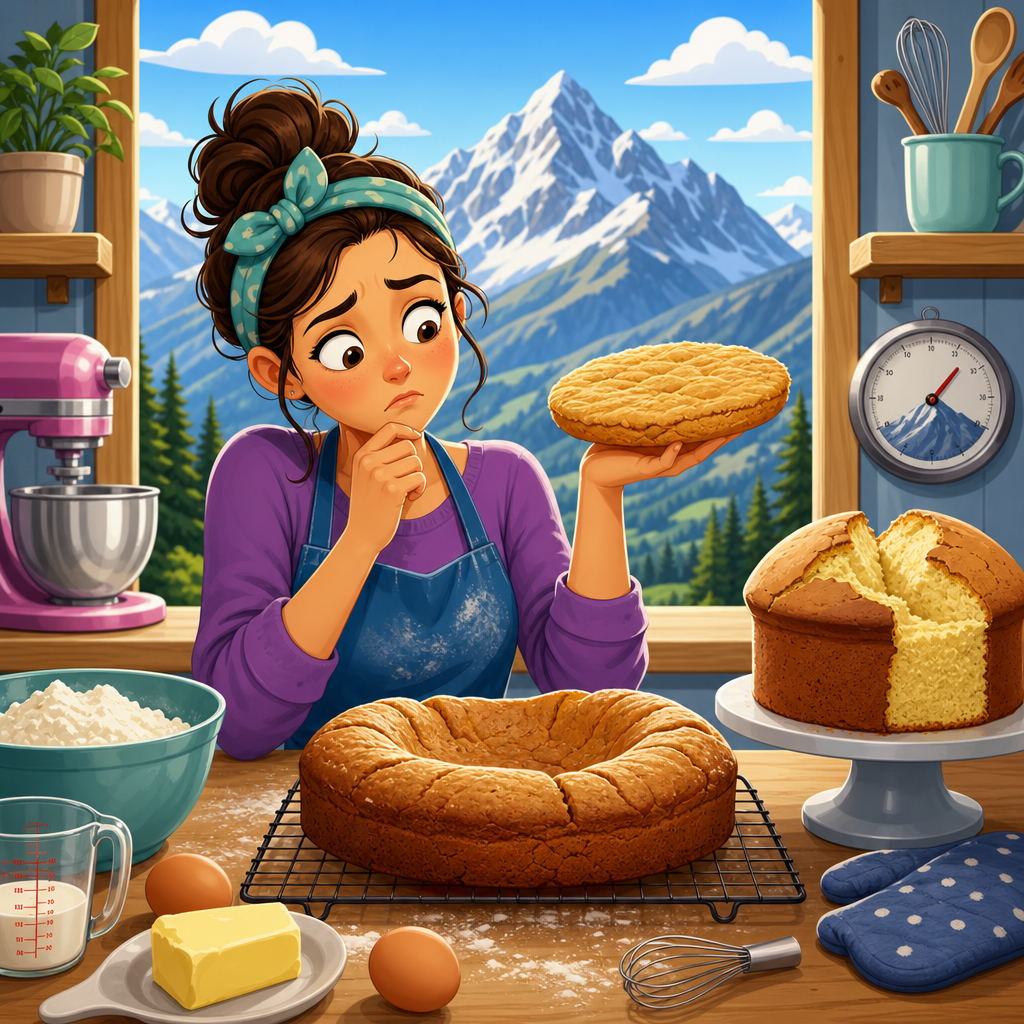
Reading the finished cupcake tells you what happened in the oven. A narrow, pointed dome with a single split usually means the center rose aggressively after the surface set. Multiple jagged cracks often point to too much leavening combined with excess heat. A dry ring around the edge suggests the bake ran too long or the oven was too hot. Large vertical tunnels indicate overmixing, overcreaming, or too much chemical lift. If the cupcake domes and then falls, the batter likely overexpanded before the starches and proteins could hold it. This visual diagnosis is more useful than changing three variables at once.
Use controlled testing. Bake a half batch with only one change, such as reducing baking powder by 10 percent. Then compare height, crumb, and moisture against the original. Next test a small liquid increase, then pan fill, then temperature. I rely on side-by-side bakes because sensory memory is unreliable. Weighing finished cupcakes can also reveal moisture loss. If one test loses significantly more mass during baking, dryness is probably part of the cracking problem. For professionals, photos and cutaway shots help standardize staff training. For home bakers, even a notebook and phone camera can build a highly effective personal altitude baking reference over time.
One final point matters for expectations: not every dome is a defect. Many bakeries prefer a gentle, rounded top for cupcakes because it looks generous and supports frosting well. The target is a controlled dome without rupture, not a perfectly flat disk. If your cupcakes are moist, evenly textured, and only lightly rounded, you may already be in the ideal range. Focus on cracks, coarse crumb, dryness, and inconsistency, not on eliminating all height. Mastering that distinction makes cakes and cupcakes at altitude much less intimidating and much more repeatable.
Cupcakes dome and crack at altitude because lower air pressure accelerates gas expansion and moisture loss, while oven heat can set the surface before the interior structure is ready. The result is simple to describe even if the science is complex: the center rises too fast, the top hardens too soon, and the pressure breaks through. Once you understand that chain reaction, the fixes become practical. Reduce leavening slightly, protect moisture with a bit more liquid, avoid overmixing, fill liners consistently, and confirm the real oven temperature before changing everything else.
As a hub within cakes and cupcakes for altitude baking, this topic supports nearly every related recipe and troubleshooting guide. Vanilla cupcakes, chocolate cupcakes, layer cakes, loaf cakes, snack cakes, and foam cakes all respond to the same core forces, though each formula needs different fine-tuning. The most reliable approach is measured testing rather than broad guesses. Change one variable, record the result, and build an adaptation system that fits your elevation, oven, pans, and ingredients. That method saves time, reduces waste, and produces cupcakes that look as good as they taste.
If your current batch is domed and cracked, start with the three highest-value checks today: verify oven temperature, reduce leavening slightly, and weigh how much batter goes into each liner. Those steps solve a large share of high-altitude cupcake problems. From there, refine liquid, flour, sugar, and mixing based on the clues your cupcakes give you. Keep this cakes and cupcakes hub as your foundation, then apply the same logic to every recipe you bake at altitude. With a few deliberate adjustments, smooth-topped, tender cupcakes become predictable instead of accidental.
Frequently Asked Questions
Why do cupcakes dome and crack more easily at high altitude?
At high altitude, lower air pressure allows gases in the batter to expand more quickly and more dramatically than they do at sea level. That means the air bubbles created by baking powder, baking soda, creaming, and steam push upward faster, often before the cupcake’s internal structure has fully set. When the outside begins to firm up but the center is still expanding, the pressure has to escape somewhere, so the top rises into a pronounced dome and often splits. In other words, cracking is usually a sign that the batter lifted too fast for its protein-and-starch structure to keep pace. Above roughly 3,000 feet, this effect becomes much more noticeable because altitude also speeds moisture loss, which can further stiffen the outer surface while the middle continues to rise. The result is a cupcake that looks overexcited in the oven: tall, peaked, and cracked down the center.
Is a cracked cupcake top always a sign that something went wrong?
Not necessarily, but it usually tells you that the formula or baking method could be adjusted for better balance at altitude. A gentle dome can be perfectly normal and even attractive, especially if you plan to frost the cupcakes. However, a high peak with a deep crack often points to overexpansion caused by too much leavening, too high an oven temperature, too much air beaten into the batter, or not enough liquid and structure for the altitude. At elevation, recipes that work beautifully at sea level can become exaggerated versions of themselves. A little crack does not automatically mean the cupcakes will taste bad, but it often goes hand in hand with a coarser crumb, drier texture, or tunnels inside the cake. So while a cracked top is not a disaster, it is a useful clue that the batter rose faster than it stabilized, and that is exactly the kind of imbalance high-altitude bakers usually try to correct.
What ingredient changes help prevent doming and cracking in cupcakes at altitude?
The most effective adjustments usually involve reducing leavening slightly, increasing liquid modestly, and strengthening the batter enough to hold a controlled rise. Because baking powder and baking soda react more aggressively at altitude, even a small reduction can make a noticeable difference in preventing the batter from ballooning upward too quickly. Extra liquid helps offset faster evaporation, which is one of the main reasons high-altitude cakes can dry out or set unevenly. Bakers also sometimes increase flour a bit to provide more structure, or use an extra egg white to reinforce the protein network so the cupcakes can rise without collapsing or splitting. Sugar may need a slight reduction in some recipes because high levels of sugar can weaken structure and interfere with setting. The exact adjustment depends on the recipe, the altitude, and the ingredients already in the formula, but the general principle is always the same: slow the rise, support the structure, and keep enough moisture in the batter so the cupcakes bake evenly instead of bursting upward and cracking.
Does oven temperature affect whether cupcakes dome and crack at altitude?
Yes, oven temperature plays a major role. If the oven is too hot, the batter can spring upward rapidly before the crumb has time to develop in a stable, even way. That fast initial rise is one of the most common causes of dramatic doming and splitting, especially at altitude where expansion is already amplified by lower air pressure. A high temperature can also cause the outer edge and top of the cupcake to set too soon, which traps the still-expanding center underneath and encourages a crack to form. On the other hand, high-altitude baking sometimes benefits from a modest temperature increase in certain recipes to help structure set before overexpansion gets out of hand. That is why there is no one-size-fits-all rule. The key is balance: if the batter is weak and highly aerated, too much heat can make the problem worse; if the batter is properly adjusted, a carefully calibrated oven temperature can actually improve the final shape. An oven thermometer is especially valuable here, because many home ovens run hotter or cooler than their dial suggests, and even a small temperature error can exaggerate doming and cracking in high-altitude cupcakes.
What are the best practical tips for getting flatter, more even cupcakes above 3,000 feet?
Start by using a recipe that has been tested for altitude or be prepared to make small, controlled adjustments rather than changing everything at once. Reduce leavening a little, add a bit more liquid, and avoid overmixing, since too much air in the batter can create an overly strong rise that ends in a split top. Fill cupcake liners consistently, usually about one-half to two-thirds full, because overfilled cups are much more likely to mushroom upward and crack. Check your oven temperature with an independent thermometer and place the pan in the center of the oven for the most even heat circulation. It also helps to bake one test batch before committing to a full recipe, especially if you are working at a significantly higher elevation than the recipe assumes. Keep notes on altitude, ingredient changes, fill level, and bake time, because high-altitude success often comes from careful repetition and observation. Most importantly, think of cupcake shape as a balance issue: you want enough rise for a light texture, but not so much that the batter outruns its own structure. Once you tune that balance, cupcakes baked above 3,000 feet can be tender, level, and reliable instead of sharply domed and cracked.