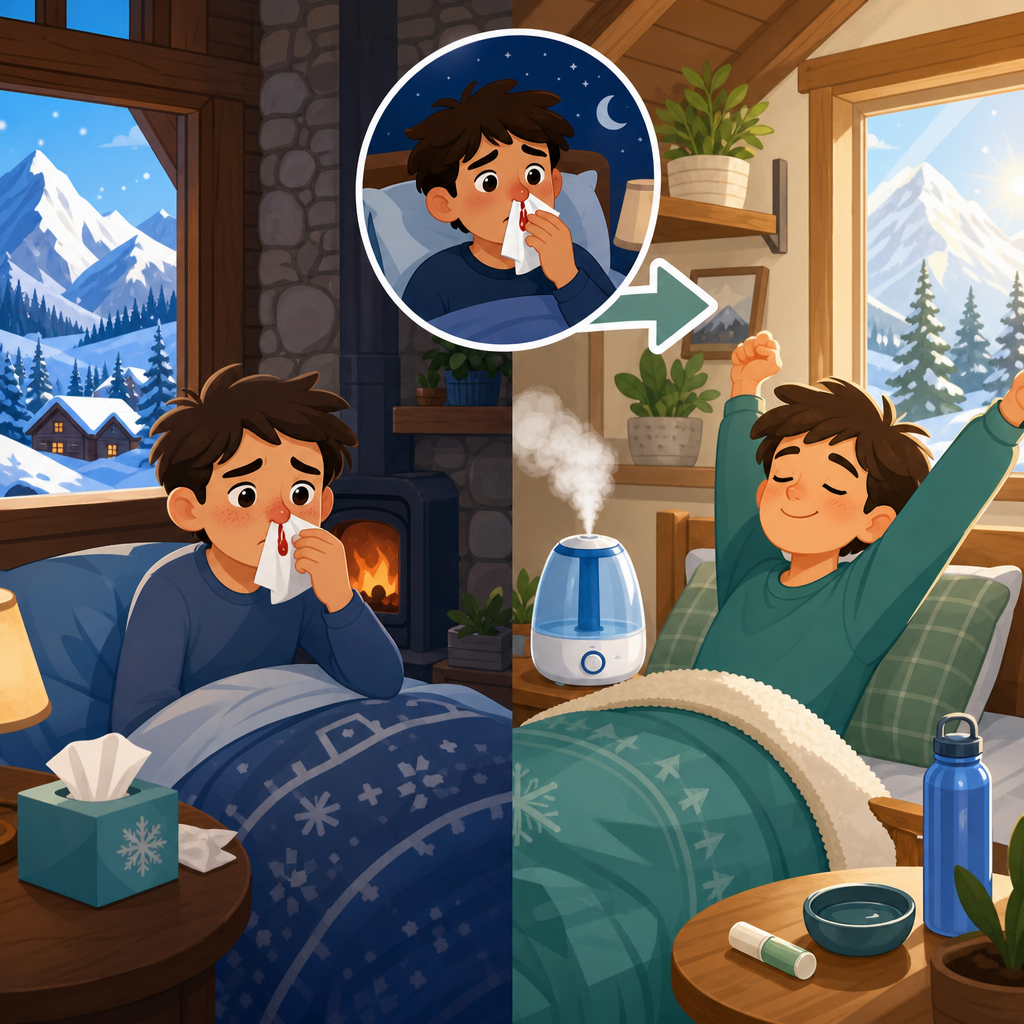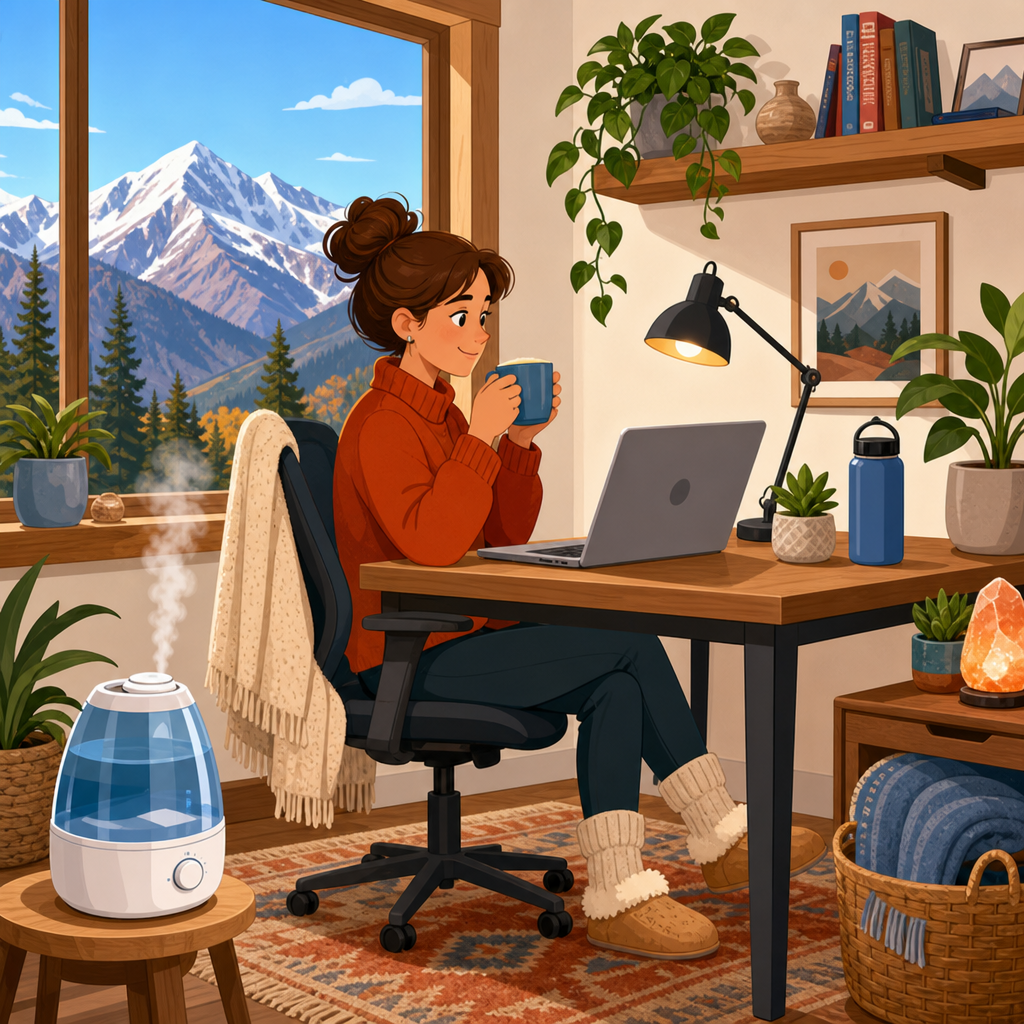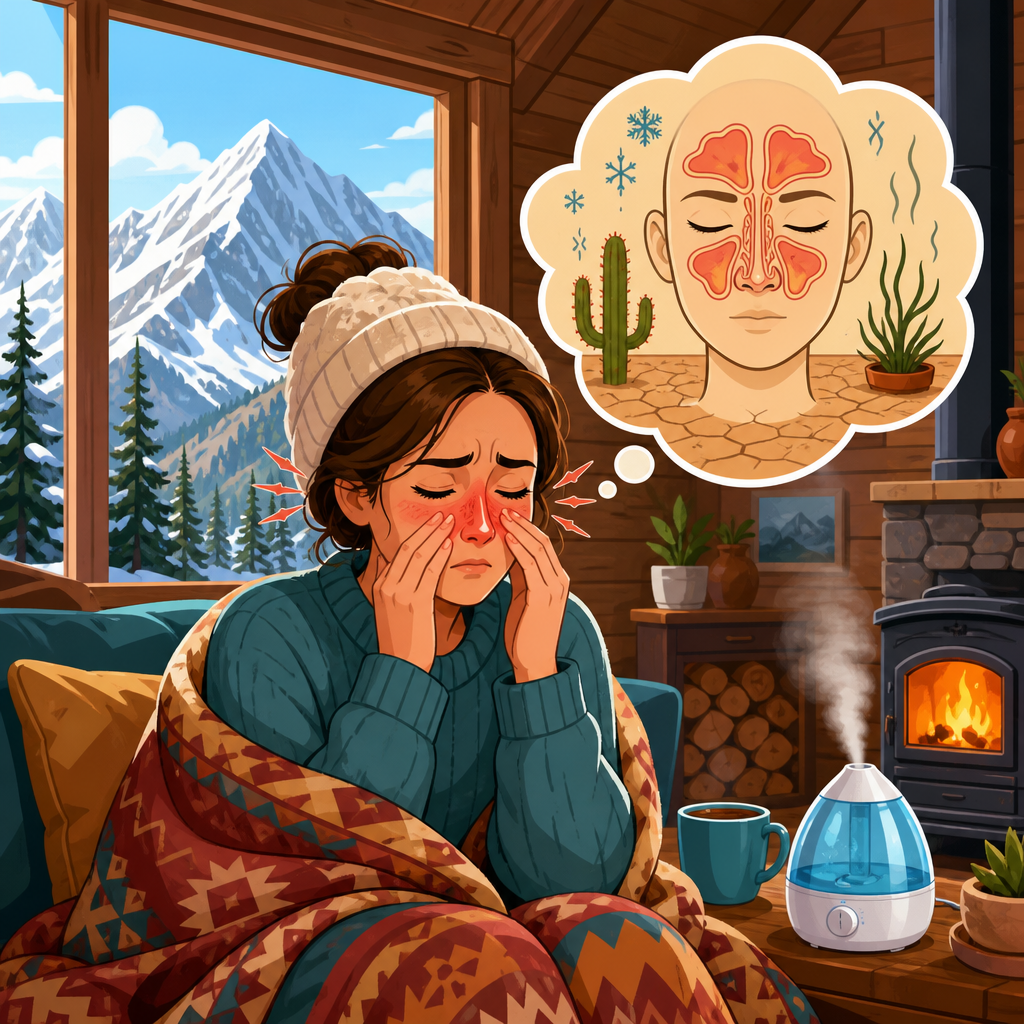
Dry mountain houses often make sinus pain worse because altitude, low outdoor humidity, forced-air heating, and leaky building envelopes combine to strip moisture from nasal tissues faster than the body can replace it. Sinuses are air-filled cavities lined with mucous membranes and tiny cilia that move mucus toward the throat. When indoor air becomes too dry, that lining loses water, mucus thickens, cilia slow down, and the tissues become irritated and inflamed. In practical terms, that means pressure in the cheeks or forehead, headaches, crusting, nosebleeds, postnasal drip, and the frustrating feeling that your nose is both blocked and dry at the same time.
I have seen this pattern repeatedly in mountain homes, especially in winter. People move from lower elevations, assume the problem is seasonal allergies, and then discover their symptoms spike indoors, overnight, or when the furnace runs. The issue matters because indoor air and humidity affect more than sinus comfort. The same dry conditions can worsen dry eyes, irritated skin, static electricity, scratchy throats, sleep quality, and even how wood floors, furniture, and instruments age. For a home-comfort topic, humidity is foundational: get it wrong, and many small problems stack up into one daily burden.
Indoor air and humidity are closely linked but not identical. Indoor air includes temperature, particles, gases, ventilation, and biological contaminants. Humidity refers to water vapor in the air, usually measured as relative humidity, or RH. Relative humidity expresses how full the air is with water vapor compared with the maximum it could hold at that temperature. Warm air can hold more moisture than cold air, which is why cold outside air that infiltrates a house becomes extremely dry once heated indoors. In many mountain climates, indoor RH can fall below 20 percent in winter, well under the range most people find comfortable.
This article serves as a hub for indoor air and humidity in daily life. It explains why mountain homes are so drying, how to recognize symptoms caused by low humidity, what humidity range to target, how heating and ventilation systems change moisture levels, which tools and fixes work, and when sinus pain points to something more than dry air. If you want one clear framework for balancing comfort, health, and home performance, start here.
Why mountain homes dry out your sinuses so fast
Mountain environments create a perfect setup for dehydration of the nose and sinuses. First, outdoor air at high elevation is usually cold and dry, especially during winter and shoulder seasons. Second, houses are heated for long periods, and heating lowers relative humidity unless moisture is added. Third, many homes in ski towns or foothill communities are ventilated by accident through gaps around doors, attic penetrations, recessed lights, and duct leaks. Each time dry outdoor air enters and is warmed, indoor RH drops further.
The physics are straightforward. Imagine outdoor air at 20 degrees Fahrenheit with 60 percent relative humidity. That sounds reasonably humid, but once that same air enters a home and is heated to about 70 degrees without adding moisture, the indoor relative humidity can plunge to around 10 to 15 percent. At that level, mucous membranes lose moisture quickly. The nose compensates by increasing blood flow and mucus production, which can feel like congestion, pressure, and throbbing.
Altitude adds another layer. People breathe faster and lose more moisture through respiration in thinner air, and many notice they drink less water than they should during cold weather. Wood stoves, gas fireplaces, and forced-air furnaces can all intensify the drying effect. Homes with large south-facing windows may also see indoor temperatures swing upward during sunny afternoons, lowering RH even more unless humidification keeps pace.
Not every mountain house behaves the same way. A newer, tighter home with balanced ventilation and a humidifier can feel comfortable at 30 to 40 percent RH. An older house with air leaks and a powerful furnace may hover near desert conditions indoors. Building age, insulation quality, occupancy, cooking habits, shower use, and whether bathroom fans run excessively all influence the result. But the consistent pattern is this: in mountain climates, heated indoor air is often dry enough to irritate sinus tissue every day.
What dry indoor air does inside the nose and sinuses
Your nasal passages are designed to warm, filter, and humidify incoming air. The lining contains goblet cells that produce mucus and cilia that sweep debris outward in a coordinated motion called mucociliary clearance. This system works best when mucus has the right water content and viscosity. Dry air thickens secretions, slows clearance, and leaves inflammatory molecules and particles in contact with the tissue longer.
That is why dryness can cause both pain and congestion. People often think a stuffy nose means too much moisture, but in many homes the opposite is true. Dryness irritates the lining, the blood vessels swell, and mucus becomes sticky rather than free-flowing. Pressure can build near the maxillary sinuses in the cheeks, the frontal sinuses above the eyes, or deeper in the head. If crusting blocks normal drainage, the discomfort gets worse.
Low humidity also weakens the protective barrier of the upper airway. The nasal lining is part of the body’s first-line defense, and when it dries out, small cracks and micro-irritation develop more easily. That raises the likelihood of nosebleeds, burning, a metallic smell, or soreness when you breathe in cold air. It can also make viral infections feel worse because irritated tissue reacts more strongly. Dry air does not directly cause every sinus infection, but it creates conditions that are less resilient.
In my experience, the people most affected are mouth breathers at night, frequent users of decongestant sprays, CPAP users without adequate humidification, and anyone who already has allergic rhinitis or a deviated septum. Their tissues are starting from a disadvantage. In a dry mountain house, even mild baseline inflammation can become daily sinus pain.
How to tell dry-air sinus pain from allergies, illness, or altitude
Dry-air sinus pain usually follows a pattern. Symptoms are worse indoors than outdoors after a snowstorm, worse in the morning after sleeping with the heat on, and worse in rooms with a wood stove or strong forced-air supply. The nose feels dry, but also blocked. You may notice bloody crusts, sore nostrils, or headaches that improve after a shower. Symptoms often ease during travel to more humid places.
Allergies usually bring itchiness, sneezing, watery eyes, and predictable triggers such as pets, dust, or pollen. A viral illness more often includes fatigue, body aches, fever, or thicker discolored mucus over several days. Altitude itself may contribute to dehydration and headache, especially during the first days after arrival, but if symptoms persist mainly inside one house, indoor conditions deserve scrutiny.
A simple home check helps. Measure humidity in the bedroom, living room, and near the thermostat using a calibrated hygrometer. If readings are consistently below 25 percent in winter, dry air is a credible primary cause. Also note whether symptoms improve after saline spray, a humidified night, or reducing furnace runtime. Those are practical clues, not guesswork.
| Pattern | Dry Indoor Air | Allergies | Cold or Infection |
|---|---|---|---|
| Main sensation | Dryness, burning, pressure, crusting | Itching, sneezing, watery eyes | Thick mucus, sore throat, fatigue |
| When worse | Overnight, with heating, indoors | After exposure to trigger | Progresses over days |
| Common clues | Nosebleeds, relief after shower or humidifier | Seasonal pattern, pet or dust exposure | Body aches, fever, feeling ill |
| First useful step | Measure RH and add moisture safely | Reduce trigger and consider filtration | Rest, fluids, medical evaluation if severe |
The best indoor humidity range for comfort, health, and home protection
For most mountain homes, a winter indoor relative humidity range of about 30 to 40 percent balances sinus comfort with building safety. Many people feel noticeably better once RH rises above 30 percent. However, pushing humidity too high can create condensation on windows, promote mold growth on cold surfaces, and damage wall assemblies in very cold climates. The right target depends on outdoor temperature, insulation levels, and window performance.
Industry guidance often centers on staying between 30 and 50 percent RH for occupied spaces, with the lower end being more realistic during very cold weather. If it is below zero outside and your windows are older double-pane units, 40 percent indoors may produce condensation. In a well-built newer home with high-performance windows, that same level may be fine. The point is not to chase a single number blindly. The point is to maintain enough moisture for your airways while watching for moisture problems on cold surfaces.
Temperature matters too. Relative humidity changes when temperature changes, even if the actual moisture content does not. That is why a bedroom that cools overnight may show a higher RH reading in the morning than the living room, yet still feel dry if the absolute moisture in the air remains low. Good monitoring means looking at patterns, not one snapshot.
If you are trying to improve sleep, skin, and sinus comfort at once, start with the bedroom. People spend six to eight hours there, often with the door closed, which changes airflow and humidity dynamics. A bedroom held around 30 to 35 percent RH at typical winter temperatures often delivers meaningful relief without creating window condensation problems.
How heating, ventilation, and air leakage shape indoor humidity
Forced-air furnaces get blamed for dry air, but the heat source itself is only part of the story. Heating does not remove water from air in the way an air conditioner does; it lowers relative humidity by warming incoming dry air. The real drivers are infiltration, ventilation rate, and whether moisture is added back. A leaky house with frequent air exchange dries out faster than a tighter house, even with the same thermostat setting.
Exhaust-only ventilation can worsen dryness if it pulls in replacement air through leaks. Bathroom fans left running too long, range hoods used constantly, and clothes dryers venting large volumes outdoors all increase air exchange. Balanced systems such as heat recovery ventilators and energy recovery ventilators manage fresh air more predictably. In cold, dry climates, an energy recovery ventilator may help retain some moisture compared with simple exhaust, though results vary by model and conditions.
Duct leakage is another overlooked factor. If supply ducts leak into attics or crawlspaces, the house can become depressurized and pull in more dry outside air. Sealing ducts to standards commonly verified by pressure testing can improve both comfort and humidity stability. Air sealing around top plates, attic hatches, can lights, and rim joists also reduces uncontrolled drying. These are building-science fixes, not cosmetic ones, and they often outperform buying multiple small humidifiers.
Portable space heaters can shift the symptom pattern too. They warm local air, dropping local RH unless moisture is added, so a bedroom with a heater may feel especially drying overnight. Wood stoves are similar: they provide welcome heat but often coincide with very low indoor RH. If a home relies on these heat sources, humidification and monitoring become more important, not less.
Practical ways to add moisture without creating new problems
The most reliable approach is to measure first, humidify second, and verify third. Start with one or two digital hygrometers from a reputable brand and compare their readings in the same room for a day. Small differences are normal, but large discrepancies mean at least one device is inaccurate. Once you trust the numbers, choose a humidification strategy based on house size and symptom severity.
For single rooms, especially bedrooms, a portable evaporative humidifier is usually the safest first step. Evaporative units use a wick and fan, which naturally limits over-humidification compared with some ultrasonic models. They do require regular filter changes and cleaning. Ultrasonic humidifiers are quiet and effective, but if filled with hard tap water they can release fine white dust made of minerals. Using distilled water reduces that problem. Steam vaporizers add moisture effectively but use more energy and carry burn risk around children.
Whole-house humidifiers attached to HVAC systems work well in dry mountain regions when sized and maintained correctly. Bypass, fan-powered, and steam models each have tradeoffs. Steam units provide the most precise control and the highest output, useful in larger or leakier homes, but they cost more to install and operate. Any central system should include a humidistat and seasonal maintenance to prevent scale, microbial growth, and water waste.
Low-tech moisture sources help at the margins: cooking, showering, air-drying laundry where appropriate, and keeping interior doors open for better mixing. Houseplants contribute a little through transpiration, but they are not a primary fix for a dry house. Most important, do not solve sinus pain by simply over-humidifying. If you see condensation on window frames, musty smells, or damp spots in closets or corners, pull back and reassess.
When to seek medical care and how this hub connects to the wider topic
Dry air explains a lot, but not everything. Persistent one-sided pain, fever, facial swelling, repeated significant nosebleeds, severe headaches, dental pain, or symptoms lasting weeks despite humidity correction deserve medical evaluation. Structural issues such as nasal polyps, chronic sinusitis, medication effects, autoimmune conditions, and sleep-disordered breathing can mimic simple dryness. A clinician may recommend saline irrigation, medication changes, or referral to an ear, nose, and throat specialist. For CPAP users, integrated humidification and mask fit often make a major difference.
As a hub for indoor air and humidity, this topic branches into related concerns that often travel together in daily life: dry eyes from forced-air heating, winter itch and skin barrier damage, bedroom humidity for sleep, static electricity, humidifier maintenance, condensation and mold risk, air purifiers versus humidifiers, and how to read a hygrometer accurately. The through line is simple. Good indoor air is not one product; it is a system that balances moisture, ventilation, cleanliness, and temperature.
If your sinuses hurt more in a dry mountain house, the most likely reason is that your indoor air is dehydrating the tissues that protect and drain your nose. Measure humidity, aim for a safe winter range near 30 to 40 percent when conditions allow, reduce uncontrolled air leakage, and choose humidification that fits your space and heating system. Small changes can turn a house that feels harsh every morning into one that supports easier breathing, better sleep, and more comfortable daily living. Start by checking the humidity in your bedroom tonight.
Frequently Asked Questions
Why do my sinuses seem to hurt more in a dry mountain house than in other homes?
Sinus discomfort often feels worse in a dry mountain house because several drying forces are happening at the same time. At higher elevations, the air usually contains less moisture to begin with, and that dryness follows you indoors. Once inside, forced-air heating can lower humidity even further by warming the air without adding moisture. If the home also has a leaky building envelope, dry outside air continually sneaks in through gaps around windows, doors, attics, crawlspaces, and wall penetrations, replacing whatever indoor moisture is present. The result is an environment that pulls water out of your nasal passages faster than your body can restore it.
Your sinuses are lined with delicate mucous membranes and tiny hair-like structures called cilia. Their job is to keep mucus at the right consistency and move it steadily toward the throat, where it can be swallowed and cleared naturally. In very dry air, that lining loses water, mucus becomes thicker and stickier, cilia slow down, and normal drainage becomes less efficient. As that process continues, the tissues can become irritated, inflamed, and more sensitive to pressure changes. That is why many people notice symptoms such as facial pressure, burning inside the nose, thick mucus, headaches, congestion that feels “stuck,” or even small nosebleeds. In short, the pain is not just “allergies” or “winter air” in a general sense; it is often a direct response to a dry indoor environment interfering with the normal function of the sinus lining.
How does low humidity actually affect the sinuses and make them painful?
Low humidity affects the sinuses by dehydrating the tissues that are supposed to stay moist in order to protect you. The nasal passages and sinuses are covered with a thin layer of mucus that traps dust, allergens, microbes, and other particles before they can cause trouble deeper in the respiratory system. That mucus is moved along by cilia in a steady cleaning process often called mucociliary clearance. When the surrounding air is too dry, the body loses moisture from that lining into the air through evaporation. As the lining dries out, mucus thickens, becomes less mobile, and is harder for the cilia to move efficiently.
That change has several consequences that can lead directly to pain. First, thickened mucus may not drain as well from the sinus cavities, which can create a sense of fullness or pressure in the cheeks, forehead, around the eyes, or behind the nose. Second, dried and irritated tissues are more prone to inflammation, and inflammation can narrow the already small drainage pathways that connect the sinuses to the nasal cavity. Third, dryness can make the inside of the nose feel raw, burning, or sore, even without a true infection. In some cases, tiny cracks can develop in the tissue, leading to crusting or light bleeding. All of this can produce symptoms that people describe as sinus pain, even when the main underlying problem is moisture loss and impaired clearance rather than bacteria. That is why restoring humidity and protecting the nasal lining can make such a noticeable difference.
What role do forced-air heating systems and drafty houses play in sinus problems?
Forced-air heating systems are a major reason indoor air becomes so uncomfortable in mountain homes during colder months. A furnace heats the air quickly, but unless a humidification system is built into the HVAC equipment, it does not replace the moisture that dry air lacks. Warmer air can also increase your sense of dryness because it encourages more evaporation from skin, eyes, and nasal tissues. If supply ducts are running often all day and night, the home may feel cozy in temperature while still being harshly dry for the sinuses.
Draftiness makes the problem worse. In many mountain houses, the building envelope is not perfectly sealed, so outdoor air leaks inward through cracks, gaps, and poorly insulated assemblies. Because that outside air is often very dry, every air leak acts like a hidden source of ongoing dehumidification. This can create rooms that feel different from one another, with some spaces noticeably drier due to duct imbalance, air leakage, or proximity to heating vents. Occupants may wake up with worse symptoms in bedrooms where the air is especially dry overnight. In practical terms, a forced-air system plus a leaky house can keep indoor humidity chronically too low, even if you occasionally use a portable humidifier. That is why improving filtration, balancing airflow, sealing leaks, and maintaining healthier humidity levels often helps sinus symptoms more than simply turning up the heat or taking repeated short-term decongestants.
What are the most effective ways to reduce sinus pain caused by dry indoor air?
The most effective approach is to focus on moisture balance and tissue protection rather than only treating the pain after it starts. A good first step is measuring indoor relative humidity with a hygrometer instead of guessing. Many people feel best when indoor humidity is kept in a moderate range, often around 30% to 50%, though the right target depends on climate, window performance, and condensation risk. If the home is consistently below that range, a humidifier can help, especially in bedrooms where symptoms tend to be worst overnight. Whole-home humidifiers connected to the HVAC system can be useful in very dry climates, while portable units can help in specific rooms if they are sized correctly and cleaned regularly to prevent microbial growth.
Direct sinus care also matters. Saline nasal sprays, saline rinses, and moisturizing nasal gels can help rehydrate the lining, loosen thick mucus, and support normal clearance. Drinking enough fluids supports overall hydration, though it does not fully solve an extremely dry indoor environment by itself. Limiting unnecessary exposure to irritants such as smoke, strong fragrances, dusty filters, and overly hot airflow can also reduce inflammation. If a heating vent blows directly at the bed or favorite chair, redirecting that airflow may help. Beyond symptom management, the house itself may need attention. Air sealing, duct inspection, filter changes, and HVAC maintenance can reduce excessive drying and improve comfort. If symptoms are frequent, severe, or do not improve, a medical evaluation is a smart next step to rule out sinus infection, structural issues, allergies, or chronic inflammation that may be overlapping with the dryness problem.
When is sinus pain in a dry mountain house a sign that I should see a doctor?
Dry indoor air can absolutely cause real sinus discomfort, but not every case of sinus pain should be blamed on humidity alone. You should consider medical evaluation if the pain is severe, persistent, repeatedly returns, or is accompanied by symptoms that suggest infection or another underlying issue. Warning signs include fever, significant facial swelling, thick discolored drainage that lasts and worsens, pain concentrated on one side, dental pain that does not make sense otherwise, reduced smell that continues, or symptoms lasting more than about 10 days without improvement. If symptoms improve briefly and then suddenly worsen again, that pattern can also merit attention.
It is also wise to seek help if you are having frequent nosebleeds, heavy crusting, trouble breathing through the nose, recurrent headaches, ear pressure, or disrupted sleep from congestion. People with asthma, severe allergies, immune system concerns, or a history of chronic sinusitis may need more tailored care because dry air can aggravate preexisting airway problems. A clinician can help determine whether the pain is mainly from dry, inflamed tissues, or whether there are contributing factors such as infection, nasal polyps, a deviated septum, medication side effects, or allergic inflammation. In many cases, the answer is not either-or; mountain-house dryness may be the trigger that exposes another issue already in the background. Getting the right diagnosis can prevent a cycle of recurring pain and help you choose solutions that actually address the cause.