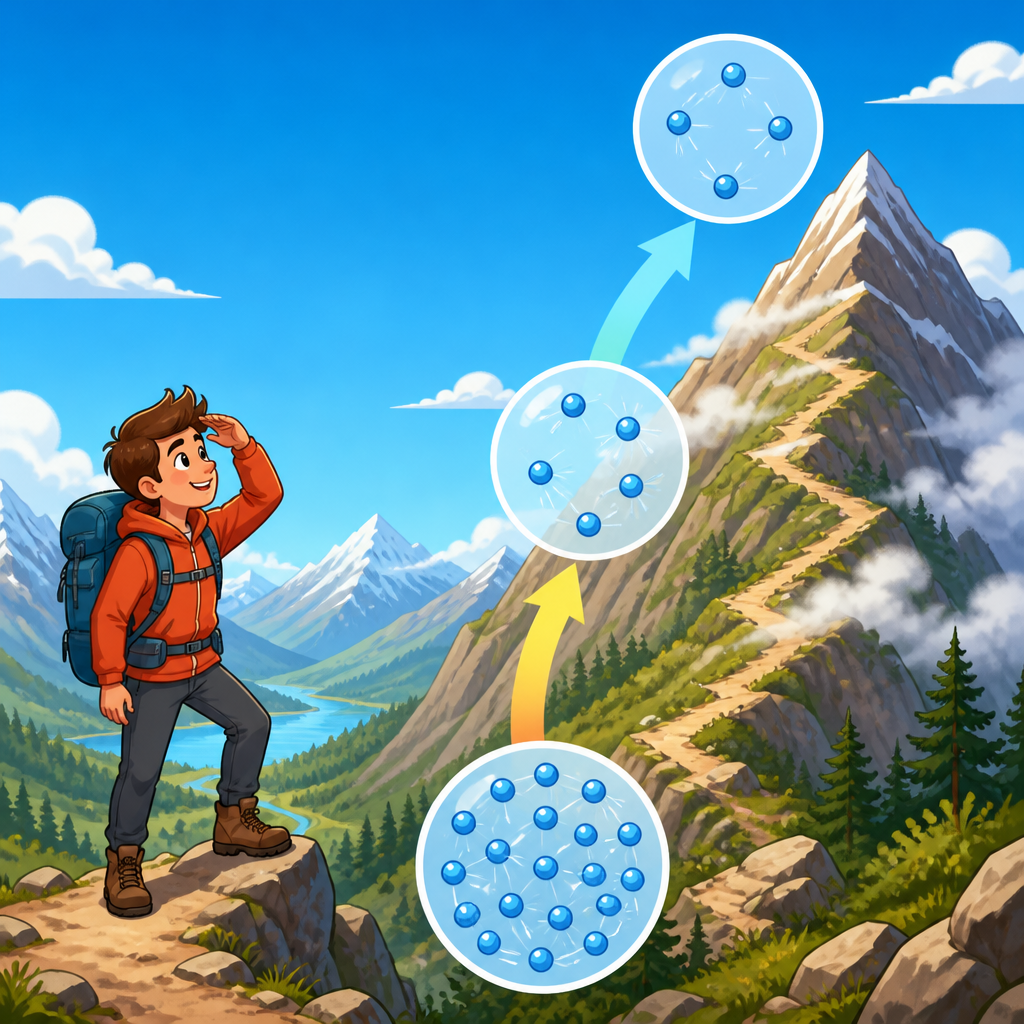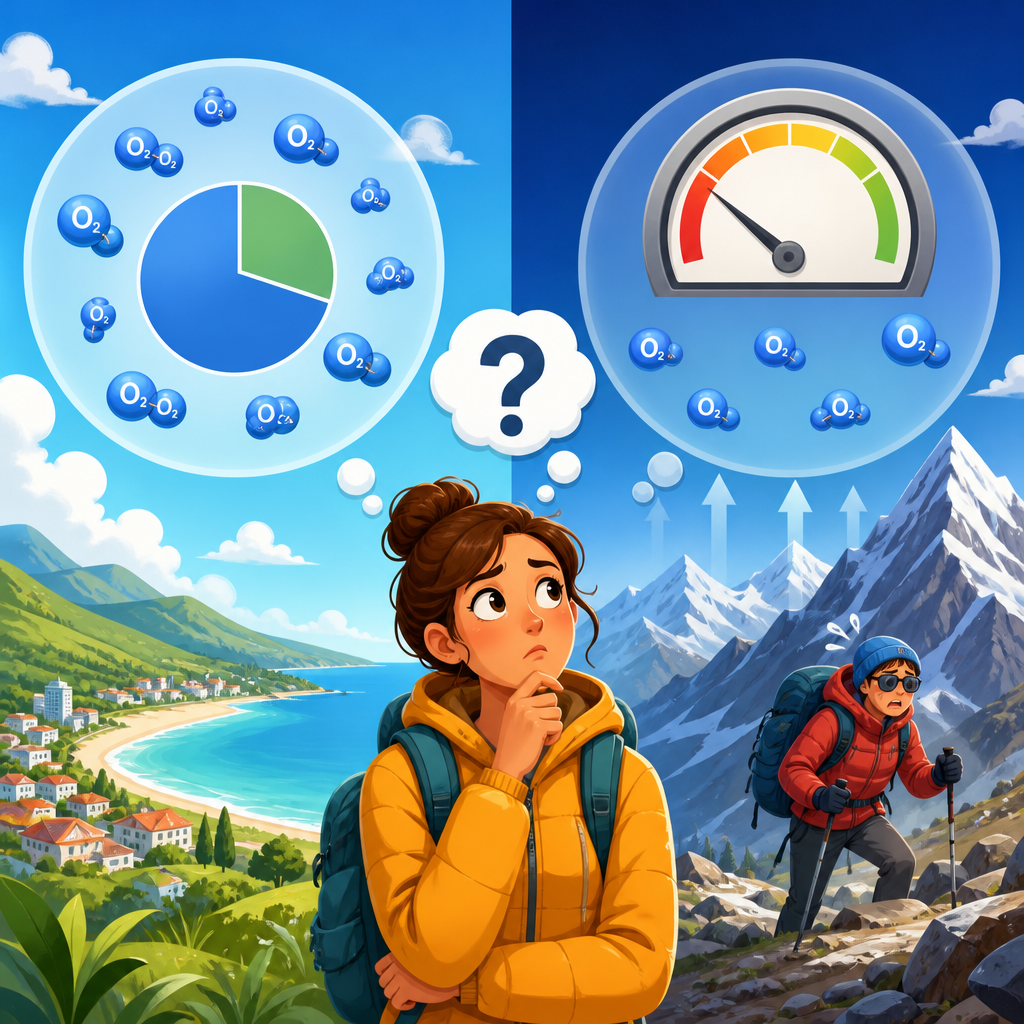
Most travelers assume high altitude is dangerous because the air contains less oxygen, but the more important concept is that the percentage of oxygen stays almost the same while the pressure pushing that oxygen into your lungs falls. That distinction explains why someone can breathe normally at sea level, struggle in Cusco, feel lightheaded on a trek in Ladakh, and require supplemental oxygen on Denali even though Earth’s atmosphere remains roughly 20.9 percent oxygen almost everywhere below the edge of the stratosphere. In practice, the body responds not to oxygen percentage alone, but to oxygen pressure: the amount of oxygen available to move from the air sacs of the lungs into the bloodstream. I have found that once travelers understand this single idea, many confusing altitude symptoms, travel myths, and acclimatization rules begin to make sense.
This topic matters because altitude affects tourism, aviation, mountaineering, public health, architecture, labor, religion, cuisine, and identity in highland communities from the Andes to the Himalaya. It also sits at the center of the broader science and culture conversation around life at elevation. If you are planning a ski trip in Colorado, a pilgrimage in Tibet, a visit to La Paz, or a cultural journey through Ethiopian highlands, you need more than generic advice to drink water and take it easy. You need a workable mental model. Oxygen percentage describes atmospheric composition. Oxygen pressure describes how many oxygen molecules are effectively available per breath. The first changes little with altitude. The second declines steadily as barometric pressure drops. That is why high altitude stresses the body, why pressurized aircraft cabins are engineered the way they are, and why long-resident high-altitude populations have developed distinct biological and cultural adaptations over generations.
The basic physics: oxygen percentage stays stable while barometric pressure falls
At sea level, standard atmospheric pressure is about 760 millimeters of mercury, or 101.3 kilopascals. Oxygen makes up about 20.9 percent of dry air, so the partial pressure of oxygen in ambient air is roughly 159 millimeters of mercury. Climb to 3,500 meters, and the oxygen fraction is still about 20.9 percent, but total pressure has fallen dramatically, so oxygen partial pressure falls with it. The result is fewer oxygen molecules entering the lungs with every breath. This is the key misunderstanding behind the common statement that “there is less oxygen in the air” at altitude. Chemically, that statement is inaccurate. Functionally, it feels true because the lower pressure means lower oxygen availability.
The distinction becomes even clearer in the lungs. Inspired air is humidified and mixed with carbon dioxide, so alveolar oxygen pressure is much lower than ambient oxygen pressure. Clinicians use the alveolar gas equation to estimate this drop. You do not need to calculate it while traveling, but it explains why the body can be comfortable at sea level and stressed at altitude before any disease is present. Pulse oximeters reveal the same process from another angle: oxygen saturation often falls from the high nineties at sea level to lower values at elevation, especially during sleep or exertion. In healthy people, that decline can be manageable with acclimatization. In others, it can trigger acute mountain sickness, impaired performance, or dangerous altitude illnesses.
Why travelers feel altitude: physiology, symptoms, and common mistakes
When oxygen pressure falls, the body responds immediately by breathing faster and deeper. Heart rate rises, sleep quality often worsens, and exercise feels harder than expected. These are normal compensatory responses. The problem comes when ascent outpaces adaptation. Acute mountain sickness usually appears within six to twelve hours after arrival above about 2,500 meters and commonly includes headache, nausea, fatigue, poor appetite, dizziness, and restless sleep. Travelers often blame dehydration alone, but dehydration is not the root cause. Low oxygen pressure is. Drinking water helps overall comfort, yet it does not reverse altitude stress.
I have repeatedly seen fit sea-level athletes underestimate this point. Fitness improves strength and endurance, but it does not grant immunity to altitude illness. A marathon runner can develop acute mountain sickness in Cusco or Lhasa just as a sedentary traveler can. Speed of ascent, sleeping altitude, prior acclimatization, genetics, and illness history matter more than confidence. The major red flags are severe headache, vomiting, confusion, loss of coordination, and breathlessness at rest. These suggest progression toward high-altitude cerebral edema or high-altitude pulmonary edema, both medical emergencies requiring descent, oxygen if available, and urgent treatment. No cultural itinerary, summit goal, or prepaid reservation is worth ignoring those signs.
Another frequent mistake is assuming daytime comfort predicts nighttime safety. During sleep, breathing patterns become less stable, oxygen saturation can dip further, and symptoms may worsen. That is why many travelers feel acceptable while sightseeing yet wake with headache or nausea. Alcohol, sedatives, and overexertion can amplify the problem. So can respiratory infections. Practical prevention remains straightforward: ascend gradually when possible, avoid hard exertion on the first day at a new sleeping altitude, consider acetazolamide for higher-risk itineraries, and learn the symptom pattern before departure rather than improvising in a remote town.
How acclimatization works, and where its limits are
Acclimatization is the body’s short-term adjustment to lower oxygen pressure. Within minutes, ventilation increases. Over hours to days, the kidneys compensate for changes in blood acidity caused by faster breathing, allowing ventilation to stay elevated. Over days to weeks, plasma volume shifts, red blood cell production increases through erythropoietin signaling, and tissues adjust how they use oxygen. This process improves function, but it is not magic. Acclimatization reduces risk; it does not turn 5,500 meters into sea level.
A practical rule used in mountain medicine is to limit increases in sleeping altitude once above roughly 3,000 meters and to include rest days during bigger ascents. “Climb high, sleep low” works because short exposure can stimulate adaptation while a lower sleeping altitude reduces overnight stress. Acetazolamide supports acclimatization by promoting bicarbonate loss and encouraging ventilation. Dexamethasone can prevent or treat certain altitude syndromes, but it does not produce true acclimatization and should not be treated as a shortcut. Portable hyperbaric chambers can temporarily simulate descent in remote settings, but descent remains the definitive intervention for severe illness.
| Altitude | Approximate pressure | Oxygen percentage | What many travelers notice |
|---|---|---|---|
| Sea level | 760 mmHg | 20.9% | Normal exercise capacity and sleep for most people |
| 2,500 m | ~560 mmHg | 20.9% | Shortness of breath on stairs, mild sleep disruption |
| 3,500 m | ~495 mmHg | 20.9% | Headache risk, harder exertion, lower appetite |
| 5,500 m | ~380 mmHg | 20.9% | Marked fatigue, slow pace, substantial acclimatization demand |
These figures are rounded, because weather systems alter local pressure, and actual physiological impact varies by temperature, exertion, and individual response. Still, the table captures the central lesson: oxygen percentage remains stable while usable oxygen pressure drops sharply. That is the altitude concept travelers need.
High-altitude communities: biology shaped by place, history, and livelihood
Long-resident high-altitude populations show that human adaptation is not uniform. Andean, Tibetan, and Ethiopian highlanders all live successfully at elevation, yet they do not rely on identical physiological strategies. Tibetans tend to ventilate more and often maintain relatively lower hemoglobin concentrations than Andean highlanders at comparable altitudes, a pattern linked to genetic variants including EPAS1 and EGLN1 that affect hypoxia pathways. Many Andean populations, by contrast, more commonly show higher hemoglobin levels and other cardiopulmonary adaptations. Ethiopian highlanders present another pattern that appears to preserve function with less dramatic hemoglobin elevation than classic Andean responses. These differences matter because they show that “human adaptation to altitude” is plural, not singular.
Culture evolves with physiology and environment. In the Andes, agricultural terraces, camelid pastoralism, coca use in some regions, and settlement patterns all reflect the demands of steep terrain, cold nights, and thin air. In Himalayan regions, trade routes, yak herding, monastery networks, and architectural choices reveal deep knowledge of weather, slope, fuel scarcity, and bodily limits at altitude. Highland cuisines often emphasize dense carbohydrates, preserved foods, soups, teas, and ingredients suited to shorter growing seasons or transport constraints. Festivals, migration schedules, labor rhythms, and local medical beliefs also reflect altitude realities, even when not described in scientific language.
Travelers benefit from understanding this cultural dimension because altitude is not just a biomedical hazard layered onto a destination. It is part of how a place works. A market timetable, a pilgrimage route, a building’s stair design, or the prominence of certain hot drinks can all make more sense when viewed through the lens of oxygen pressure, cold stress, and terrain. Respect begins with noticing that residents are not simply “used to it.” Communities have built systems around altitude over centuries.
Science in everyday travel: flights, hotels, trekking plans, and medical risk
Commercial aviation provides one of the clearest demonstrations of the oxygen pressure principle. Aircraft cabins are pressurized, but not to sea level. Typical cabin altitude is often equivalent to about 6,000 to 8,000 feet, meaning passengers are exposed to lower pressure and lower oxygen partial pressure for hours even though the oxygen percentage remains unchanged. Healthy travelers usually tolerate this well. People with severe lung disease, certain heart conditions, anemia, or recent respiratory illness may not. That is why preflight assessment sometimes includes hypoxia altitude simulation testing or supplemental oxygen planning.
Hotels and resorts at elevation create another layer of risk. A traveler may fly from sea level to Denver, continue to a ski town above 2,400 meters, drink alcohol, skip dinner, sleep poorly, and wake blaming the mattress. In reality, the trip stacked several altitude stressors at once. The same applies to rapid arrivals in Cusco, La Paz, or Lhasa. Smart itinerary design beats bravado. If possible, spend a night at a moderate altitude before going higher, schedule lighter activity on arrival, and keep the first twenty-four hours flexible.
Medical risk is not equal across travelers. Prior altitude illness is one of the strongest predictors of future problems on a similar ascent profile. Chronic obstructive pulmonary disease, pulmonary hypertension, obstructive sleep apnea, sickle cell disease, and pregnancy all require individualized planning. Children can acclimatize, but they may communicate symptoms poorly. Older adults are not automatically at greater risk if they ascend conservatively, though coexisting disease often matters more than age itself. The sensible approach is to match the plan to the person, not to generic internet bravado.
The wider hub: how altitude connects science, culture, work, sport, and climate
This subject sits at the center of a larger high-altitude conversation. Scientific questions include hypoxia signaling, sleep-disordered breathing, fetal growth at elevation, chronic mountain sickness, UV exposure, and performance tradeoffs in endurance sport. Cultural questions include how pilgrimage, language, foodways, architecture, and labor systems adjust to mountain environments. Economic questions include mining, tourism, transport costs, seasonal migration, and access to healthcare. Climate questions include glacier retreat, water security, wildfire patterns, and changing hazard exposure in upland regions.
As a hub for science and culture, this page should point readers toward those connected themes. Understanding oxygen percentage versus oxygen pressure gives you the conceptual base for all of them. It clarifies why mountain runners train differently, why highland pregnancies are studied closely, why religious centers at elevation develop distinctive rhythms, why some workers rotate in and out of mines, and why rescue protocols prioritize descent. It also helps travelers read destinations more intelligently. A mountain community is not merely a scenic version of a lowland city. It is a place organized around pressure, terrain, weather, and adaptation.
The most useful takeaway is simple: at altitude, the oxygen fraction in the air is nearly the same, but the pressure driving oxygen into your body is lower, and that is what changes how you feel and function. Once you understand that, common myths fall away. You can see why acclimatization matters, why aircraft cabins are pressurized, why a fit athlete can still get sick, and why high-altitude communities deserve to be understood on their own terms rather than through lowland assumptions. For travelers, this knowledge improves both safety and cultural literacy.
Before your next trip to a mountain city, trekking route, pilgrimage center, or alpine resort, plan for sleeping altitude as carefully as you plan flights and hotels. Build in time to adapt, learn the warning signs, and let local context guide your expectations. If you are exploring the broader world of high-altitude life, use this hub as your starting point, then continue into the linked science, health, history, and community stories that make mountain regions some of the most fascinating places on Earth.
Frequently Asked Questions
Does the oxygen percentage actually decrease at high altitude?
No. This is the key misconception. For most places travelers go on Earth, the percentage of oxygen in the atmosphere stays essentially the same at about 20.9 percent. What changes with altitude is not the fraction of oxygen, but the total air pressure. At sea level, every breath contains oxygen making up about one-fifth of the air, and that oxygen is being delivered under relatively high pressure. As you go higher, the air becomes less dense and the atmospheric pressure drops, so each breath contains fewer oxygen molecules even though the percentage is still roughly unchanged. In practical terms, that means your lungs have less oxygen available to transfer into your bloodstream with every inhale. This is why a visitor can breathe comfortably at sea level, feel winded in Cusco, get a headache trekking in Ladakh, or need supplemental oxygen high on Denali without the atmosphere suddenly becoming “low oxygen” in percentage terms. The problem is lower oxygen pressure, not a dramatically different oxygen mix.
What is the difference between oxygen percentage and oxygen pressure?
Oxygen percentage tells you how much of the air is oxygen as a share of the whole atmosphere. Oxygen pressure, often discussed as partial pressure, tells you how strongly that oxygen is available to move from the air into your lungs and then into your blood. That second idea is the one that matters most for altitude. Your body does not use percentages directly; it depends on pressure gradients. At sea level, the overall atmospheric pressure is high enough that oxygen molecules are packed more closely together, so the partial pressure of oxygen is high enough to load your blood efficiently. At altitude, the same 20.9 percent oxygen is spread through thinner air, so the partial pressure falls. Because the driving pressure is lower, oxygen enters the bloodstream less effectively, especially during exercise or sleep. That is why altitude symptoms are tied to reduced pressure rather than some dramatic drop in oxygen concentration. Understanding this distinction also makes many travel experiences easier to interpret: you are not breathing “bad air” in the mountains, you are breathing air that delivers less oxygen per breath because the atmospheric push is weaker.
Why do people feel sick or short of breath in places like Cusco or Ladakh if the oxygen percentage is the same?
People feel the effects of altitude because their bodies respond to lower oxygen pressure, not because the air suddenly contains a much smaller oxygen fraction. In high-altitude destinations such as Cusco or Ladakh, the reduced atmospheric pressure means each breath delivers fewer oxygen molecules into the lungs than it would at sea level. Your body notices that quickly. In response, you breathe faster, your heart may beat harder, and over time your kidneys and blood chemistry begin adjusting to help you cope. Before those adjustments happen, many travelers experience shortness of breath on exertion, headache, poor sleep, lightheadedness, fatigue, nausea, or reduced exercise tolerance. These symptoms are signs that your body is temporarily struggling to match oxygen delivery to demand. The faster you ascend, the more noticeable this can be. Individual responses vary widely, which is why one traveler can stroll around with minimal trouble while another feels miserable at the same elevation. Hydration, pace of ascent, recent sleep, alcohol intake, fitness expectations, and genetic variation all influence how you feel. But the underlying reason is still the same: less oxygen pressure means less efficient oxygen transfer into the bloodstream.
If the issue is lower oxygen pressure, how does acclimatization help?
Acclimatization helps because your body can partially compensate for the reduced oxygen pressure over time. It cannot change the atmosphere, but it can improve how you capture, transport, and use oxygen in thinner air. One of the earliest responses is increased breathing. By breathing faster and deeper, you bring more air into the lungs to make up for the lower oxygen delivered in each breath. Your heart rate may also rise to circulate oxygen more quickly. Over the following hours to days, your kidneys adjust the acid-base balance of your blood to support this higher breathing rate. With longer exposure, your body may increase red blood cell production, which can improve oxygen-carrying capacity. Muscles and tissues also adapt in subtler ways. This is why gradual ascent works: it gives your body time to build these compensations. It does not make high altitude identical to sea level, and it does not eliminate risk, but it can significantly improve comfort and safety. That is also why altitude advice emphasizes going up slowly, taking rest days, avoiding overexertion early on, and descending if symptoms worsen. Acclimatization is your body’s workaround for the falling pressure of oxygen at altitude.
When do travelers need supplemental oxygen, and why does it work if the oxygen percentage in the air has not changed much?
Supplemental oxygen becomes useful or necessary when the natural oxygen pressure in the surrounding air is too low for the body to maintain adequate oxygenation, especially during very high-altitude climbs, severe altitude illness, certain medical conditions, or emergencies. It works because adding oxygen raises the amount of oxygen available in the air you breathe, which increases the partial pressure of oxygen reaching your lungs. In other words, even though the atmosphere at altitude still contains about 20.9 percent oxygen, the total pressure is so low that your body may not get enough oxygen from normal breathing alone. Supplemental oxygen changes that equation by enriching the air you inhale and increasing the pressure gradient that drives oxygen into your blood. This is why it can dramatically improve symptoms and performance at extreme elevations such as Denali or other very high mountains. It is also why aircraft cabins are pressurized and why oxygen is used in medical treatment for altitude-related problems. For travelers, the practical lesson is straightforward: altitude danger is not mainly about the air “running out of oxygen” in percentage terms. It is about the shrinking pressure support that normally helps oxygen move into your body.