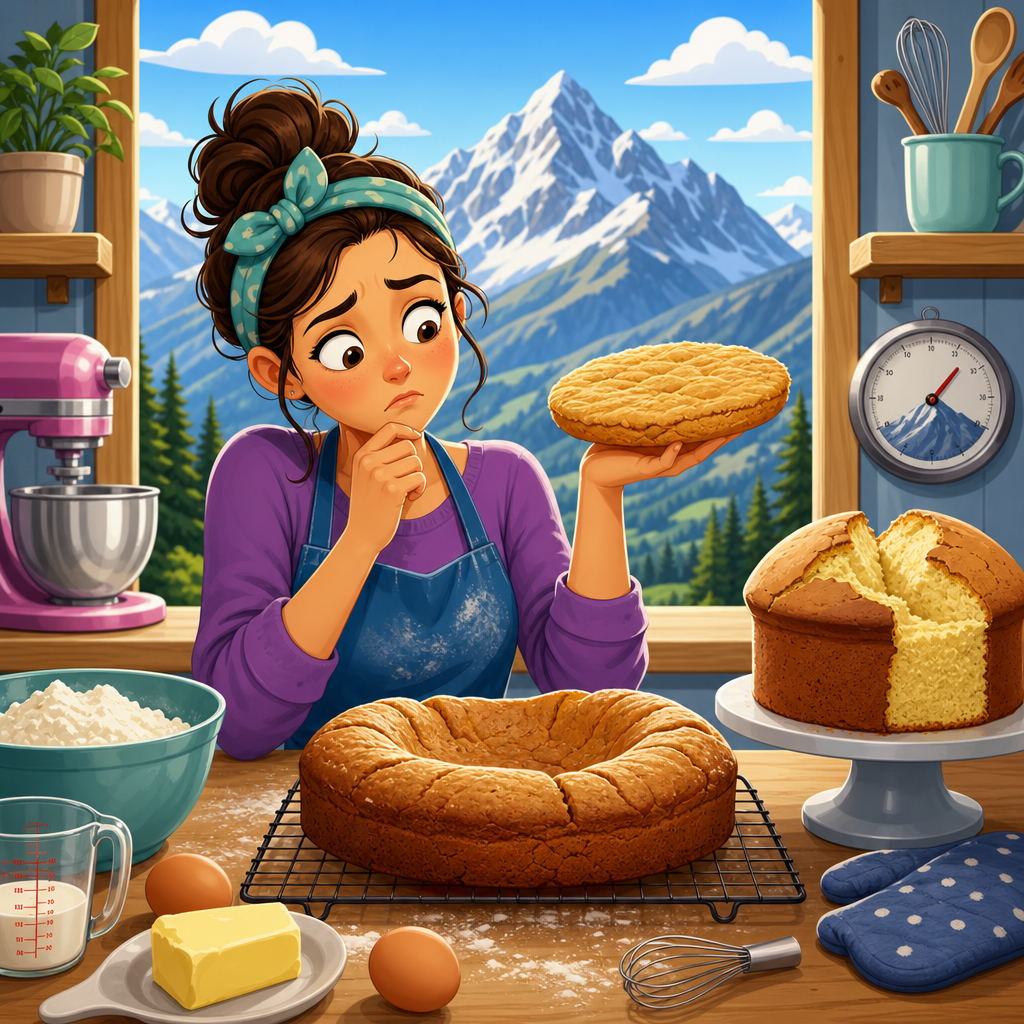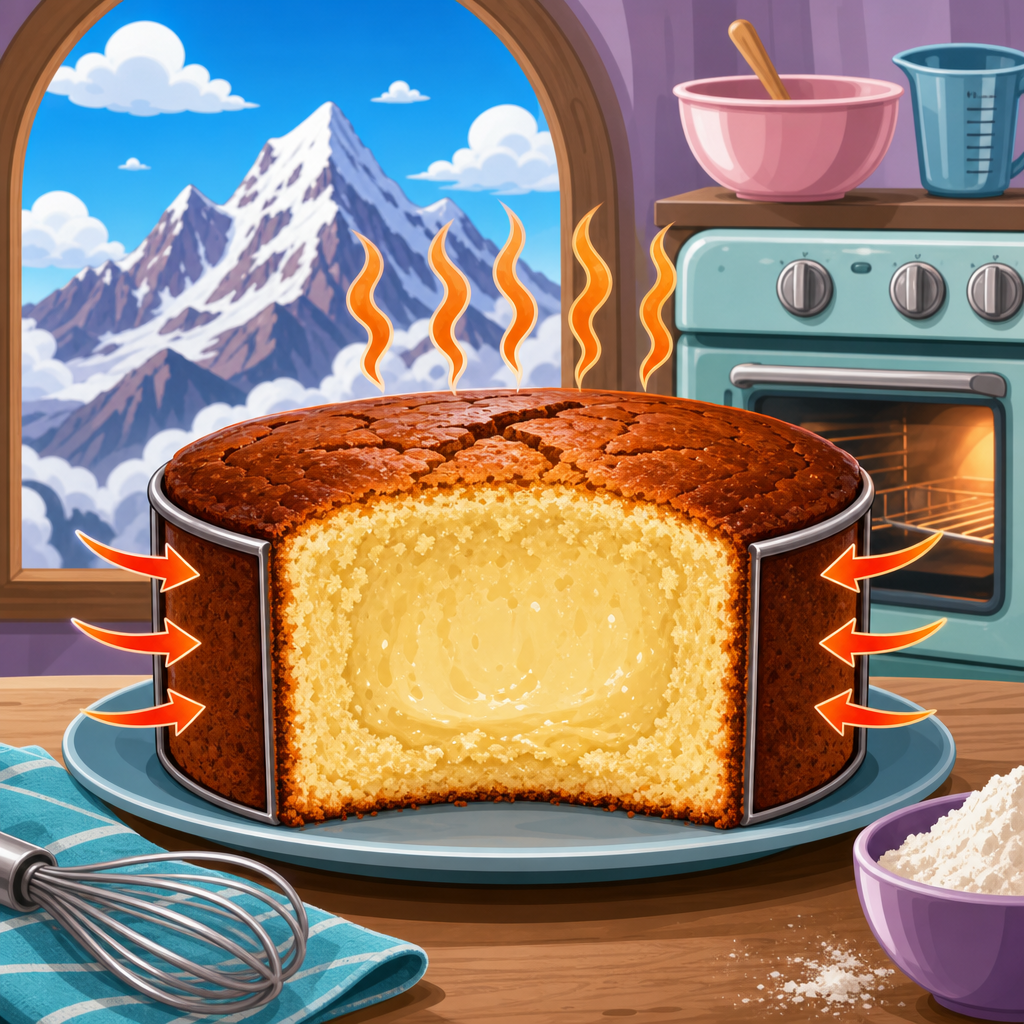
High-altitude cakes often brown before the center is done because elevation changes how heat, moisture, and structure behave in the oven, causing the batter’s surface to set and color faster while the interior struggles to finish baking. In practical terms, high altitude usually means 3,000 feet and above, where lower air pressure affects boiling point, evaporation rate, gas expansion, and the timing of starch gelatinization and protein coagulation. I have baked and tested cakes in mountain kitchens where a formula that works perfectly near sea level domes hard, crusts early, and stays gummy under the top at 5,000 to 8,000 feet. For home bakers, this problem matters because it wastes ingredients, disrupts celebration baking, and makes troubleshooting feel random when the cause is actually predictable.
This article explains why a cake browns too fast at altitude, how to diagnose the exact failure point, and what workflow changes make results repeatable. Browning refers mainly to Maillard reactions and caramelization at the cake surface, both accelerated when moisture leaves the top layer too quickly and the oven environment runs effectively hotter than the batter can tolerate. “Center is done” means the crumb has set through the middle: starches have absorbed enough water and gelatinized, proteins from eggs and flour have coagulated, and excess steam has escaped without collapsing the structure. In high-altitude baking, the challenge is balance. Leavening gases expand more, water boils at a lower temperature, and evaporation speeds up, so the outside can firm and darken before the center reaches the point where it can support itself.
As a hub for baking troubleshooting and workflow, this guide connects the core variables that influence altitude outcomes: oven temperature, pan size and color, sugar concentration, liquid ratio, flour strength, mixing method, leavening level, rack position, bake time, and cooling sequence. If you understand these variables, you can fix not only overbrowning but also tunneling, collapse, peaked tops, sticky crumb, dry edges, and uneven layers. The key principle is simple: at altitude, cakes need help retaining moisture and delaying surface set while the interior catches up. The rest of this page shows exactly how to do that with specific adjustments and a clear process you can apply recipe after recipe.
The science behind fast browning at elevation
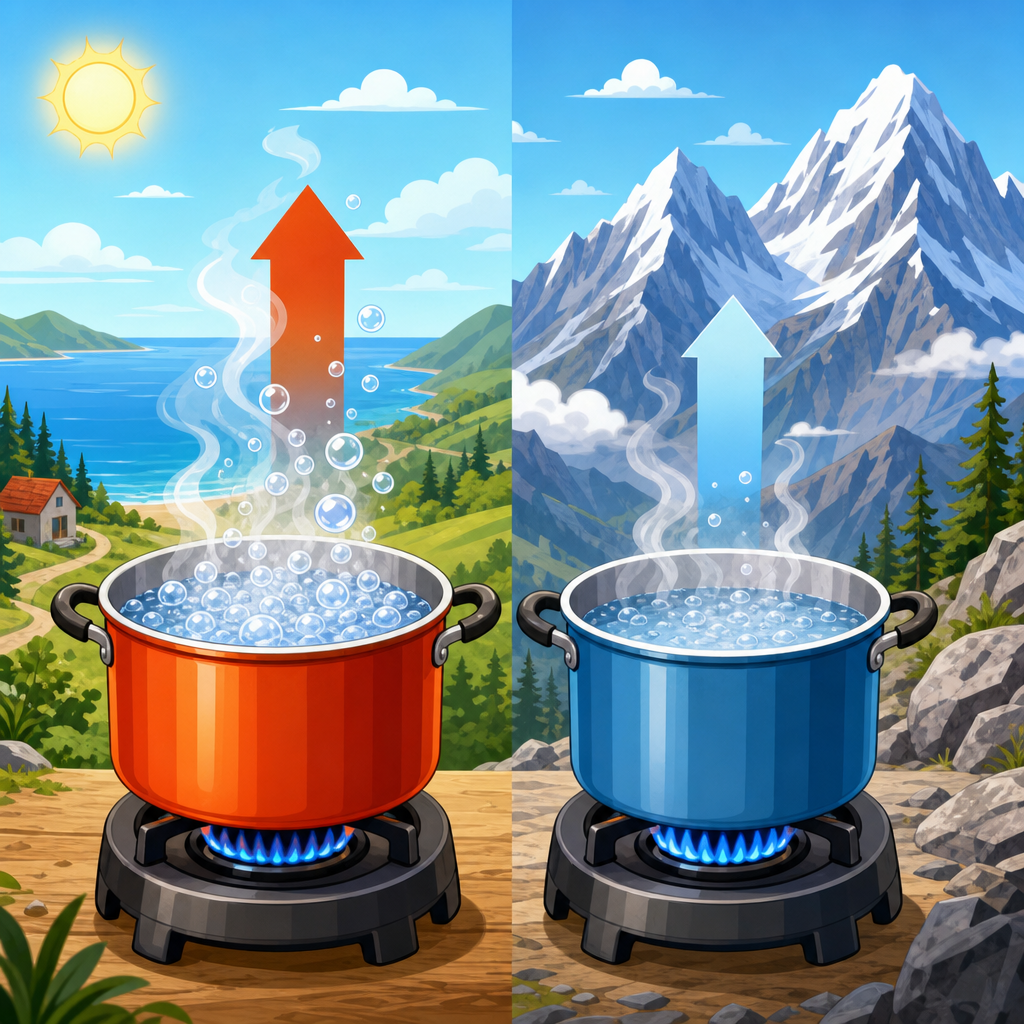
The first reason high-altitude cakes brown early is lower atmospheric pressure. As elevation increases, water boils at a lower temperature, which means moisture evaporates from batter more readily. In the oven, the top and outer edges lose water before the center does, concentrating sugars and proteins near the surface. Once that top layer dries, browning reactions accelerate. This is why a cake can look deeply golden, even dark at the rim, while a tester still finds wet batter in the middle. The issue is not only oven heat; it is the timing mismatch between outer drying and inner setting.
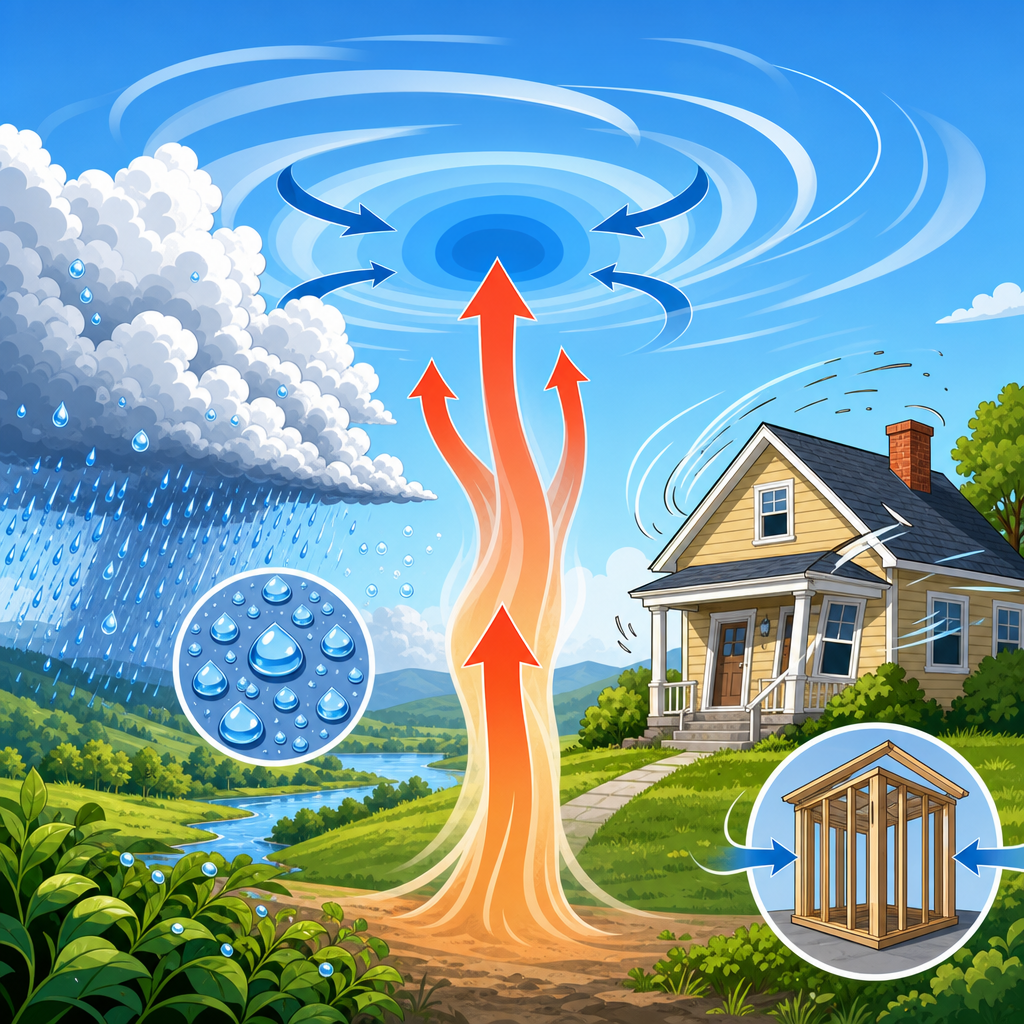
The second reason is rapid gas expansion. Chemical leaveners and air bubbles expand more aggressively at altitude, pushing batter upward before the crumb has fully stabilized. That fast lift exposes more surface area and often creates a peaked top, which browns first because it sits closer to the upper heating element and receives more direct radiant heat. Meanwhile, the center underneath may still be undergelatinized. I see this often in butter cakes and chocolate layer cakes: the top domes, the crust darkens, and the center line under the dome remains dense because structure lagged behind expansion.
Sugar and fat also play a role. Sugar tenderizes by interfering with gluten and delaying starch setting, while fat coats flour particles and softens crumb structure. Both are desirable in cake, but at altitude, formulas with high sugar and moderate liquid are especially prone to edge overbaking and center underbaking. The top browns because dissolved sugar migrates with moisture and concentrates as the surface dries. Chocolate cakes can be more vulnerable because cocoa absorbs water and dark colors hide overbrowning until the cake is cut. Understanding this chemistry is the foundation of effective altitude cake troubleshooting.
How oven conditions create the problem
Most high-altitude browning problems are amplified by oven management. Many home ovens cycle wide, sometimes by 25 to 50 degrees Fahrenheit above the target. At sea level, a sturdy cake formula may tolerate that swing. At altitude, those peaks can set the surface too soon. An oven dial at 350 degrees may actually hit 380 during preheat recovery, especially in smaller electric ovens. I strongly recommend verifying calibration with a reliable oven thermometer or, better, a digital probe that logs fluctuations. Bakers are often surprised to learn the recipe was not the main issue.
Rack position matters more than many people realize. Cakes baked on the upper third of the oven receive stronger top heat and brown sooner. Dark nonstick pans compound the effect by absorbing and transferring heat quickly to the batter perimeter. Glass dishes can make timing less forgiving because they heat slowly but retain heat longer, encouraging edge overbaking by the end of the bake. For layer cakes at altitude, light-colored aluminum pans placed on the center rack provide the most even heat transfer. This single equipment change fixes a large share of premature browning cases.
Convection is another common culprit. Fan-forced air speeds evaporation and promotes even browning in some products, but cakes are not always helped by it, especially at elevation. If your oven runs convection by default, turn it off for most cakes or reduce the temperature by 25 degrees and watch closely. The fan dries the surface, forms crust early, and can tilt the balance toward color before interior doneness. When bakers tell me, “The cake looked done ten minutes early, but it sank after cooling,” convection plus altitude is often part of the story.
Recipe variables that affect surface browning and center setting
The formula itself determines how well a cake tolerates altitude. Too much leavening is one of the most frequent problems. Because baking powder and baking soda generate lift more forcefully at altitude, a standard sea-level amount can cause the batter to rise too fast, then collapse before the center sets. Reducing leavening slightly helps the crumb stabilize and gives the interior time to bake through. Extra liquid is often needed for the opposite reason: it slows drying, supports starch gelatinization, and reduces the race between surface browning and center doneness.
Flour choice influences strength. Lower-protein cake flour creates a fine crumb, but at high altitude it can be too fragile in some formulas unless the recipe is balanced with enough egg, liquid, and controlled leavening. All-purpose flour sometimes gives better structural insurance in butter cakes and snack cakes baked above 5,000 feet. Eggs matter too. Additional egg white can strengthen the network and improve bake-through, though too much can toughen the crumb. Sugar reduction is another common altitude adjustment, usually modest rather than drastic. Slightly less sugar can reduce over-tenderization and slow excessive surface coloring.
Mixing method changes outcomes as much as ingredients. Creaming butter and sugar incorporates air, which is useful, but overcreaming at altitude creates too many unstable bubbles that expand quickly and exaggerate doming and crusting. Reverse-creaming and two-stage methods can produce a tighter, more controlled crumb in mountain baking because they limit large air pockets. Batter depth matters as well. If a pan is overfilled, the outside has a long time to brown while the center mass catches up. Dividing batter into more pans, using shallower layers, or choosing a larger pan often solves what appears to be a temperature problem.
| Variable | Common high-altitude effect | Practical correction |
|---|---|---|
| Oven temperature too high | Dark top, pale or gummy center | Lower by 15 to 25 degrees and extend bake slightly |
| Too much leavening | Rapid rise, peaked top, collapse, early crust | Reduce baking powder or soda modestly |
| Insufficient liquid | Dry edges, fast surface browning | Add 1 to 4 tablespoons liquid depending on formula |
| Dark pan | Overbrowned sides and bottom | Use light aluminum pans |
| Upper rack position | Top browns before middle sets | Bake on center rack |
| Convection fan | Crust forms early, moisture loss increases | Use conventional bake or lower heat |
A practical troubleshooting workflow for consistently better cakes
When a cake browns too fast at altitude, change one variable at a time and keep notes. My standard workflow starts with heat, because oven error is easy to confirm and causes dramatic symptoms. Check actual temperature, move the pan to the center rack, and switch to light aluminum if needed. If the top is coloring too quickly but the cake still needs significant time, tenting loosely with foil can protect the surface, but that is a rescue step, not the main fix. The lasting solution is to slow browning and improve center setting before the bake starts.
Next, evaluate batter depth and formula balance. Ask direct diagnostic questions. Did the cake dome sharply? That points to too much leavening, too much incorporated air, or oven heat that is effectively too high. Were the edges dry while the center line was sticky? That suggests insufficient liquid, a pan that is too small, or a dark pan overheating the perimeter. Did the cake sink after appearing done? That usually means the crust set before the internal structure did. In mountain baking, these symptoms are linked, so solving one often improves several others at the same time.
For repeatable results, maintain a worksheet for each recipe with altitude, pan size, batter weight per pan, oven setting, actual oven reading, bake time, cooling time, and final texture. Professional bakers do this as standard practice because memory is unreliable and small adjustments matter. If you bake the same vanilla cake at 5,280 feet and again at 7,200 feet, the successful version may need different liquid and leavening. A disciplined workflow turns altitude baking from guesswork into controlled testing. That is why this topic belongs at the center of any broader cooking and baking at altitude resource.
Specific fixes for common cake styles
Butter cakes usually need moderate correction because they rely on creaming for aeration and contain enough sugar to brown readily. At 3,500 to 5,000 feet, I often start by lowering the oven 15 to 25 degrees, reducing baking powder slightly, and adding a little milk or buttermilk. At 5,000 feet and above, I also watch pan depth carefully and avoid overfilling. White and yellow layer cakes benefit from gentle mixing after flour is added so the crumb sets evenly without oversized bubbles. If the top still colors too soon, cake strips around the pans can moderate edge heating.
Chocolate cakes behave differently because cocoa and melted chocolate change both acidity and water absorption. Many chocolate formulas are thin batters, which can bake beautifully at altitude if the oven is not too hot. However, recipes with high sugar, coffee, or sour cream can crust early while the center remains soft. Here I prioritize pan choice, center-rack baking, and exact doneness testing with both a skewer and light fingertip pressure. A few moist crumbs are fine; liquid batter is not. Cheesecakes and flourless cakes are separate cases entirely, since browning and center movement are governed by custard behavior rather than standard cake structure.
Oil cakes and chiffon-style cakes often rise dramatically at altitude because their foam or emulsion structure is naturally light. They may need reduced leavening and careful cooling upside down or in the pan, depending on style, to prevent collapse. Bundt cakes are especially prone to dark exteriors because the center tube increases heat exposure. If a Bundt browns before the interior is done, reduce temperature, lengthen bake time, and consider a lighter-colored pan with a tested capacity. Cupcakes can mislead bakers because they color fast and appear finished; check internal spring and crumb set rather than surface color alone.
Tools, testing methods, and workflow habits that prevent repeat failures
Reliable tools make altitude troubleshooting faster. An oven thermometer is essential, but an instant-read probe thermometer is even more useful because it helps confirm interior doneness in dense cakes. While ideal internal temperatures vary by formula, many butter cakes finish around the low 200s Fahrenheit when fully set. Use that number as a reference, not a rigid rule. A scale is equally important. Measuring flour by volume introduces inconsistency large enough to mimic altitude problems. In my testing, a heavy cup of flour can turn a tender cake into a dry, overbrowned one with no recipe change at all.
Pan preparation should be standardized. Grease, parchment, and even pan-release sprays affect edge frying and crust formation. I line round pans with parchment circles and avoid excessive butter pooling on the sides, which can effectively shallow-fry the batter edge and intensify browning. Cooling is part of workflow too. A cake that sits too long in a hot pan continues cooking at the perimeter while steam condenses toward the middle. Invert or unmold according to the style, then cool on a rack so residual heat can escape evenly. This reduces the dry-edge, damp-center contrast many bakers blame solely on oven settings.
Finally, know when a recipe is simply not altitude friendly without reformulation. Some highly tender, high-sugar celebration cakes are engineered for sea-level conditions and need more than one small tweak. If repeated tests fail, start from a recipe written for your elevation or from trusted sources such as university extension guidance, well-tested mountain baking cookbooks, or established brands with altitude notes, including King Arthur Baking. Good workflow is not only about fixing errors after they happen. It is about choosing formulas, tools, and procedures that make success likely before the batter ever reaches the oven.
High-altitude cakes brown before the center is done because the surface loses moisture quickly, browning reactions accelerate, and the batter’s structure often lags behind expansion. Once you understand that sequence, the problem stops feeling mysterious. Lower pressure speeds evaporation, leavening acts more aggressively, and oven conditions that seem minor at sea level become decisive in a mountain kitchen. The practical response is to slow surface coloring and help the interior set: verify oven temperature, use the center rack, prefer light aluminum pans, avoid unnecessary convection, manage batter depth, reduce excess leavening, and add enough liquid for the cake style.
As the hub for baking troubleshooting and workflow within cooking and baking at altitude, this page should guide your next steps on every related issue. Overbrowning is linked to doming, collapse, gummy centers, dry edges, tunneling, and uneven layers because all of them come from the same balance of heat, moisture, and structure. The most effective bakers are systematic. They test one adjustment at a time, record outcomes, and build a reliable version of each recipe for their specific elevation and oven. That disciplined approach saves more cakes than any single trick, including foil tents or guessing at extra bake time.
If your cakes keep darkening before they finish, start with your next bake: calibrate the oven, switch to a light pan, bake on the center rack, and note the result. Then refine the formula with small, deliberate changes. With that workflow, high-altitude cake troubleshooting becomes repeatable, and beautifully baked centers with evenly browned tops become the norm rather than the exception.
Frequently Asked Questions
Why do cakes at high altitude brown on top before the center is fully baked?
At high altitude, the main issue is lower air pressure. Once you get to roughly 3,000 feet and above, water boils at a lower temperature, moisture evaporates faster, and the gases in your batter expand more quickly. That combination makes the outer portion of the cake heat up, set, and begin browning sooner, while the middle is still trying to build enough structure to finish baking. In other words, the surface moves ahead of the center.
Browning itself is not always a sign that the cake is done. The top and edges are exposed to the oven’s direct heat first, so they dry out and color faster. Meanwhile, the center remains wetter for longer because it needs enough time for starches to gelatinize and proteins to coagulate. At altitude, that timing gets disrupted. The batter may rise rapidly, lose moisture quickly, and start setting unevenly, which leaves you with a cake that looks ready on the outside but still has an underbaked middle.
What changes in the oven cause this problem at 3,000 feet and above?
Several altitude-driven changes happen at once. First, lower air pressure means leavening gases expand more aggressively. That can make a cake rise too fast before its internal structure is strong enough to support the rise. Second, moisture escapes from the batter more quickly because evaporation is accelerated. Third, because water boils at a lower temperature, the batter’s liquid phase behaves differently, which affects how long it takes the center to cook through properly.
These shifts change the balance between heat, moisture, and structure. The cake’s exterior is exposed to the hottest oven environment, so it starts to firm up and brown while the center is still relatively soft. Sugar concentration at the surface can also increase as moisture leaves, which encourages faster color development. The result is a cake that can appear finished from the top and around the edges, but when tested in the middle, it still needs more time.
How can I keep a high-altitude cake from over-browning before the center is done?
The most effective fix is usually a combination of recipe adjustment and baking adjustment. Many high-altitude bakers reduce sugar slightly, increase liquid a bit, and sometimes decrease leavening so the cake does not rise too fast and dry out at the surface. A modest increase in flour can also help strengthen structure. These changes help the center set more evenly and reduce the chance that the top races ahead.
In the oven, start by checking your pan size and oven accuracy. An oven that runs hot will exaggerate top browning. Use an oven thermometer if you have not already confirmed your actual temperature. In some cases, lowering the oven temperature slightly and baking a bit longer helps the center catch up without burning the surface. Light-colored metal pans are also helpful because they absorb less heat than dark pans. If the cake is browning too quickly late in baking, you can loosely tent it with foil so the top is shielded while the middle finishes.
Does the type of cake matter when dealing with premature browning at altitude?
Yes, very much. Not all cakes respond the same way at altitude. High-sugar cakes, butter cakes, chocolate cakes, and very moist batters often brown faster because sugar encourages color and rich batters can heat unevenly. Foam cakes and sponge-style cakes behave differently because they rely more on whipped eggs and trapped air than on chemical leavening, so their structural timing is different. Dense cakes may seem more stable, while tender layer cakes are often more sensitive to rapid rise and moisture loss.
Ingredients also play a role. A recipe with a lot of sugar, a high proportion of baking powder, or not enough liquid is more likely to show the classic pattern of early browning and a lagging center. Chocolate can make doneness harder to judge visually, and fruit or dairy-heavy batters can add extra moisture that slows interior baking. That is why altitude adjustments are rarely one-size-fits-all. The exact solution depends on the cake style, ingredient ratios, pan depth, and your specific elevation.
How do I know when a high-altitude cake is actually done if the top already looks brown?
Color is only one clue, and at altitude it is often misleading. A properly baked cake should show several signs of doneness working together. The center should spring back lightly when touched, the cake should begin pulling slightly from the sides of the pan, and a tester inserted into the middle should come out with a few moist crumbs rather than wet batter. For some richer cakes, an instant-read thermometer can be especially useful because it gives you a more objective reading than appearance alone.
It also helps to watch the cake’s overall behavior rather than relying on a single moment. If the top is deeply browned but the center still jiggles or a skewer comes out wet, the cake is not done yet. In that situation, protect the top with foil and continue baking in short intervals. Over time, you will learn how your oven and elevation affect baking speed. That experience matters because high-altitude baking rewards careful observation just as much as following the written recipe.