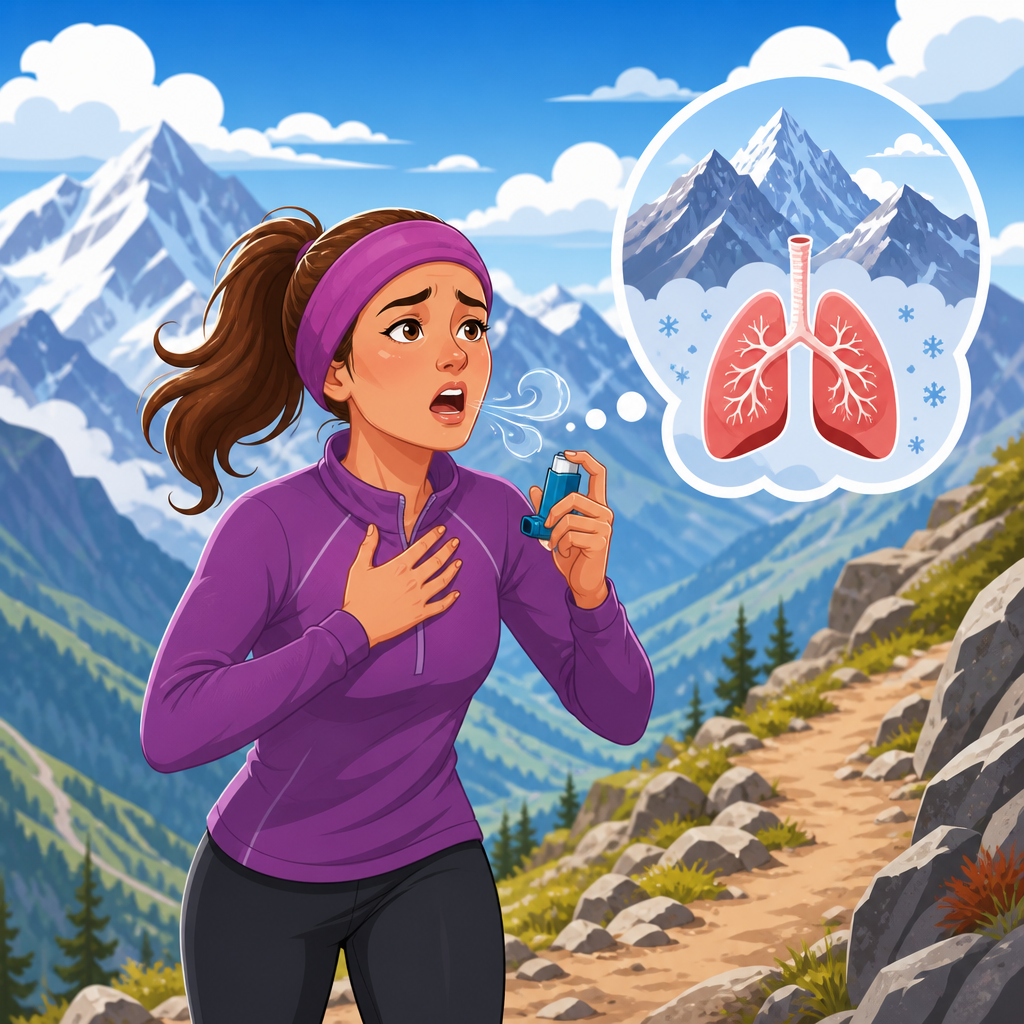
Altitude travel can be rewarding, but for people with respiratory, cardiovascular, or chronic conditions, the key question is not simply whether a destination looks appealing. It is whether your body can tolerate lower oxygen pressure, colder air, greater exertion, and reduced access to urgent care. Deciding whether altitude travel is worth the risk for your condition starts with pre-trip medical planning: a structured process of reviewing your diagnosis, stability, medications, oxygen needs, recent test results, and emergency contingencies before you book or depart.
In clinical terms, altitude matters because barometric pressure falls as elevation rises. The percentage of oxygen in air stays about the same, yet each breath delivers less oxygen to the bloodstream. Many travelers notice only mild shortness of breath above 5,000 to 8,000 feet, but people with chronic obstructive pulmonary disease, asthma, interstitial lung disease, pulmonary hypertension, heart failure, coronary artery disease, arrhythmias, anemia, or sleep-disordered breathing may experience larger drops in oxygen saturation and symptom control. I have seen patients do well on carefully planned mountain trips and others struggle on the first night because they assumed feeling fine at sea level meant they were automatically fit for altitude.
Pre-trip medical planning means more than asking, “Is altitude safe?” It means identifying your personal threshold, understanding what warning signs would make the trip unwise, and reducing avoidable risk. It also means matching itinerary details to your condition: sleeping altitude versus daytime altitude, remote trekking versus resort access, commercial flight versus overland ascent, and the availability of oxygen, pharmacies, and hospitals at the destination. This hub article covers the full planning process so you can judge risk realistically, ask better questions at your medical visit, and decide whether to go, modify the trip, or postpone it.
Start with the condition-specific risk question
The most useful starting point is not the altitude number alone. It is the interaction between altitude and your specific diagnosis. A person with well-controlled mild asthma may handle 7,000 feet without meaningful issues, while someone with moderate pulmonary hypertension may face serious risk at the same elevation. Ask three direct questions: How stable is my condition now? What happens to my disease when oxygen availability falls or exertion rises? If symptoms worsen, how quickly could I get treatment?
For lung disease, the practical concern is hypoxemia, or low blood oxygen. Lower ambient pressure can push borderline oxygen levels into a clearly unsafe range, especially during sleep or exertion. For heart disease, altitude can increase heart rate, blood pressure, and myocardial oxygen demand while reducing oxygen supply, which may provoke angina, arrhythmia, or fluid balance problems. For chronic illnesses such as sickle cell disease, severe anemia, neuromuscular disorders, or advanced kidney disease, altitude can stress already limited physiologic reserve. The trip is “worth the risk” only if expected benefits outweigh the probability and consequences of deterioration.
It helps to separate medical risk into categories. Mild risk means your condition is stable, you have no recent exacerbation, your medications are working, and the trip allows a gradual ascent with nearby care. Moderate risk means the trip might still be possible, but only with testing, medication adjustments, oxygen planning, or a lower sleeping altitude. High risk means postponement is the safer decision. In practice, uncontrolled symptoms, recent hospitalization, new chest pain, recent oxygen requirement, or unstable vital signs should stop the planning process until the condition is reassessed.
Know the altitude exposures that actually change risk
Travelers often focus on the highest point on the itinerary, but sleeping altitude usually matters more than a short daytime visit. The body has fewer reserves at night, breathing patterns change during sleep, and altitude-related oxygen drops may become more pronounced. A day trip to 9,000 feet from a base at 4,500 feet is not the same as sleeping at 9,000 feet for three nights. Likewise, a scenic drive to a mountain lodge differs from hiking uphill while carrying luggage in cold air.
Commercial air travel is another important exposure. Aircraft cabins are pressurized, but not to sea level. Cabin altitude is commonly equivalent to roughly 6,000 to 8,000 feet, which can be enough to uncover previously unrecognized oxygen needs in people with lung or cardiac disease. That means some travelers are actually tested first for fitness to fly, not just fitness for mountains. If you struggle during air travel, that information belongs in your altitude risk discussion.
Cold, dry air can worsen bronchospasm in asthma and increase respiratory water loss. Heavy exertion can trigger angina or breathlessness. Remote locations raise the stakes because even manageable symptoms become dangerous when oxygen, medications, or evacuation are delayed. When I help patients assess trips, I break the itinerary into concrete exposures: flight, transfer, sleeping altitude, peak altitude, daily walking distance, steepness, climate, and access to care. That level of detail leads to much better decisions than asking whether “Colorado” or “the Andes” is safe in general.
Build your pre-trip medical review around recent stability
Your medical review should start with the last three to six months, because recent stability predicts altitude tolerance better than a distant diagnosis label. Bring a concise record of recent symptoms, hospitalizations, steroid bursts, oxygen use, chest pain episodes, palpitations, syncope, edema, and exercise tolerance. If climbing one flight of stairs at home is difficult, altitude will not improve that problem. If your rescue inhaler use has increased, your inhaler plan likely needs work before travel.
Testing should be driven by condition and symptoms. Common inputs include pulse oximetry at rest and with walking, spirometry, hemoglobin level, echocardiography, sleep study history, exercise testing, and recent clinic notes from the physician who manages the condition best. For selected air travelers with chronic lung disease, some clinicians use a high-altitude simulation test to estimate in-flight oxygen needs, though availability varies. The British Thoracic Society and aerospace medicine guidance are often useful reference points for flight assessment; for mountain travel, specialist judgment still matters because exertion and sleeping altitude add variables beyond cabin exposure.
Medication review is just as important as testing. Confirm dosages, refill timing, inhaler technique, device maintenance, battery needs for concentrators, and whether any drug increases risk through dehydration or blood pressure shifts. Diuretics, sedatives, opioids, and some sleep aids deserve special discussion before altitude trips. If you use CPAP, ask whether your device is altitude compatible and whether reliable power is available. A safe plan is not just a doctor saying yes; it is a documented strategy for routine management, worsening symptoms, and emergency escalation.
Condition-specific planning priorities before you travel
Different diagnoses require different checkpoints. The table below highlights what I prioritize most often during pre-trip medical planning for altitude travel.
| Condition | Main altitude concern | Pre-trip planning priority | Example decision point |
|---|---|---|---|
| COPD | Hypoxemia during flight, sleep, or exertion | Rest/exertional oximetry, oxygen assessment, inhaler optimization | If saturation drops significantly on walking, arrange oxygen or lower altitude |
| Asthma | Cold, dry air and exertion triggering bronchospasm | Control symptoms, review rescue plan, carry spacers and backups | If using rescue inhaler frequently before departure, delay travel |
| Interstitial lung disease | Marked oxygen desaturation with activity | Exertional testing, oxygen logistics, realistic activity limits | If short walks cause major desaturation, avoid high sleeping altitude |
| Pulmonary hypertension | Serious strain from hypoxia | Specialist clearance, oxygen plan, avoid remote itineraries | Unstable symptoms usually make altitude travel a poor choice |
| Heart failure or CAD | Increased oxygen demand, fluid shifts, ischemia | Stability review, exertion limits, medication timing | Recent chest pain or decompensation should postpone travel |
| Sleep apnea | Nocturnal desaturation, device access issues | CPAP readiness, power supply, sleep altitude planning | If CPAP cannot be used reliably, reconsider remote stays |
| Anemia or sickle cell disease | Reduced oxygen-carrying reserve | Lab review, specialist advice, hydration and emergency planning | Severe anemia or prior crisis increases risk substantially |
The principle is simple: identify the dominant failure mode for your condition, then plan around it. For COPD and interstitial lung disease, oxygen logistics often decide feasibility. For coronary disease, exertion profile and symptom-free stability matter more. For sleep apnea, nighttime setup can determine whether the trip is manageable. Broad reassurance is not enough; the plan must fit the disease mechanism.
Use a practical go, modify, or postpone framework
Most travelers do not need absolute certainty. They need a decision framework that turns clinical information into an action. I use a three-part approach. Go means the condition is stable, recent symptoms are controlled, the itinerary is moderate, medications and equipment are secure, and you understand self-monitoring. Modify means the trip may proceed only if you lower sleeping altitude, slow the ascent, reduce physical demands, add oxygen, shorten remote segments, or build in rest days. Postpone means your condition is unstable or the consequences of deterioration are too high for the setting.
A few examples make this clearer. A traveler with stable mild asthma, normal day-to-day activity, and no recent flare may go with a written action plan and extra inhalers. A traveler with COPD who is comfortable at sea level but desaturates on exertion may modify the trip by arranging supplemental oxygen, staying below a lower sleeping altitude, and avoiding strenuous hikes. A traveler with worsening heart failure symptoms, increasing edema, or recent emergency care should postpone, because altitude adds physiologic stress at exactly the wrong time.
Do not underestimate the value of changing the itinerary instead of forcing a yes-or-no answer. Staying one or two nights at an intermediate elevation, choosing a town with hospital access, switching from trekking to scenic rail travel, or using ground transport instead of immediate ascent can transform a risky plan into a reasonable one. If your condition is chronic, future travel is usually possible somewhere. The goal is not to prove toughness; it is to choose a version of the trip your body can handle safely.
Prepare medications, oxygen, records, and emergency backup
Once the trip is medically acceptable, logistics become the next safety layer. Carry medications in original labeled containers in hand luggage, with extra supply for delays. Bring rescue medicines in more than one bag. If you use inhalers, pack a spacer and verify technique before departure. If you require oxygen, confirm liter flow, delivery mode, battery duration, airline approval, charging options, hotel policies, and local supplier details. Never assume destination oxygen availability until it is documented.
Written records matter. Carry a concise medical summary listing diagnoses, baseline oxygen saturation if known, allergies, surgeries, current medications, implanted devices, specialist contacts, and what has happened during prior altitude or flight exposure. Include a one-page action plan stating what to do for worsening breathlessness, wheeze, chest pain, edema, low oxygen readings, or equipment failure. This is especially useful for travel companions, who often recognize deterioration before the traveler does.
Insurance and evacuation coverage deserve careful reading. Standard travel insurance may exclude preexisting conditions unless declared properly, and emergency evacuation from mountain regions can be expensive. Before departure, identify the nearest urgent care, hospital, and pharmacy to each overnight location. Share your itinerary with family and know the trigger points for descent or cancellation. Good pre-trip medical planning is not pessimistic. It is what allows travelers with chronic conditions to say yes to the right trip with fewer surprises and much lower risk.
Conclusion: decide with evidence, not optimism alone
Altitude travel is worth the risk for your condition only when the decision is based on physiology, recent stability, itinerary details, and a realistic backup plan. Lower oxygen pressure, exertion, cold air, sleep-related desaturation, and distance from care all matter, but they do not affect every diagnosis in the same way. That is why pre-trip medical planning is the hub of safe decision-making for travelers with respiratory, cardiovascular, and chronic conditions.
The key takeaways are straightforward. Start with your specific disease mechanism, not a generic altitude label. Review the last few months of symptoms, testing, and treatment control. Examine the real exposures on the trip, especially flight, sleeping altitude, exertion, and remoteness. Then use a clear go, modify, or postpone framework. If the trip is reasonable, complete the logistics: medications, oxygen, devices, records, insurance, and emergency steps.
When travelers skip this process, they rely on hope and anecdote. When they do it well, they often discover practical ways to travel more safely, or they identify red flags early enough to avoid a dangerous trip. Use this hub as your starting point, then book a focused pre-trip visit with the clinician who knows your condition best and build a plan around the exact itinerary you have in mind.
Frequently Asked Questions
How do I know if altitude travel is safe for my specific condition?
The safest way to decide is to start with your actual diagnosis, how stable it has been recently, and how your body responds to exertion or low-oxygen situations. Altitude affects people differently, but the basic challenge is the same: there is less oxygen available, the air is often colder and drier, physical activity may feel harder, and access to emergency care can be limited depending on the destination. For someone with asthma, COPD, interstitial lung disease, pulmonary hypertension, heart disease, sleep apnea, anemia, or another chronic condition, those changes can shift a trip from manageable to risky if planning is not done in advance.
A good decision usually involves a pre-travel medical review with the clinician who knows your condition best. That review should cover recent symptoms, flare-ups, hospitalizations, oxygen levels, exercise tolerance, medication response, and whether you have needed urgent care lately. In many cases, the question is not simply “Can I go?” but “Under what conditions would this be reasonably safe?” That may include limits on maximum altitude, avoiding rapid ascent, building in rest days, using preventive medication, or arranging supplemental oxygen. If your condition has been unstable, recently worsened, or is still being evaluated, postponing the trip may be the safer choice.
It is also important to consider the trip itself, not just your diagnosis. Sleeping at 8,000 feet is different from briefly sightseeing there. A remote lodge is different from a city with a hospital nearby. A gentle itinerary is different from a hiking vacation. When you weigh safety, think about destination altitude, speed of ascent, overnight altitude, climate, physical demands, and how quickly you could get medical help if symptoms develop. That broader view often gives a more realistic answer than focusing on the destination alone.
What medical planning should I do before committing to a high-altitude trip?
Pre-trip planning should be structured and specific. Ideally, you should discuss the trip well before departure so there is time to assess your condition, adjust treatment if needed, and make a realistic plan. Your clinician may review your baseline oxygen saturation, lung or heart function, recent imaging or lab work, exercise tolerance, and whether your current treatment is keeping symptoms stable. If you use inhalers, heart medications, diuretics, blood thinners, CPAP, or home oxygen, each of those may affect how you prepare for altitude.
You should also review your medication list in practical terms. Make sure you have enough medication for the full trip plus extra in case of delays. Confirm dosing schedules, refill timing, storage requirements, and whether any medicines might increase dehydration or require closer monitoring during travel. If altitude sickness prevention medication is being considered, ask whether it is appropriate for your condition and whether it interacts with your regular treatment. People who have oxygen needs at sea level, borderline oxygen levels, or symptoms with exertion may need formal evaluation to determine whether in-flight or altitude oxygen support is needed.
Just as important, create a written contingency plan. Know what symptoms mean “slow down and monitor,” what symptoms mean “start rescue treatment,” and what symptoms mean “descend and seek urgent care immediately.” Keep copies of your diagnosis, medication list, allergies, recent test results if relevant, and clinician contact information. Research the nearest urgent care or hospital at your destination, especially if you are traveling to a mountain area where services may be sparse. This planning process does not guarantee a problem-free trip, but it greatly improves your ability to judge whether the trip is worth the risk and to respond quickly if conditions change.
Which symptoms or warning signs mean altitude travel may not be worth the risk right now?
In general, recent instability is one of the strongest warning signs. If you have had worsening shortness of breath, chest pain, fainting, frequent asthma attacks, low oxygen levels, swelling from heart failure, a recent hospitalization, a new need for oxygen, or major medication changes, that usually signals that your body may not be ready for the extra strain of altitude. Even if the trip is important, it is wise to ask whether travel can wait until your condition is more predictable.
There are also destination-related red flags. A trip that involves rapid ascent, high sleeping altitude, strenuous activity, cold-weather exposure, or limited access to medical care increases risk significantly. If you already become breathless on stairs, struggle at moderate exertion, wake up short of breath at night, or have symptoms that are hard to control at home, those same issues may worsen at altitude. For some people, especially those with significant cardiopulmonary disease, even commercial air travel can be a meaningful physiological stress before they ever reach the mountain destination.
You should be especially cautious if your clinicians have not yet clarified your diagnosis, if you are awaiting testing for unexplained symptoms, or if you have had previous trouble at altitude. A prior episode of severe altitude illness, oxygen desaturation, arrhythmia, or marked exercise intolerance at elevation should be taken seriously. The decision does not always have to be “never travel,” but it may need to become “not until the condition is better controlled,” “only to lower altitude,” or “only with oxygen, slower ascent, and a nearby medical facility.”
Can I still enjoy altitude travel if I have a respiratory or heart condition?
Often, yes—but only if the trip is matched to your current health status rather than to an idealized itinerary. Many people with chronic respiratory or cardiovascular conditions are able to travel safely to moderate altitude when they choose destinations carefully, ascend gradually, stay well hydrated, avoid overexertion, and follow a clear medical plan. In practical terms, that may mean choosing a lower-elevation destination, staying in a location with easy vehicle access rather than a remote trail area, or planning sightseeing and rest rather than aggressive outdoor activity.
The key is to separate the experience you want from the version of the trip that carries unnecessary risk. You may still enjoy mountain scenery, cooler weather, and time away without sleeping at very high elevation or pushing yourself on long hikes. If your condition requires oxygen, CPAP, inhalers, or other medical support, arranging those details in advance can make the trip much more feasible. It is also smart to schedule lighter activity for the first day or two, since your body may need time to adapt and symptoms can emerge after arrival rather than immediately.
Many travelers make better decisions when they define personal thresholds ahead of time. For example, decide what level of breathlessness, fatigue, cough, dizziness, or chest discomfort means you should stop activity. Know when you would skip an excursion, rest for the day, or descend. This approach helps you enjoy the trip without constantly guessing whether you are pushing too far. In other words, altitude travel can still be worth it, but the safer and more satisfying version may look different from what a healthy traveler would plan.
What questions should I ask my doctor before I book or take an altitude trip?
Start with the most direct question: “Based on my condition as it is now, do you think this trip is medically reasonable?” Then get specific. Ask how your diagnosis may be affected by lower oxygen levels, whether flying or sleeping at altitude creates special concerns, and whether the planned altitude and activities are within a safer range for you. If you know the destination elevation, overnight altitude, and planned exertion level, bring those details to the appointment. Specifics allow for much more useful advice than asking generally about “going to the mountains.”
You should also ask whether you need any testing before travel, such as oxygen assessment, exercise evaluation, or updated review of your lung or heart status. Ask whether your current medications are optimized, whether you should carry rescue medicines, and whether you may need supplemental oxygen during the flight, at altitude, or during sleep. If you use medical equipment, confirm what is required for transport, power supply, and backup planning. It is also wise to ask what symptoms should prompt immediate descent or urgent medical attention, since altitude-related problems can overlap with symptoms of your underlying condition.
Finally, ask your doctor to help you make a decision framework, not just give a yes-or-no answer. Useful questions include: “What factors would make this trip too risky?” “Would a lower altitude destination be safer?” “What precautions would reduce risk meaningfully?” and “If my symptoms change before departure, when should I cancel?” This kind of conversation turns medical advice into a practical travel decision. For many people, that is exactly what determines whether altitude travel is truly worth the risk for their condition.