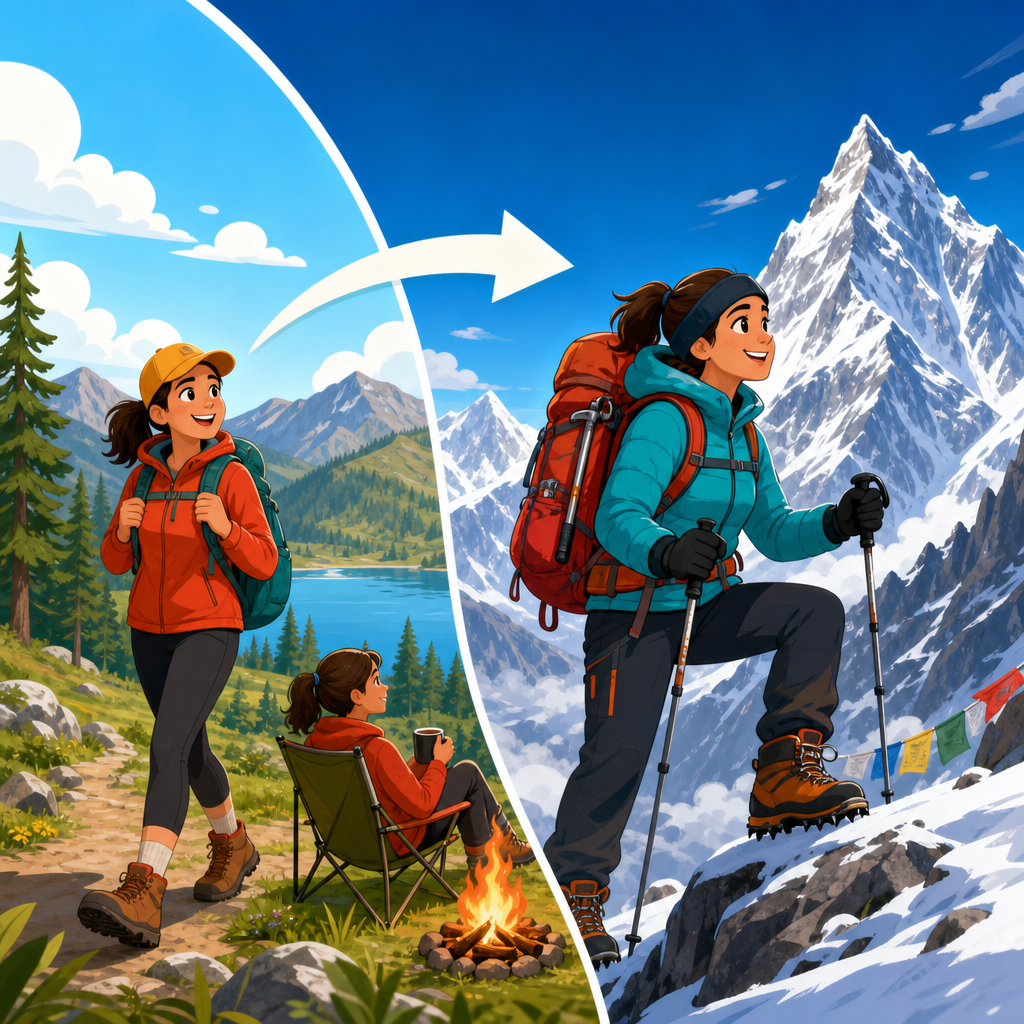
A weekend trip can help you pre-acclimate for a bigger mountain trip, but only within clear physiological limits, and understanding those limits is what separates useful preparation from false confidence. Pre-acclimation means exposing your body to moderate altitude before a major ascent so early adaptations begin before the main trip. In practical terms, that usually means spending one or two nights higher than you normally live, hiking or sleeping at elevation, then returning home before the main expedition. Training, in this context, includes aerobic fitness, uphill conditioning, breathing efficiency, hydration habits, and schedule design. The topic matters because altitude illness is driven by reduced oxygen pressure, not by toughness, and many otherwise fit travelers underestimate how different high elevation feels. I have seen weekend altitude blocks make a noticeable difference in how clients tolerate the first days of a longer trek, especially between roughly 2,000 and 3,500 meters. I have also seen people assume one quick trip “acclimatized” them for 4,500 meters and above, then struggle badly. A strong hub article on pre-acclimation and training has to answer the central question directly: yes, a weekend trip can help, but it is best viewed as partial preparation that improves your starting point rather than a substitute for proper acclimatization on the main climb.
How pre-acclimation works in the body
Altitude becomes stressful because barometric pressure falls as elevation rises, so each breath delivers less oxygen into the lungs and then into the blood. Within minutes to hours, ventilation increases; that is the first and most important adaptation. Over the next day or two, the kidneys begin adjusting acid-base balance so you can sustain faster breathing. Plasma volume may fall, making the blood more concentrated. Over a longer period, erythropoietin rises and stimulates red blood cell production, but meaningful increases in oxygen-carrying capacity take far longer than a weekend. This is why a short trip can help your first 24 to 72 hours at altitude but cannot fully prepare you for a much higher objective.
The useful takeaway is simple. A weekend exposure can prime the breathing response, remind you what altitude feels like, and reduce the shock of your first nights on the main trip. It can also expose weak points in pacing, layering, hydration, nutrition, and sleep. What it will not do is create complete adaptation or protect you from acute mountain sickness if your itinerary is too aggressive later. The Wilderness Medical Society guidance on altitude illness consistently supports gradual ascent as the main prevention strategy. Pre-acclimation is an aid, not a bypass.
When a weekend trip helps most
The biggest benefit comes when the weekend trip resembles the early phase of the main trip. If your larger objective starts with nights around 2,500 to 3,000 meters, then a weekend sleeping somewhere in that range can be genuinely useful. Skiers heading to Colorado resorts, trekkers preparing for Kilimanjaro, hikers planning a fast move into the Alps, and climbers flying from sea level to the Andes can all gain something from this kind of exposure. In my experience, the people who feel the clearest benefit are those coming from low elevation and those whose main itinerary compresses the first few days.
A weekend trip is also valuable if it lets you test logistics under mild altitude stress. Many problems blamed on altitude are actually poor pacing, under-eating, alcohol use, dehydration, overheating during effort, or trying new gear on a major trip. A short mountain weekend surfaces those issues cheaply and early. For example, if you discover at 2,700 meters that you stop drinking when it is cold, that your breakfast is too light, or that your pack setup drives your heart rate up on climbs, you have learned something actionable before a more consequential expedition.
What a weekend trip cannot do
One of the most common mistakes is assuming that because you felt fine for a night or two at moderate altitude, you are protected at much higher elevations. You are not. The risk of acute mountain sickness rises with sleeping elevation and ascent rate, and severe forms such as high altitude cerebral edema and high altitude pulmonary edema remain possible if you go too high too fast. A weekend at 2,500 meters does not prepare you adequately for sleeping at 4,300 meters three days later. Even repeated short trips have diminishing returns if your main itinerary is still too aggressive.
There is also a retention problem. Some acclimatization gains fade after returning to low altitude. Ventilatory adaptation can persist for a while, but the effect is not permanent, and the timeline varies by individual and exposure pattern. That is why the timing of a weekend trip matters. Usually, closer is better, particularly within one to three weeks of the main departure. If the trip happened two months ago, treat it as useful experience, not current acclimatization.
Best altitude targets, timing, and structure
For most travelers, the sweet spot for a pre-acclimation weekend is sleeping roughly between 2,000 and 3,000 meters, with daytime exercise somewhat higher if terrain allows and symptoms remain mild. Higher is not automatically better. If the pre-trip weekend is so high that it leaves you exhausted, sleep deprived, or ill, it becomes counterproductive. A practical structure is to drive or travel up, keep day one moderate, sleep one night at altitude, add a controlled hike on day two, sleep a second night if possible, then descend. If you know your main trip begins with sleeping around 3,000 meters, spending one or two nights near that level is usually more useful than a single hard push much higher.
| Pre-trip pattern | Likely benefit | Best use case |
|---|---|---|
| 1 night at 2,000–2,500 m | Mild familiarization | First exposure, gear and pacing test |
| 2 nights at 2,500–3,000 m | Meaningful early adaptation | Lowlanders starting a trek at moderate altitude |
| Day hikes to 3,000–3,500 m, sleep lower | Useful stimulus with better recovery | Those prone to poor sleep high up |
| Repeated weekends over 3–6 weeks | Best non-camp strategy | Athletes preparing for high, fixed travel dates |
If you have access to mountains, repeated exposures work better than one isolated weekend. That can mean sleeping high on consecutive weekends, or using a “climb high, sleep lower” pattern on each trip. This approach mirrors what many experienced climbers do intuitively because it balances stimulus and recovery. It also lets you monitor whether the second exposure feels easier, which is often a good sign that the first trip had training value.
How fitness training supports pre-acclimation
Fitness does not prevent altitude illness, but it does improve your margin for error by lowering relative effort at any given pace. When I prepare people for high trekking, I focus on steady aerobic work, uphill economy, and pack-specific strength endurance. Zone 2 aerobic training builds durability and helps keep heart rate under control on long approaches. Hill intervals and stair climbing improve tolerance for sustained ascents. Strength work, especially step-ups, split squats, calf loading, and trunk stability, helps hikers move efficiently under load. The fitter you are, the easier it is to maintain a conservative pace, and conservative pacing is one of the most reliable altitude-management tools.
Breathing and recovery habits matter as well. Many travelers surge on steep sections, then stop repeatedly because they have drifted above a sustainable intensity. At altitude, that pattern amplifies breathlessness and anxiety. A better method is pressure breathing on steeper terrain, shorter steps, and a pace that allows conversation in phrases rather than gasps. Good sleep hygiene before travel, adequate carbohydrate intake during long efforts, and realistic pack weights also influence how altitude feels. In other words, training supports acclimatization by reducing unnecessary physiological stress.
Alternatives and add-ons: hypoxic tents, gyms, and medication
If you cannot reach real mountains, simulated altitude can still play a role, but expectations need to be realistic. Hypoxic tents and altitude rooms reduce the oxygen fraction you breathe, creating a lower-oxygen environment without changing barometric pressure. They can support staged pre-acclimation, especially when used consistently for sleeping over multiple weeks. Elite programs sometimes follow “live high, train low” models, though those are designed mainly for performance adaptation and require careful setup. For ordinary travelers, the main barrier is compliance: sleeping in a tent system for many nights is uncomfortable for some users, and sporadic use is less effective.
Commercial altitude classes and mask-based systems are more mixed. Exercise in hypoxia can increase tolerance to breathlessness, but the evidence for short, intermittent sessions as a reliable substitute for real acclimatization is weaker than many marketing claims suggest. If you use these tools, treat them as supplemental. The strongest non-pharmacologic strategy remains gradual ascent, ideally informed by prior real-altitude exposure.
Medication belongs in the conversation because many trip plans are constrained by flights and fixed schedules. Acetazolamide is the standard preventive option for people ascending rapidly or with a history of acute mountain sickness. It helps by stimulating ventilation through mild metabolic acidosis, effectively supporting the same adaptation your body is trying to make. It does not replace a safe itinerary, but it can make a compressed schedule safer. Dexamethasone, nifedipine, and other drugs have more specific roles and should be used based on medical guidance. Any preventive medication plan should be tested before a major trip so side effects do not surprise you in the mountains.
How to build a practical pre-acclimation plan
The best plan starts with your main trip profile: highest sleeping elevation, rate of ascent, total days, prior altitude history, and access to mountains before departure. From there, build backwards. If you live near altitude, schedule one to three weekends in the month before departure, aiming to sleep at or just below the altitude of your main trip’s first high camps or lodges. If you live at sea level with limited access, prioritize one weekend within two weeks of departure and pair it with strong aerobic preparation and conservative early-trip pacing. If your expedition starts above 3,500 meters, discuss medication and itinerary safeguards early rather than hoping fitness will carry you through.
Finally, use the weekend trip as an assessment, not just exposure. Track resting heart rate, sleep quality, appetite, urine color, headache severity, and how hard moderate exercise feels. If you develop persistent headache, nausea, unusual fatigue, or poor coordination, descend and reassess. Learning to recognize your own early symptom pattern is one of the most valuable outcomes of pre-acclimation. It makes you calmer, faster to respond, and less likely to ignore warning signs on the bigger objective.
The short answer is yes: a weekend trip can help you pre-acclimate for a bigger mountain trip, especially if it includes one or two nights sleeping between about 2,000 and 3,000 meters and happens close to departure. Its benefits are concrete but modest. You may breathe more comfortably on the first days, sleep slightly better, pace yourself more intelligently, and arrive with tested systems for food, hydration, clothing, and effort. What a weekend trip cannot do is fully prepare you for a much higher or much faster ascent. Gradual ascent still matters most, and no amount of motivation changes the underlying physiology.
The most effective preparation combines several layers: a realistic itinerary, repeated altitude exposure if available, aerobic and uphill training, disciplined pacing, and preventive medication when appropriate. Think of pre-acclimation as stacking advantages rather than searching for a single hack. When those advantages line up, your odds of staying healthy and performing well improve meaningfully. Use this page as your starting point for every pre-acclimation and training decision, then build a plan that matches your route, your altitude history, and your timeline. If a bigger mountain trip is on your calendar, schedule that weekend now and make it count.
Frequently Asked Questions
Can a weekend trip really help you pre-acclimate for a bigger mountain trip?
Yes, a weekend trip can help, but the benefit is modest and very specific. If you spend one or two nights at moderate altitude before a larger mountain objective, your body may begin some of the early adjustments that happen during acclimatization. That can include changes in breathing, fluid balance, and your overall familiarity with how your body feels when you sleep, hike, and recover at elevation. For many people, this means the first day or two of a later trip may feel a little less abrupt than if they had gone straight from sea level or low elevation to a high mountain environment.
That said, a weekend trip is not a shortcut to full acclimatization. It does not make you “altitude proof,” and it should never create false confidence about how aggressively you can ascend on the main trip. The biggest value of a short pre-acclimation outing is that it may slightly reduce the shock of initial exposure and give you useful information about your own response to altitude. In other words, it can be a helpful head start, not a substitute for a careful ascent plan, conservative pacing, good hydration, proper recovery, and close attention to symptoms once the real trip begins.
What kind of weekend trip is most useful for pre-acclimation?
The most useful weekend trip is usually one that exposes you to moderate altitude in a controlled, low-risk way. In practical terms, that often means driving or hiking to a mountain area where you can spend one or two nights higher than you normally live, ideally at an elevation that is high enough to trigger some adaptation but not so high that you are pushing into severe stress before your main objective. Sleeping at elevation matters, because acclimatization is strongly influenced by time spent high, not just a short daytime hike. A daytime hike followed by sleeping low can still be valuable, but a trip that includes overnight exposure is generally more helpful for true pre-acclimation.
It also helps if the weekend trip includes light to moderate activity rather than maximum effort. A steady hike, easy movement, and time spent resting at elevation often provide a better acclimation signal than treating the weekend as a hard training event. The goal is exposure, not exhaustion. If you overdo the effort, become dehydrated, sleep poorly, or leave the weekend deeply fatigued, you may blunt the practical benefit. The best pre-acclimation weekend is one that lets you spend meaningful time high, sleep reasonably well, monitor how you feel, and return home healthy rather than depleted.
What are the limits of pre-acclimation from just one weekend?
The main limit is that acclimatization is a process, not a one-time event. Your body can begin adapting within hours to days, but stronger and more durable changes take longer exposure and often require a staged ascent over multiple days. A single weekend may help start the process, but it cannot replicate what happens during a well-managed longer stay at altitude. It also cannot guarantee how you will perform on a later trip, especially if the later trip involves substantially higher elevation, faster ascent, heavier loads, colder weather, poor sleep, or back-to-back hard days.
Another important limitation is timing. Any early gain from a weekend trip does not last indefinitely. If your bigger mountain trip happens soon afterward, the benefit may still be relevant. If too much time passes, the effect can fade. There is also a major individual factor: some people respond well to short exposure, while others remain highly sensitive to altitude no matter how fit they are. Fitness helps with work capacity, but it does not eliminate altitude risk. That is why a weekend pre-acclimation trip should be viewed as one layer of preparation, not as permission to ignore standard altitude precautions on the main climb.
How soon before the bigger trip should you do a pre-acclimation weekend?
In general, the closer the pre-acclimation weekend is to the main mountain trip, the more likely you are to preserve some of the early adaptations and practical familiarity you gained. Many people aim to schedule the weekend trip shortly before the bigger objective so that the body is not starting from zero when the main ascent begins. This can be especially useful if your usual home elevation is low and your major trip begins with a rapid jump to higher terrain.
At the same time, “close” does not mean “so close that you arrive worn out.” You still need enough time to recover from travel, hiking, disrupted sleep, and general fatigue. A pre-acclimation weekend works best when it leaves you refreshed and informed, not drained. The exact timing depends on your schedule, recovery ability, and the demands of the main expedition, but the core principle is simple: use the weekend trip to prime your system, then begin the bigger trip with a conservative altitude plan rather than assuming the earlier exposure solved everything.
Can a weekend trip reduce the risk of altitude sickness, or should you still follow a cautious ascent plan?
You should absolutely still follow a cautious ascent plan. A weekend trip may reduce some of the initial strain of going to altitude, but it does not remove the risk of acute mountain sickness or more serious altitude-related illness. Altitude problems are influenced by how high you go, how fast you ascend, how well you sleep, your hydration and nutrition, your recent exposure history, and your personal susceptibility. Even people who have done a successful pre-acclimation weekend can still develop symptoms if they climb too fast or ignore warning signs.
The smart approach is to treat the weekend trip as helpful preparation, not as protection. Continue to build in gradual ascent when possible, be conservative with sleeping elevation, keep effort reasonable early in the trip, and watch carefully for symptoms such as headache, nausea, dizziness, unusual fatigue, poor sleep, or loss of appetite. If symptoms worsen rather than improve with rest, that is a signal to stop ascending and reassess. In short, a weekend trip can improve readiness, but sound mountain judgment remains the real safety tool. Pre-acclimation is useful when it supports a cautious plan, and dangerous when it creates false confidence.