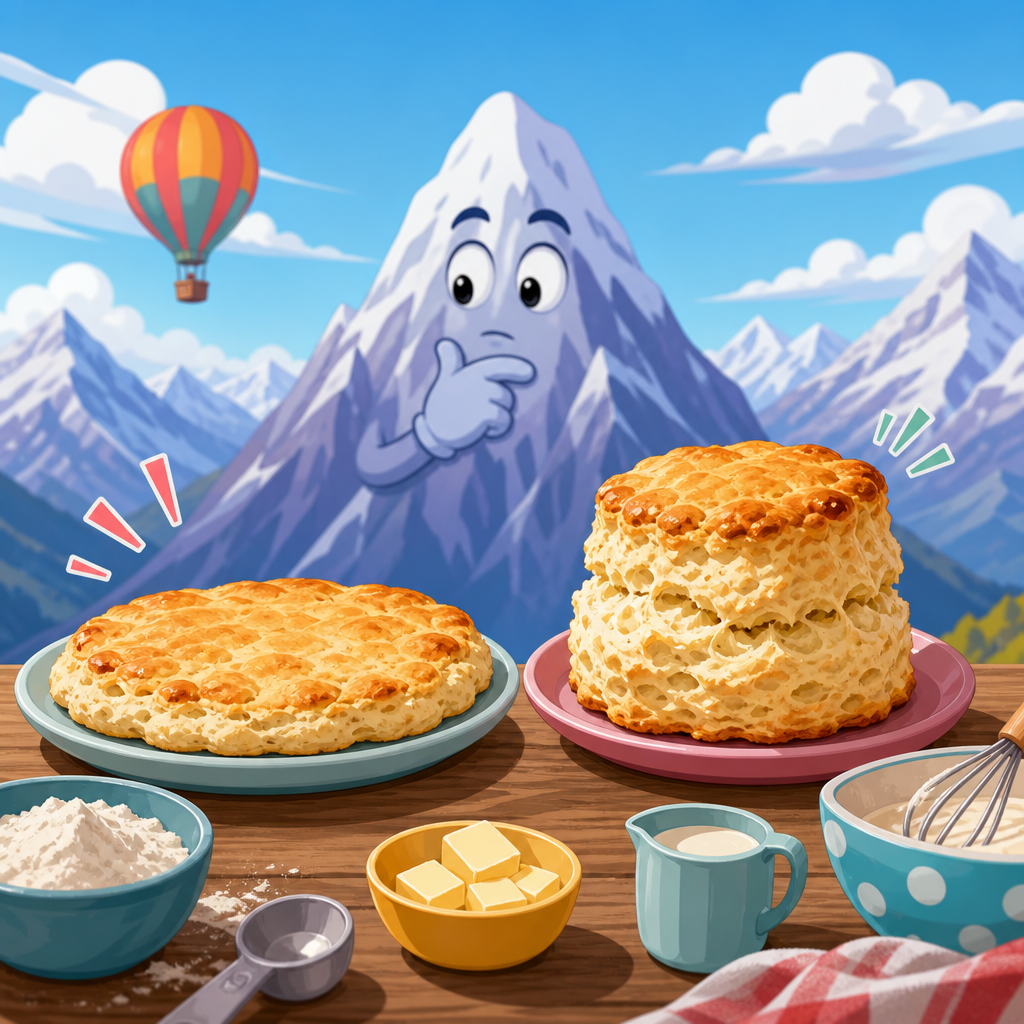
Scones at altitude often spread because the same dough balance that works near sea level behaves differently when air pressure drops, moisture evaporates faster, and leavening gases expand sooner. In practical terms, “spread” means the dough loses height and defined edges before the crumb sets, producing flatter rounds, excessive lateral flow, and bottoms that brown before the centers finish. I have tested this problem repeatedly in mountain kitchens, and the pattern is consistent: altitude changes how flour hydrates, how butter melts, how baking powder reacts, and how quickly the oven drives off water. For anyone building confidence with quick breads and breakfast bakes, understanding this single issue opens the door to better biscuits, muffins, coffee cakes, soda breads, and breakfast pastries. This hub explains why scones spread at altitude, what adjustments solve it, and how the same principles guide the broader category of high-altitude quick baking.
Quick breads are baked goods leavened with baking powder, baking soda, steam, eggs, or a combination of those mechanisms rather than yeast fermentation. Breakfast bakes within this group include scones, muffins, biscuits, banana bread, loaf cakes, baked oatmeal, coffeecake, cornbread, and similar items mixed and baked on a relatively short timeline. At altitude, usually starting around 3,000 feet and becoming more noticeable above 5,000 feet, reduced atmospheric pressure accelerates gas expansion and moisture loss. That means formulas designed for lower elevations can over-rise, under-set, dry out, or collapse. Scones make the issue obvious because their ideal texture depends on a narrow balance: enough lift for layers and tenderness, enough structure to hold shape, and enough fat to create a short crumb without liquefying into the pan.
This topic matters because breakfast baking punishes small mistakes. A dinner roll can recover through proofing adjustments, but a scone or muffin batter has fewer opportunities to correct itself once mixed. Home bakers also tend to judge quick breads by visual cues: tall muffin domes, sharp scone edges, clean loaf slices, and even browning. At altitude, those cues change unless the formula changes too. The good news is that the fixes are systematic, not mysterious. They involve controlling leavening strength, improving dough structure, managing temperature, and matching pan, portion, and bake profile to your elevation. Master those variables and this entire category of quick breads becomes more predictable.
Why scones spread at altitude
The main reason scones spread at altitude is that the dough expands before its starches and proteins have set enough to support the rise. Lower air pressure allows carbon dioxide and steam to push outward more aggressively. If the dough contains too much baking powder, too much sugar, too much liquid, or overly warm fat, the result is rapid early expansion followed by lateral slumping. In side-by-side bakes I have run at 5,280 feet, the exact same cream scone formula that stood tall near sea level produced wider, softer mounds with blurred edges unless I cut the leavening and tightened the dough.
Butter behavior is the second major factor. Traditional scones rely on cold butter pieces that remain discrete long enough to create steam pockets and flaky separation. At altitude, kitchens are often dry and sunny, and dough warms quickly during mixing, shaping, and cutting. If the butter softens too much, it smears into the flour instead of staying in pieces. Then, once the tray enters the oven, the fat melts before the crumb can set, and the dough spreads outward. This is why high-altitude bakers often report that one batch spreads while another, made from the same recipe, bakes perfectly on a colder day.
Flour strength and hydration also matter more than most recipes acknowledge. Flour is never just flour in practice; protein level, milling style, and absorption vary by brand. At altitude, faster evaporation can make dough seem dry during mixing yet still bake loose if the structure is weak. Conversely, adding extra cream to chase a smoother dough often tips the formula toward spread. A proper scone dough should look somewhat rough, with visible butter pieces and just enough moisture to hold together when pressed. If it is glossy, sticky, or easily scooped like thick cake batter, it is too wet for sharply defined high-altitude scones.
The core fixes: formula, temperature, and handling
To fix spreading scones at altitude, start with the formula. Reduce baking powder modestly rather than dramatically; a common starting point is cutting total baking powder by about 10 to 25 percent above 5,000 feet, then fine-tuning from there. If the recipe is sweet, reduce sugar slightly because sugar weakens structure, delays setting, and increases spread. Increase flour carefully, usually by one to three tablespoons per batch, if the dough feels soft or sticky. If the recipe uses only cream for liquid, hold back a small portion and add it only if the dough will not hold when squeezed. These changes strengthen the dough without making it heavy.
Temperature control is nonnegotiable. Use cold butter, cold cream, and if your kitchen is warm, chill the flour bowl beforehand. After shaping and cutting, freeze or refrigerate the scones until they are very firm. I prefer a 15 to 25 minute chill for wedges and at least 30 minutes for drop scones. That pause hardens the fat, relaxes any handling warmth, and gives the dough a better chance to rise vertically before the butter melts. In professional production, I have held trays overnight under refrigeration and baked them directly from cold with more consistent height and cleaner edges than same-day room-temperature dough.
Handling technique is equally important. Mix only until the dough is cohesive. Overmixing develops gluten unevenly and warms the dough; undermixing leaves dry flour pockets that later create weak spots. Pat the dough thicker than you think you need. A disk around 1 inch thick or even slightly more gives the interior enough mass to support upward lift. Cut straight down with a sharp cutter rather than twisting, or use a bench scraper for wedges. Twisting seals the edges and can interfere with rise. For drop scones, use two spoons or a scoop and then nudge the portions upward rather than outward so they start tall.
| Problem | Likely cause at altitude | Best fix |
|---|---|---|
| Scones spread wide | Too much leavening, warm butter, soft dough | Reduce baking powder, chill shaped dough, add a little flour |
| Flat but greasy bottoms | Butter melted before structure set | Use colder ingredients, hotter oven, parchment on a heavy pan |
| Tough interior | Too much flour or overmixing | Mix less, reduce added flour, handle gently |
| Dry, crumbly scones | Excess evaporation and overbaking | Add a little more liquid, bake slightly shorter, check oven accuracy |
| High rise then collapse | Leavening too strong for elevation | Cut baking powder further and increase oven temperature slightly |
Oven setup and ingredient choices that improve structure
A slightly hotter oven usually helps scones at altitude because it sets the outer structure faster. Many bakers see better shape by increasing the baking temperature by 15 to 25 degrees Fahrenheit compared with a sea-level recipe, provided the dough is properly chilled. The goal is not darker color for its own sake; it is earlier starch gelatinization and protein coagulation so the dough rises upward instead of flowing outward. Use an oven thermometer because residential ovens often run 25 degrees off, and that error matters more at altitude where timing windows are narrower.
Pan choice changes spread too. Heavy-gauge light metal sheet pans usually outperform dark pans because they brown more evenly and reduce the risk of overcolored bottoms before the centers set. Parchment is generally better than greased pans for scones because excess grease encourages lateral slip. If your oven has a strong bottom element, double-panning can protect the base while preserving oven spring. Leave enough space between scones for airflow, but not so much that they are isolated in a way that encourages uneven heat patterns across the tray.
Ingredient selection can provide subtle but meaningful support. Flour with moderate protein, such as standard all-purpose in the 10 to 11.7 percent range, works well for most scones; very soft flour may lack structure, while bread flour can make the crumb too chewy unless balanced carefully. Buttermilk adds acidity, which can strengthen some doughs and activate baking soda in controlled ways, but it also changes browning and tenderness, so it should not be swapped blindly for cream. Eggs improve structure and richness, which is why some high-altitude bakers prefer egg-enriched scones when repeated spreading persists. A yolk wash helps color without requiring excess sugar.
How the same principles apply to quick breads and breakfast bakes
Scones are one part of a broader family, and the same altitude mechanics shape every quick bread and breakfast bake. Muffins often dome too fast, then tunnel or sink if leavening is excessive. Biscuits can tilt or spread if the dough is too soft or the cutter twists the edges. Banana bread and zucchini bread may crown dramatically and then collapse along the center line because the batter contains too much chemical leavener and moisture for the loaf to set in time. Coffee cakes can become gummy beneath the crumb topping when the topping insulates the batter while the center struggles to bake through. Once you recognize that lower pressure exaggerates expansion and evaporation, these outcomes become easier to diagnose.
For muffins, the standard altitude pattern is to reduce baking powder or soda slightly, increase oven temperature modestly, and watch sugar and liquid closely. For biscuits, the playbook nearly mirrors scones: cold fat, minimal handling, firm dough, straight cuts, and a hot oven. For loaf-style quick breads, the balance shifts toward pan depth and bake duration. A batter that looks normal at sea level may need a touch more flour, one less tablespoon or two of sugar, or an extra egg white at elevation to prevent collapse. In baked oatmeal and breakfast casseroles with a bread-like structure, reduced liquid or slightly longer rest times can prevent wet centers.
As a hub for quick breads and breakfast bakes, this page should connect readers to deeper guides on high-altitude muffins, biscuits, banana bread, coffee cake, cornbread, pancakes, waffles, and baked oatmeal. The common thread is methodical adjustment, not guesswork. Start with elevation, identify the product type, then decide whether the formula needs less leavening, less sugar, more structure, more liquid retention, colder handling, or a hotter oven. That decision tree is more reliable than generic advice to “just add more flour,” which can solve spread in one product while ruining tenderness in another.
A practical troubleshooting workflow for repeatable results
When a batch fails, change one variable at a time and keep notes. Record elevation, room temperature, flour brand, pan type, ingredient temperatures, dough feel, bake temperature, and total bake time. I learned this the hard way after three nearly identical blueberry scone batches produced three different spreads because one tray sat on the counter while I cleaned up, one went into a warmer oven, and one used a different brand of butter with a slightly lower melting profile. Without notes, those differences are easy to miss and impossible to learn from.
Use a consistent sequence. First, evaluate dough firmness before shaping. Second, chill shaped pieces until genuinely cold. Third, verify oven temperature with an independent thermometer. Fourth, assess spread in the first ten minutes of baking without opening the door unless absolutely necessary. If the dough still spreads, your next adjustment should usually be less leavening or a slightly firmer dough, not endless chilling alone. If the shape holds but the interior is dry, restore a bit of liquid or shorten the bake. If the scones rise tall but taste coarse, you have likely overcorrected with flour or reduced fat too much.
The biggest benefit of mastering scones at altitude is not just better scones. It is a framework for every quick bread and breakfast bake you make afterward. Reduced pressure changes expansion, moisture, and timing, but those variables can be managed. Build colder doughs, stronger structure, smarter leavening, and more accurate oven conditions, and your results become predictable. Use this hub as your starting point, then apply the same logic across muffins, biscuits, loaf breads, and breakfast cakes. Bake one test batch, write down what happens, and make your next adjustment with confidence.
Frequently Asked Questions
Why do scones spread so much more at high altitude than they do near sea level?
At altitude, scones spread more because several baking variables shift at the same time, and most of those changes work against structure. Lower air pressure allows the gases created by baking powder, baking soda, steam, and trapped air in the dough to expand earlier and more aggressively. That early expansion sounds helpful, but in scones it often happens before the dough has enough strength to hold its shape. The butter softens, the moisture evaporates faster, and the outer structure can lag behind the internal push, so instead of rising upward in a neat, tall form, the dough relaxes outward.
In practical terms, spreading means the dough loses height and clean edges before the crumb sets. You may see flatter tops, rounded corners instead of sharp cut sides, more lateral flow on the pan, and bottoms that brown too fast while the centers still need time. That pattern is especially common in mountain kitchens because the same dough balance that feels perfect near sea level can become too wet, too weak, or too aggressively leavened once altitude changes the timing of expansion and evaporation.
The core issue is not usually one single mistake. It is the combination of flour hydration, fat temperature, leavening strength, oven heat, and dough handling. At higher elevations, even a slightly soft butter, a touch too much liquid, or an extra bit of leavener can push a workable dough into a spreading dough. That is why successful altitude baking usually comes from tightening the formula and the process at the same time rather than relying on one dramatic fix.
What are the most effective recipe changes to keep scones tall and defined at altitude?
The most effective adjustments are usually modest but intentional. First, reduce the total liquid slightly. Because moisture evaporates faster at altitude, many bakers assume they always need more liquid, but with scones, excess moisture often weakens the dough before it has a chance to set. If your dough feels loose, sticky, or overly glossy, cut back the cream, milk, buttermilk, or egg mixture a little at a time until the dough holds together firmly without becoming dry. A good scone dough should look slightly shaggy but still stand up when patted out.
Second, consider increasing the flour slightly or using a somewhat higher-protein flour if your current recipe consistently slumps. A small increase in flour gives the dough more body and helps it maintain sharp edges during the first minutes in the oven. You do not want a tough biscuit-like texture, but you do want enough structure to resist premature spread. If your recipe is rich in cream, fruit, or add-ins, that extra support can make a noticeable difference.
Third, reduce the leavening a bit if your scones puff quickly and then collapse outward. At altitude, baking powder and baking soda can act more forcefully because gases expand more readily. Too much leavening can create rapid lift before the crumb stabilizes, which often turns into sideways movement rather than height. A small reduction is usually more effective than a dramatic one, because you still want a tender crumb and good internal rise.
Fourth, increase oven temperature slightly if needed. A hotter oven helps the exterior and interior structure set sooner, which limits spread. This is especially useful if your scones are flattening before they gain vertical lift. The goal is not to overbrown them but to give them an earlier structural “set” so they rise up rather than melt outward.
Finally, keep the fat cold and the dough cool from start to finish. Cold butter creates steam and layers while also delaying melt. Warm butter leaks early, weakens the dough, and encourages the exact kind of lateral spread you are trying to prevent. In altitude baking, temperature control is not just a nice technique; it is one of the strongest shape-preserving tools you have.
How should the dough look and feel if I want altitude scones that rise instead of spreading?
The dough should feel cohesive, cool, and lightly firm rather than soft, sticky, or loose. If you pat it into a round or rectangle and it immediately relaxes at the edges, that is a warning sign that it may spread during baking. A properly balanced altitude scone dough should hold defined lines when cut, and the individual pieces should transfer to the baking sheet without sagging or slumping.
Visually, the dough should look a little rough, not smooth like cookie dough. Those rough surfaces and visible butter pieces are useful because they indicate the fat has not been overworked into the flour. Overmixed dough tends to warm up, lose its internal layering, and behave more heavily in the oven. Under-structured dough, on the other hand, can appear wet and pasty, which often leads to flatter scones with blurred edges.
When pressed together, the dough should hold without oozing. It should not feel crumbly and dry, but it also should not feel so hydrated that it sticks aggressively to your hands or bench scraper. If you need a heavy dusting of flour just to move it, the dough may be too wet. At altitude, aiming for a slightly firmer dough than you might use at sea level often produces better shape retention and more reliable rise.
Thickness matters too. If you roll or pat the dough too thin, it has less vertical potential and more tendency to spread. A taller cut gives the dough somewhere to go but up. Sharp cuts also help. Press straight down with a cutter or knife rather than twisting, because twisting can seal the edges and interfere with even lift. In a mountain kitchen, those seemingly small handling choices can be the difference between neat, high-rising scones and broad, flat ones.
Does chilling really help prevent spreading, and when should I chill the dough?
Yes, chilling helps a great deal, and for altitude scones it is often one of the most reliable fixes. Chilling keeps the butter solid, firms the dough, and slows the early stage of fat melt that can cause the dough to relax before the crumb sets. Since high altitude already encourages faster gas expansion and faster moisture loss, starting with a colder dough gives you a buffer. It helps the scones maintain their shape long enough for oven heat to build structure where you want it.
The best time to chill is after shaping and cutting. Once the scones are portioned, place them on the baking sheet and refrigerate until they feel cold and firm again. This is especially important if your kitchen is warm, your hands have handled the dough a lot, or the butter softened during mixing. Even a short chill can noticeably improve edge definition and height.
If your recipe is particularly rich or your altitude is especially high, freezing the shaped scones briefly before baking can work even better than refrigeration. You do not need to freeze them solid unless you are storing them; you just want the butter very cold and the dough well set. That colder starting point encourages better oven spring in the upward direction instead of outward flow.
Chilling is not a substitute for a balanced formula, but it amplifies good technique. If the dough is far too wet or heavily leavened, chilling may reduce the symptoms without solving the cause. Still, when paired with slightly reduced liquid, careful mixing, and a properly hot oven, chilling is one of the simplest and most effective ways to keep altitude scones tall, tender, and clearly shaped.
What baking and handling mistakes most often cause flat, over-spread scones at altitude?
The most common mistake is making the dough too wet. This can happen from adding all the liquid automatically, measuring flour lightly, using very large eggs, or incorporating juicy fruit without accounting for the extra moisture. At altitude, that softness shows up quickly as spread. If your dough feels more like a sticky drop dough than a shapeable scone dough, the final bake will often reflect that imbalance.
Another frequent problem is using butter that is too warm or overworking the dough until the butter disappears into the flour. Scones need cold fat for both tenderness and lift. Once the butter softens too much, the dough loses the delayed melt that helps preserve shape. Instead of creating steam pockets and flaky layers, the fat leaks early and encourages the scones to flatten and brown on the bottom.
Too much leavening is also a major cause. At sea level, a certain amount of baking powder may create a nice high rise. At altitude, that same amount can make the scones balloon early and then collapse outward before the structure catches up. The result is often a broad, uneven shape with a coarse crumb. Similarly, an oven that runs cool can make spreading worse because the dough has more time to soften and move laterally before the proteins and starches set.
Handling errors matter as well. Twisting the cutter, rolling the dough too thin, spacing pieces too closely, or baking on a warm sheet can all contribute to poor shape. Warm pans and delayed baking are especially problematic in mountain kitchens because they give the butter a head start on melting. For the best results, mix minimally, shape efficiently, cut cleanly, chill the portions, and bake on a fully preheated oven with a cool baking sheet. When you remove those process errors, altitude adjustments become much more predictable and your scones are far more likely to rise high instead of spreading