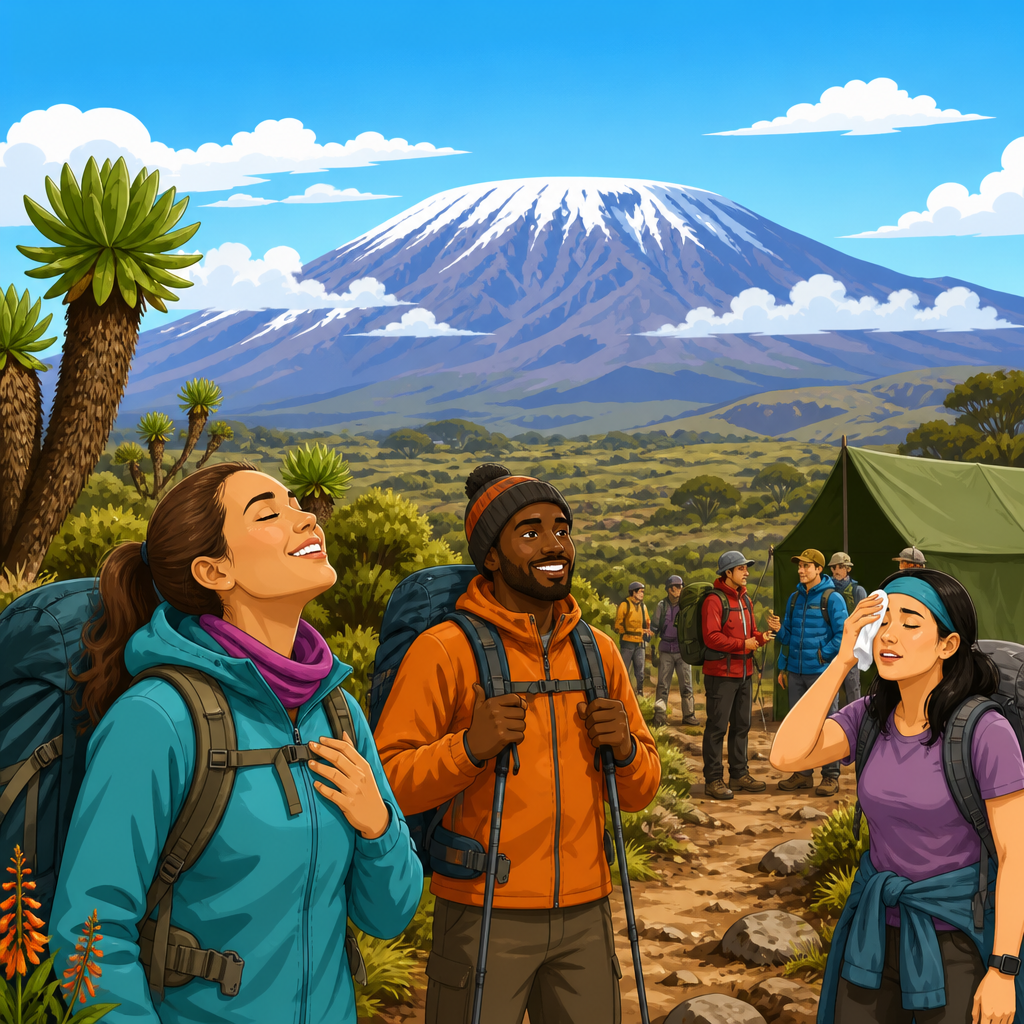
Arriving in Kilimanjaro is not just an airport transfer or a hotel check-in; it is the moment your trek preparation becomes physical. The abstract ideas you considered at home—altitude, heat, dehydration, long travel days, dusty roads, and restless sleep—start showing up in your body within hours of landing. For trekkers heading to Mount Kilimanjaro, understanding what to expect physically when you arrive in Kilimanjaro helps you reduce stress, manage symptoms early, and begin the climb in a stronger position.
Kilimanjaro usually refers to the broader travel gateway around Kilimanjaro International Airport, Moshi, and Arusha rather than the mountain itself. Most travelers land after a long-haul journey, often slightly dehydrated, sleep deprived, and stiff from sitting. Trek preparation means more than packing boots and rain gear. It includes anticipating how equatorial sun, a higher starting elevation than sea level, new food, changed routines, and pre-trek nerves can affect your muscles, digestion, breathing, and energy. In my experience preparing trekkers for summit week, the people who feel best on day one are rarely the fittest on paper; they are the ones who arrive expecting their bodies to need a reset.
This matters because the first forty-eight hours set the tone for the entire expedition. A mild headache ignored on arrival can become a hydration problem. A heavy celebratory meal can leave you bloated before your gear check. Skipping movement after a red-eye flight can make your legs feel flat on the first hiking day. By knowing what is normal, what deserves attention, and how to respond, you can protect performance and enjoy the start of the journey.
The first physical effects of landing in Kilimanjaro
Most trekkers notice three things immediately after arrival: fatigue, dryness, and heat. Even if the weather feels pleasant compared with a city summer, the air often seems drier than expected after hours in an aircraft cabin with low humidity. It is common to step off the plane with a dry throat, chapped lips, and a mild headache caused by travel rather than altitude sickness. Kilimanjaro International Airport sits at roughly 896 meters above sea level, so the arrival area is not high enough to cause serious altitude illness in healthy travelers, but it is high enough that some people who live at sea level notice slightly faster breathing during exertion.
Your body may also feel strangely heavy. After overnight flights, airport lines, and transfers over uneven roads, many travelers report tight calves, swollen feet, lower back stiffness, and a sense of general puffiness. This is a normal response to prolonged sitting and disrupted circulation. I advise trekkers to take a short walk, stretch hip flexors and calves, and begin drinking water steadily rather than all at once. Urine should trend pale yellow within several hours. If it stays dark, your hydration is still behind.
Digestive changes are also common on arrival. Jet lag can suppress appetite or trigger cravings for salty, familiar foods. Some trekkers feel constipated from flying; others develop loose stools from travel stress, meal timing changes, or overly rich food. None of this means your trek is compromised, but it does mean the first meals in Tanzania should be simple, moderate, and easy to digest.
How climate, sun, and dust affect your body before the trek starts
The Kilimanjaro region catches many first-time visitors off guard because it combines strong equatorial sun with variable temperatures. In Moshi or Arusha, afternoons can feel warm enough for a T-shirt, while early mornings and evenings are cool. The key physical challenge is not extreme heat alone; it is sun exposure layered on top of travel fatigue. Ultraviolet intensity near the equator is high year-round, and trekkers can burn quickly during a lodge garden walk, a town errand, or an equipment briefing.
You may also notice nasal dryness or mild coughing from road dust, especially in the dry seasons. Vehicles moving on unpaved surfaces can stir up fine particles that irritate the throat and sinuses. This can be mistaken for the start of a cold. Usually, hydration, saline spray, and reducing unnecessary exposure help. If you already have asthma or allergic rhinitis, keep inhalers and medication in your day bag, not buried in duffels.
Skin and eyes often need attention too. Contact lens wearers sometimes experience irritation from dust and low humidity. Sunglasses with UV protection are not just for summit day; they are useful from arrival onward. A broad-spectrum sunscreen of at least SPF 30, lip balm with sun protection, and a lightweight long-sleeve layer make a measurable difference in comfort before you ever touch the trail.
What altitude feels like at the start, and what it does not
One of the most common trek preparation questions is whether you will feel altitude the moment you arrive in Kilimanjaro. The accurate answer is usually no, not in a clinically significant way. Most accommodations in Moshi sit around 800 to 1,000 meters, while Arusha is commonly around 1,400 meters. At those elevations, healthy travelers may notice slightly drier breathing during brisk walking, but they should not expect true acute mountain sickness simply from being in town.
That said, people often misread travel fatigue as altitude. A headache after a long international itinerary is far more likely to come from dehydration, caffeine disruption, poor sleep, or skipped meals than from sleeping one night in Moshi. Knowing this distinction matters. If you assume every symptom is altitude, you may miss the simple fixes that actually help: water, electrolytes, food, movement, and sleep hygiene.
Real altitude adaptation begins on the mountain, where the pressure drop is large enough to matter. The best preparation on arrival is not trying to “train” acclimatization in town. It is arriving rested enough to start the route slowly, following the guide’s pace, and avoiding extra physical stressors such as alcohol excess or intense workouts the day before the trek.
Hydration, sleep, and digestion: the three systems to stabilize first
If I had to prioritize the physical basics for the first twenty-four hours in Kilimanjaro, they would be hydration, sleep, and digestion. These systems interact. Poor hydration worsens headaches and constipation. Bad sleep increases appetite swings and perceived exertion. Digestive upset undermines both fluid intake and energy levels. Trekkers who stabilize these early usually feel markedly better by the morning of departure.
| Physical issue on arrival | What it usually feels like | Most useful response |
|---|---|---|
| Dehydration | Headache, dry mouth, dark urine, fatigue | Drink water steadily, add electrolytes, limit alcohol |
| Jet lag | Early waking, poor concentration, low energy | Get daylight exposure, keep naps short, sleep at local time |
| Digestive disruption | Bloating, constipation, loose stool, reduced appetite | Choose simple meals, avoid overeating, carry medications advised by your clinician |
| Muscle stiffness | Tight calves, hips, lower back, swollen feet | Walk gently, stretch, elevate feet, avoid hard training |
Hydration should be deliberate. The Wilderness Medical Society and high-altitude clinicians consistently emphasize avoiding both dehydration and overhydration. In practical terms, this means drinking regularly, monitoring urine color, and replacing salts if you have been sweating. Sleep is trickier because excitement and time zone shifts can keep you awake. A calm evening routine, reduced screen time, and a lighter dinner work better than forcing sleep with habits you never use at home.
For digestion, use the same discipline you would use before a race. Eat enough carbohydrates to replenish travel depletion, include moderate protein, and avoid experimenting with very spicy or greasy meals if your stomach is sensitive. A familiar breakfast on trek day is better than a heroic buffet.
How your fitness feels after travel, and why that feeling can mislead you
Many trekkers judge their readiness based on how they feel during the first walk around the hotel grounds. This is unreliable. Long flights can mask fitness by making strong hikers feel sluggish, while adrenaline can make underprepared hikers feel temporarily energetic. I have seen marathon runners worry because a single flight of stairs felt hard after arrival, and I have seen casual walkers feel invincible until they hit their first sustained climb on the route. Neither impression predicts summit success.
Your muscles may feel flat because glycogen stores were reduced during travel and meal timing was erratic. Ankles and feet can be mildly swollen from cabin pressure and immobility. Shoulders and neck often tighten from carrying hand luggage. These are not signs that your training failed. They are signs that travel is physically demanding in its own right.
The best move is active recovery. A twenty- to thirty-minute easy walk, mobility work, and a normal meal are more useful than a “shakeout run.” Hard exercise on arrival rarely improves performance and can deepen dehydration or fatigue. Save your legs for the mountain. Trek preparation at this stage is about preserving capacity, not proving it.
Pre-trek health checks, gear checks, and warning signs you should not ignore
Most reputable operators conduct a gear inspection and ask about current symptoms before departure. Treat this as a health checkpoint, not a packing formality. If you have a persistent cough, vomiting, fever, chest pain, or significant diarrhea before the trek starts, speak up early. Guides are used to discussing these issues, and hiding symptoms helps no one. A minor issue managed immediately is far easier than a worsening condition at 3,500 meters.
It is also the time to confirm medication strategy. Diamox, if prescribed, should be used according to medical advice, not started casually because another trekker packed it. Anti-inflammatory drugs, anti-diarrheal medication, blister supplies, oral rehydration salts, and any personal prescriptions should be accessible and clearly labeled. The Centers for Disease Control and Prevention routinely advises travelers to carry medications in original containers and keep essential items in hand luggage. On Kilimanjaro, that is practical risk management, not bureaucracy.
Boot fit deserves special attention. Feet often swell slightly after flights, which can reveal pressure points you did not notice during training. Wear your trekking socks, lace boots carefully, and walk on stairs if possible. A hotspot identified in town is easy to tape. A hotspot ignored becomes a blister that changes your gait for six days.
Using your arrival days as the hub of trek preparation
The arrival period in Kilimanjaro should anchor every other part of trek preparation because it connects training, gear, acclimatization planning, nutrition, and mental readiness. If this page is your starting point, think of the process in linked pieces. Physical conditioning determines your recovery margin after travel. Footwear selection shapes how your legs feel on day one. Layering systems affect heat regulation before and during the climb. Hydration planning influences headache risk, digestion, and energy. Altitude education helps you separate normal travel discomfort from real mountain symptoms later.
In practice, a strong arrival routine is simple. Rehydrate on landing. Eat a balanced meal. Move enough to loosen up but not enough to create fatigue. Keep sun protection on during daytime errands. Organize medications, documents, and water treatment if your operator requires it. Attend the briefing with attention, because route profile, daily elevation gain, and bathroom realities all influence what your body will experience. Then sleep.
Trekkers who approach arrival this way usually start with steadier energy, calmer nerves, and fewer preventable problems. That is the real benefit of understanding what to expect physically when you arrive in Kilimanjaro: you gain control over the first stage of the climb before the trail even begins. Review your plan, prepare your body conservatively, and use your first day in Tanzania to set up a safer, stronger summit attempt.
Frequently Asked Questions
What physical changes do most people notice in the first few hours after arriving in Kilimanjaro?
Most trekkers feel the effects of travel almost immediately, even before they notice anything related to the mountain itself. After a long international journey, it is very common to feel dehydrated, stiff, tired, swollen in the feet or hands, slightly headachy, and mentally foggy. The air may feel warmer, drier, dustier, or heavier than what you are used to, depending on the season and where you flew from. Even if you arrive excited and energized, your body is often running on disrupted sleep, inconsistent meals, and many hours of sitting still. That can create a sense of fatigue that feels stronger than expected for a simple airport arrival.
Some trekkers also notice dry lips, a scratchy throat, mild constipation, low appetite, or a sense that their body is “off schedule.” None of this is unusual. In most cases, these early physical sensations are caused by travel stress, cabin dehydration, heat exposure, and jet lag rather than altitude illness. Kilimanjaro International Airport itself is not at extreme altitude, but you are entering a trekking environment where hydration, rest, digestion, and recovery suddenly matter more. The best response is simple and practical: drink water steadily, eat a light meal with carbohydrates and salt, walk around gently, shower if possible, and prioritize sleep rather than trying to “push through” with a busy first day.
Will I feel the altitude as soon as I arrive in Kilimanjaro?
Most people do not experience true altitude symptoms the moment they land, but some do notice subtle changes that make them more aware of their body. The areas where trekkers stay before the climb are usually high enough that you may feel slightly more winded on stairs, a little drier than usual, or more tired than expected during basic activity. That does not automatically mean you are developing altitude sickness. It often means your body is transitioning from travel mode into a higher, drier environment while still dealing with poor sleep and dehydration.
If symptoms appear, they are usually mild at first: a light headache, lower energy, disturbed sleep, reduced appetite, or an unusual awareness of breathing at night. Those symptoms can overlap with jet lag, so context matters. What experienced guides and trek doctors look for is not just one symptom, but a pattern that gets worse instead of better with rest, fluids, and food. If you arrive with a severe headache, vomiting, unusual shortness of breath at rest, confusion, or marked weakness, that is not something to ignore. But for most trekkers, the key point is this: arrival is when your body begins showing you how well it is handling hydration, sleep, and adjustment. Pay attention early, and small issues are much easier to manage before you go higher.
Why do I feel so tired, dehydrated, or headachy even before the trek starts?
This is one of the most common surprises for first-time Kilimanjaro trekkers. People often expect to feel normal until the mountain begins, but the physical load starts long before the first hiking day. Air travel is dehydrating, sleep during transit is usually poor, meal timing is disrupted, and many people drink less water than they think. Add airport stress, luggage handling, standing in lines, heat on arrival, and a transfer on bumpy or dusty roads, and your body may feel like it has already done a hard day. A mild headache, heavy legs, dry mouth, fatigue, and irritability are all very common results of that combination.
There is also a compounding effect. If you are slightly dehydrated, you may sleep worse. If you sleep worse, your pain tolerance drops and your headache feels stronger. If you feel tired, you may skip food, which can make weakness and nausea more noticeable. This is why experienced climbers treat arrival day as part of the expedition, not as empty time. Recovery habits on day one matter. Drink water consistently rather than all at once, add electrolytes if that works for you, eat something easy to digest, avoid excess alcohol, and do not mistake exhaustion for a sign that your trek is doomed. In most cases, once you rehydrate, rest, and settle into a routine, these symptoms improve significantly within a day.
What should I expect from the heat, dust, and local environment when I first get to Kilimanjaro?
Many trekkers prepare mentally for cold weather on the mountain but are caught off guard by how warm, dry, and dusty the arrival environment can feel. Depending on the season, the roads can be dry and dusty, the air can irritate your nose and throat, and the sun can feel stronger than expected. If you are wearing heavy travel clothes or not drinking enough, you may quickly feel overheated and drained. Dust can also make some people feel congested, trigger mild coughing, or irritate contact lenses and dry eyes. None of this is unusual, but it can make you feel physically less comfortable than expected during the first 24 hours.
The environment also affects your energy indirectly. Heat increases fluid loss, dust can make your mouth and throat feel dry, and strong sun can contribute to headaches and fatigue. If you are moving between the airport, vehicle transfers, and a hotel or lodge, you may not realize how much physical stress these small exposures are adding up to. Practical prevention goes a long way: wear light breathable clothing, keep a water bottle with you, use lip balm and sunscreen, consider saline spray if your nose dries out easily, and avoid overexerting yourself while “just walking around.” Arriving in Kilimanjaro is often your first reminder that environmental stress begins before the climb itself, and respecting that helps you start stronger.
How can I physically prepare myself on arrival so I start the climb in the best possible condition?
Your main job on arrival is not fitness building, gear testing, or sightseeing at full speed. It is recovery and stabilization. The most effective physical preparation in the first day is to normalize hydration, food intake, movement, and sleep. Start by drinking water regularly and pairing it with a balanced meal that includes carbohydrates, some protein, and enough salt to support fluid balance. Take a short walk or do some gentle stretching to loosen up from travel, but avoid turning arrival day into a workout. If you feel tempted to prove how strong you are, resist it. The strongest trekkers are usually the ones who arrive disciplined, not dramatic.
It also helps to monitor your body in a calm, objective way. Notice whether you have a headache, nausea, poor appetite, diarrhea, swelling, or unusual fatigue. Check whether those symptoms improve after rest and rehydration. Organize your medications, prepare layers for changing temperatures, and make sure you can easily access sunscreen, lip balm, water, and any doctor-recommended supplies. Most importantly, protect your sleep. Go to bed early if possible, reduce screen time, and avoid overloading your body with alcohol or very heavy meals. If you treat arrival as the first stage of acclimatization and physical management rather than a casual transition day, you give yourself a much better chance of beginning the Kilimanjaro trek steady, clear-headed, and resilient.