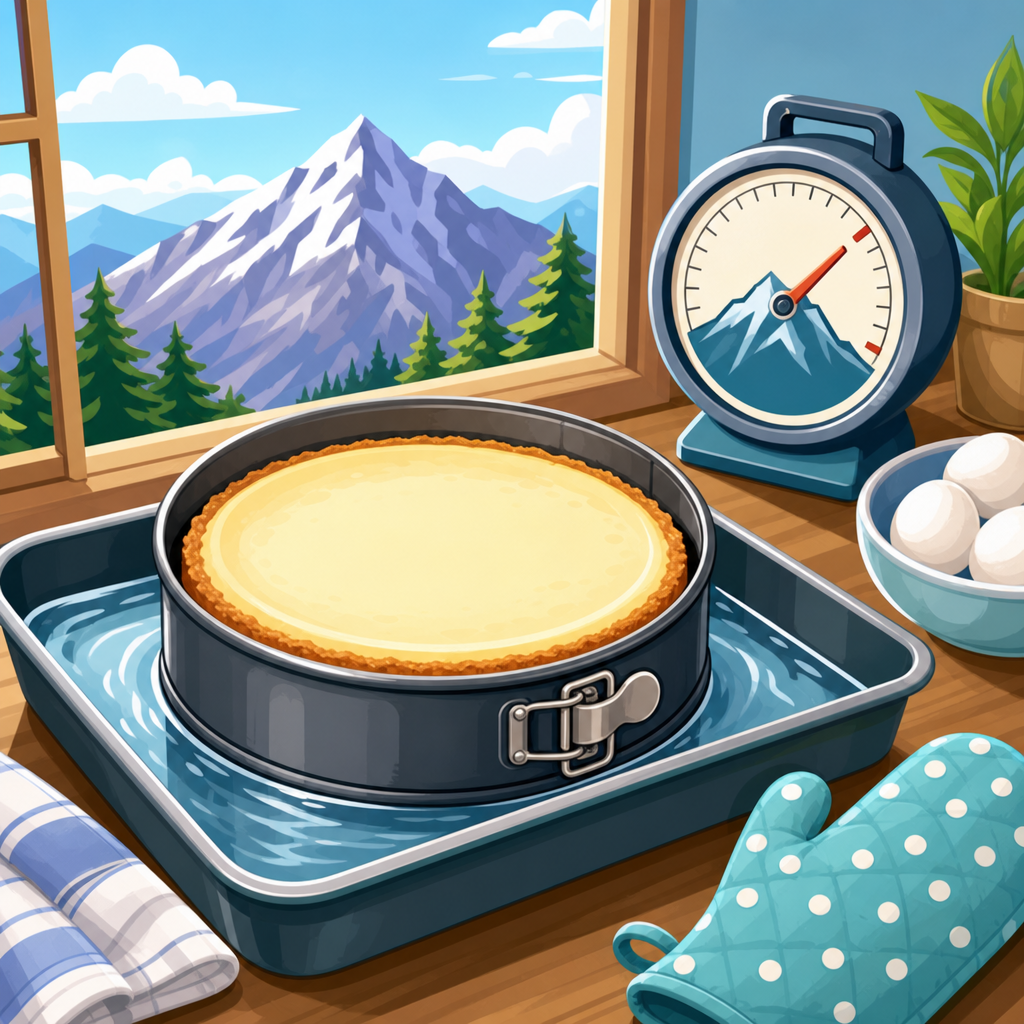
Cheesecake is one of the first desserts that exposes how altitude changes baking, because it depends on gentle heat, steady moisture, and a controlled rise from eggs rather than a strong flour structure. A water bath, often called a bain-marie, is the method bakers use to surround the pan with hot water so the custard cooks slowly and evenly. At sea level, that system is forgiving. At altitude, where water boils at a lower temperature and evaporation speeds up, the same setup can lead to underbaked centers, overbrowned tops, cracked surfaces, soggy crusts, or a cheesecake that looks set in the oven but turns loose after cooling.
When I started adapting cheesecakes in mountain kitchens, I learned quickly that the water bath itself was not optional; the standard instructions were. The higher you bake, the less useful generic advice becomes, especially above 3,000 feet. The key adjustment is understanding that altitude affects three linked variables at once: the temperature of the water surrounding the pan, the rate at which the batter loses moisture, and the speed at which trapped air and steam expand before the custard fully sets. If you manage those three factors, cheesecake becomes predictable again.
This article explains how to adjust cheesecake water baths at altitude and how those changes fit into broader baking troubleshooting and workflow. It defines the major pressure points, gives practical temperature and pan recommendations, and shows how to prevent the common failures that send bakers searching for last-minute fixes. It also serves as the central guide for altitude baking troubleshooting in this category, so each section is written to answer the questions people ask most: how much water to use, whether to wrap the pan, when to lower oven temperature, why cracks happen, and how to build a repeatable process from mixing through chilling.
Why altitude changes a cheesecake water bath
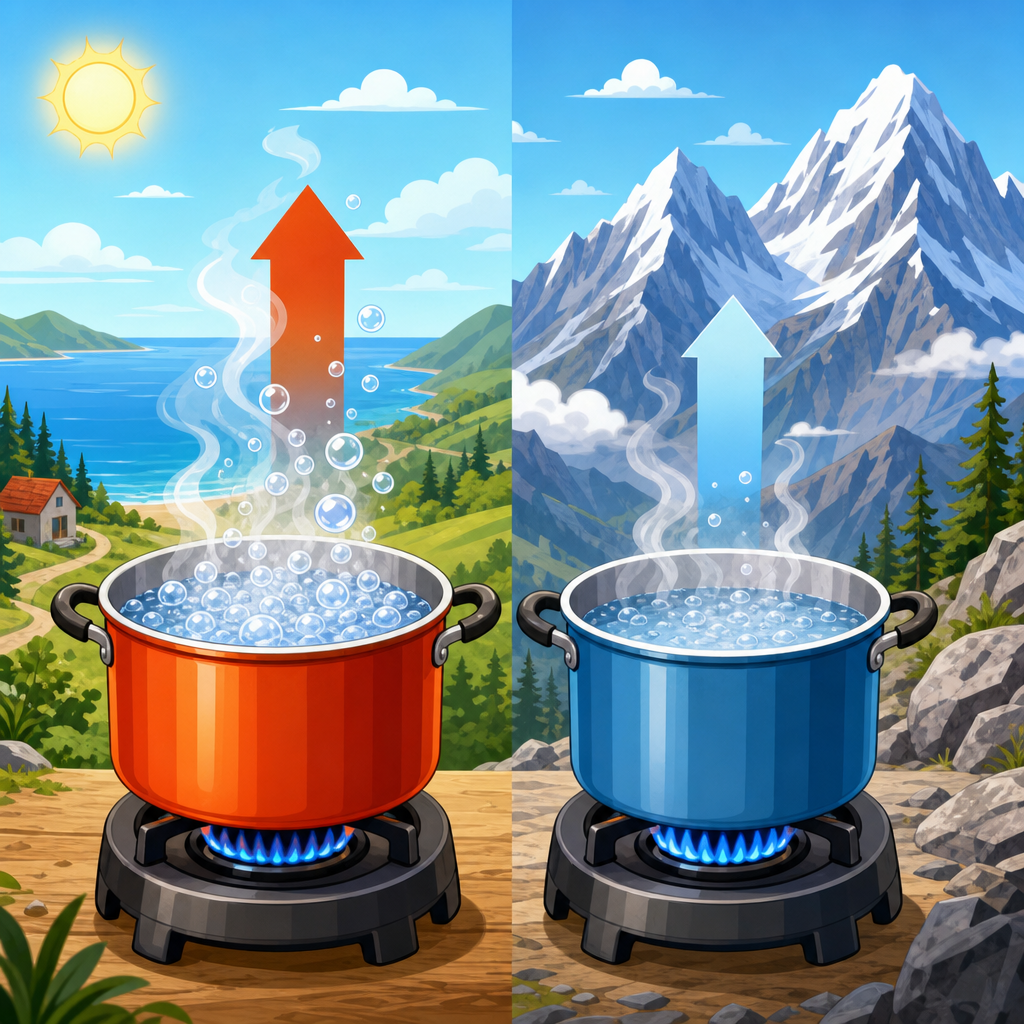
Altitude lowers atmospheric pressure, which lowers the boiling point of water. At 5,000 feet, water boils several degrees below 212°F, and by 7,500 feet the drop is significant enough to change how a water bath behaves over a long bake. That matters because a cheesecake is a custard. Custards set best when the internal temperature rises gradually, usually ending around 150°F to 160°F in the center depending on formula, then finishing carryover as they cool. A water bath buffers oven heat so the edges do not race ahead of the center. At altitude, the bath still moderates heat, but the water cannot hold the same maximum temperature it would at sea level, and it evaporates faster. The result is a narrower margin between underbaking and drying out.
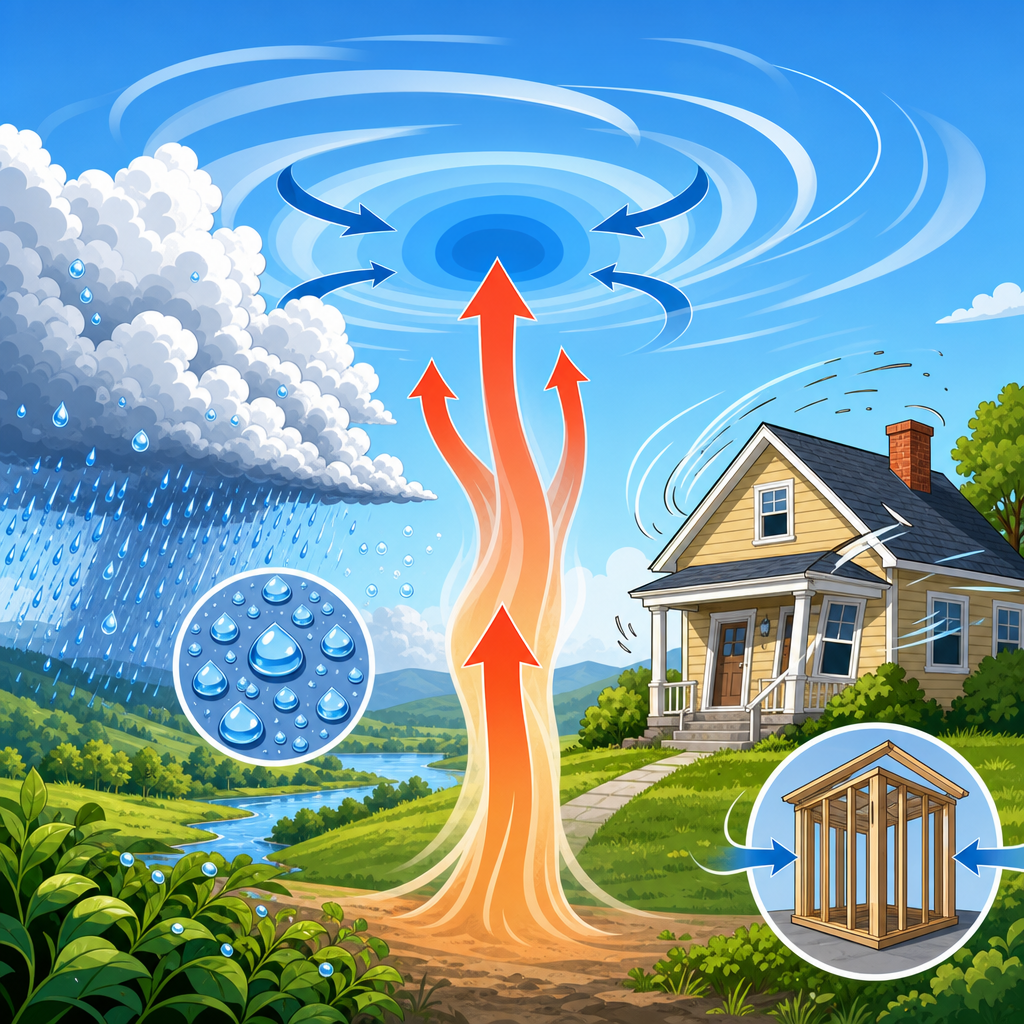
Another altitude issue is expansion. Air bubbles introduced during mixing expand more readily in lower pressure. If the batter is overmixed, especially after eggs are added, the cheesecake can puff aggressively early in the bake, then collapse and crack as it cools. Bakers often blame the water bath when the real problem is the interaction between excess aeration and weakened thermal control. In practice, the water bath must be adjusted together with mixing method, oven temperature, and cooling schedule. That is why cheesecake troubleshooting at altitude works best as a workflow, not a single tip.
How to set up the water bath correctly at altitude
The most reliable approach at altitude is a hot-water bath with containment that minimizes leaks and stabilizes heat from the start. Use a heavy springform pan or, better yet, a solid cake pan if your recipe and unmolding method allow it. Springform pans are convenient, but they are also the most common source of soggy crusts because foil can fail during long bakes. If you use springform, wrap the outside in two to three layers of extra-wide heavy-duty foil, bringing the foil well up the sides without tearing corners. I also recommend setting the wrapped pan inside a slightly larger cake pan or oven-safe roasting bag barrier when practical. That extra layer cuts the leak risk dramatically.
Preheat the oven fully and preheat the water. Do not pour lukewarm tap water into the roasting pan and hope the oven catches up. At altitude, that delay matters because the cheesecake edges begin setting before the bath reaches an effective moderating temperature. Start with hot water in the 140°F to 160°F range from a kettle or pot, then pour it into the roasting pan after the filled cheesecake pan is already on the oven rack or after the roasting pan is positioned securely. The water should come about halfway up the sides of the cheesecake pan for most 8- to 10-inch cheesecakes. At altitude, I often aim slightly higher, around halfway to two-thirds, because evaporation is faster and the extra depth keeps the thermal buffer more stable.
| Altitude | Water bath adjustment | Oven adjustment | Primary risk to watch |
|---|---|---|---|
| 0 to 3,000 ft | Halfway up pan, hot water | Use recipe as written | Leaks or overbaking edges |
| 3,000 to 5,000 ft | Halfway to two-thirds up pan, refill if needed | Reduce oven 10°F to 15°F if top browns fast | Center lagging behind edges |
| 5,000 to 7,500 ft | Two-thirds up pan, use very hot water and tight wrap | Reduce oven 15°F to 25°F | Cracks from expansion and dry surface |
| Above 7,500 ft | Deep bath, monitor evaporation closely | Reduce oven 25°F, extend bake as needed | Underbaked center with overcolored top |
Temperature, timing, and doneness adjustments
If you want a direct answer to how to adjust cheesecake water baths at altitude, it is this: keep the bath deeper, start the water hotter, lower the oven modestly, and judge doneness by temperature and movement instead of the clock alone. Most sea-level cheesecake recipes bake between 300°F and 325°F in a water bath. At altitude, especially above 5,000 feet, dropping the oven by 15°F to 25°F often improves texture because it slows edge setting and reduces top expansion. That lower oven usually means a slightly longer bake, but longer is not a problem when the heat is gentler.
Use an instant-read thermometer if precision matters. I treat 150°F to 155°F in the center as the sweet spot for many cream cheese cheesecakes that will finish setting during cooling. If you do not want to probe the cake, use the visual test correctly: the outer 2 to 3 inches should look set, the center should still wobble as one unified disk, and the surface should not ripple like liquid. At altitude, bakers often leave the cake in until the center is completely firm, which is a common route to a dry, cracked texture.
Timing varies with pan material, batter depth, and altitude, so there is no universal extra-minute rule. What does stay consistent is the need to monitor the water bath late in the bake. In very dry climates, I have seen roasting pans lose enough water over ninety minutes that the bath becomes shallow and less effective. If your oven holds heat poorly or your bake runs long, add more hot water carefully before the level drops too far. Use a kettle and pull the rack out only as much as necessary.
Preventing cracks, soggy crusts, and uneven texture
Cracks are usually the visible result of one of four workflow errors: overmixed batter, too much oven heat, abrupt cooling, or poor water bath performance. At altitude, all four become more likely. Mix the cream cheese and sugar until smooth, but once the eggs go in, keep mixing on low speed and stop as soon as the batter is homogeneous. Scrape the bowl frequently instead of relying on extra mixing time. Excess air is a structural liability in a high-altitude cheesecake because expanding bubbles rise and burst before the custard sets firmly enough to hold them.
Soggy crusts are mostly about containment, not recipe failure. If foil wrapping has failed before, switch methods. One dependable system is to place the springform pan inside a larger solid pan, then place that assembly in the water bath. Another is to bake the cheesecake in a water bath using a solid cheesecake pan with a removable bottom and line the bottom with parchment for release. Some bakers use a tray of water on a lower rack instead of a true bath around the pan. That can add humidity, but it does not moderate the cheesecake edges as effectively, so it is a compromise solution when leak risk outweighs texture gains.
Uneven texture, with a grainy band near the edge and a dense center, usually points to overheating. Cream cheese custards should not boil. If the top puffs high, browns early, or forms a dry skin while the center remains loose, reduce oven temperature and verify your oven with a calibrated thermometer. Home ovens can be off by 25°F or more, and that error becomes expensive in cheesecake.
Workflow for consistent altitude cheesecake results
A strong baking workflow prevents most troubleshooting later. Start by bringing cream cheese, eggs, and dairy to room temperature so the batter emulsifies without overbeating. Prepare the pan completely before mixing: crust baked if the formula requires it, parchment cut, foil wrap applied, roasting pan selected, kettle ready. This mise en place matters because cheesecake batter should not sit around while you search for equipment. Delays let air bubbles rise unevenly and can change how the batter pours over the crust.
After filling the pan, tap it gently on the counter to release large bubbles. If you see foam on top, skim it or pass a spatula lightly across the surface. Place the cheesecake in the roasting pan, add the hot water, and bake on a middle rack for the most even circulation. Avoid opening the oven repeatedly during the first two-thirds of the bake. Every door opening drops heat and lengthens the period when the center is trying to set, which can produce a gummy core.
Cooling is part of baking, not an afterthought. When the cheesecake reaches doneness, turn off the oven, crack the door, and let it rest for about thirty to sixty minutes depending on size. This gradual transition reduces contraction stress, one of the major causes of cracks. Then remove the pan from the water bath, unwrap or dry the exterior, and cool on a rack until barely warm before chilling. For clean slicing and full texture development, refrigerate at least six hours, preferably overnight. In professional kitchens, I never judge final texture before the next day because cheesecake continues to firm and equalize moisture in the refrigerator.
Troubleshooting scenarios and when to change the formula
If the center is still loose after the expected baking window, do not immediately raise the oven temperature. First check whether the water bath has evaporated too far or whether the oven is running cool. Restoring the bath and extending the bake usually works better than blasting the cake with more heat. If the top is browning too quickly while the center lags, tent the pan loosely with foil and continue baking at the lower temperature.
If your cheesecake consistently cracks even with a proper water bath, adjust the formula as well as the method. At altitude, some recipes benefit from one less egg yolk or one whole egg less in very rich formulas, because excess egg can make the custard set too firmly at the edges before the center catches up. A spoonful or two of starch can also stabilize the custard and reduce weeping, though it shifts the texture slightly away from the pure dense style associated with classic New York cheesecake. Sour cream, heavy cream, and fresh goat cheese each change heat tolerance differently, so ingredient swaps are not neutral.
This hub sits within broader baking troubleshooting and workflow for altitude cooking because cheesecake teaches the same lesson as soufflés, custard pies, and flourless cakes: process control matters as much as ingredients. Build notes after every bake. Record altitude, pan size, oven setting, internal temperature, water depth, bake time, and cooling method. Two or three documented bakes will teach you more than ten random recipe searches. If you want reliable cheesecake at altitude, standardize your water bath, lower heat slightly, trust measured doneness, and refine one variable at a time. Use that workflow across your other high-altitude bakes, and your results will improve faster than any single recipe tweak can deliver.
Frequently Asked Questions
Why does a cheesecake water bath need to be adjusted at high altitude?
At higher elevations, water boils at a lower temperature, which changes how a bain-marie behaves in the oven. Instead of surrounding the cheesecake with water that can hover close to sea-level simmering temperatures, the bath reaches its boiling point sooner and stays slightly cooler overall. At the same time, moisture evaporates faster at altitude, so the oven environment dries out more quickly. That combination matters because cheesecake is a custard, not a standard cake. It relies on gentle, even heat to set the eggs and dairy without curdling, puffing too much, or cracking as it cools.
In practical terms, an unadjusted water bath at altitude may not moderate heat as effectively as it does at sea level. The cheesecake can remain too loose in the center for too long, while the outer edges begin to overcook. Faster evaporation can also reduce the amount of water in the roasting pan before baking is finished, especially during long bakes. Adjusting the method helps restore the slow, moist, controlled environment that cheesecake needs. That usually means using very hot water to start, monitoring water depth more carefully, protecting the springform pan from leaks, and making small oven-time or temperature changes so the filling sets evenly from edge to center.
What is the best way to set up a cheesecake water bath at altitude?
The most reliable approach is to build in extra stability from the beginning. Wrap the outside of the springform pan thoroughly with heavy-duty foil, ideally in multiple layers, or place the cheesecake pan inside a slightly larger cake pan before setting that into the roasting pan. This added barrier helps prevent water seepage, which is especially important during longer altitude baking times. Place the prepared cheesecake in a sturdy roasting pan with high sides, then pour in very hot or near-boiling water after the pan is on the oven rack so you do not have to carry a full, sloshing pan across the kitchen.
Aim for the water to come about halfway up the sides of the cheesecake pan, or at least one-third of the way up if your roasting pan is shallow. That depth helps buffer direct oven heat and encourages gradual cooking. At altitude, it is smart to check that the roasting pan is large enough to hold a consistent amount of water without crowding the cheesecake. If the water layer is too shallow, it can evaporate too quickly and lose its protective effect. If your oven tends to run hot or bake unevenly, position the cheesecake in the center of the oven and avoid opening the door often, because heat fluctuations are more pronounced when you are trying to maintain a delicate custard environment.
Should I change the oven temperature or baking time when using a water bath for cheesecake at altitude?
Usually, yes, but the adjustment should be modest and deliberate. Because water boils at a lower temperature at altitude, the water bath may provide slightly less thermal cushioning than it does at sea level. Many bakers find that a small increase in oven temperature helps the cheesecake set more predictably. That does not mean baking it aggressively. The goal is still low, even heat. A slight increase, paired with close attention to doneness, often works better than a dramatic temperature jump that causes the cheesecake to puff, brown, or crack.
Baking time can also shift. Some high-altitude cheesecakes need a little more time for the center to set because the custard is cooking in a bath that is effectively cooler than expected. Others may appear done around the edges while still looking very fluid in the middle. Rather than relying only on the clock, judge doneness by texture. The outer 2 to 3 inches should look set, while the center should still have a slight jiggle when the pan is gently nudged. It should wobble as one mass rather than slosh like liquid. If you wait until the entire surface looks completely firm in the oven, the cheesecake is often overbaked by the time it cools.
How do I keep the water bath from evaporating too much during baking at high altitude?
Start with enough water and start it hot. Using hot or near-boiling water gives the bath an immediate thermal advantage and reduces the time the oven spends trying to bring the roasting pan up to temperature. Fill the roasting pan to a meaningful depth rather than adding a thin layer. At altitude, a shallow bath can lose too much water before the cheesecake finishes baking, especially in a dry climate or convection oven. If your recipe bakes for an extended period, choose a roasting pan with enough capacity to maintain water around the cheesecake throughout the bake.
It also helps to minimize unnecessary oven-door openings, since every opening releases heat and moisture. If you know your oven runs dry, you can place an additional pan of hot water on a lower rack to support overall humidity, though the cheesecake should still sit in its own direct water bath for best results. Some bakers tent the roasting pan loosely with foil for part of the bake to reduce evaporation and protect the surface from excess heat, but the covering should not trap condensation so tightly that water drips onto the cheesecake. The key is balance: enough retained moisture to support gentle baking, but not so much interference that the cheesecake surface becomes wet or uneven.
How can I tell whether altitude problems are coming from the water bath or from the cheesecake batter itself?
The symptoms usually offer clues. If the cheesecake has a soggy crust or wet exterior, the issue is often water leakage rather than altitude alone. If the edges are overcooked, the center is underdone, and the top develops cracks despite using a bath, the water may have evaporated too much or the oven temperature may be too high for the altitude-adjusted setup. If the cheesecake rises dramatically, then sinks and splits, the batter may have incorporated too much air, the eggs may be overbeaten, or the cheesecake may have baked too hot. A proper water bath can help, but it cannot fully correct a batter that was mixed in a way that encourages excessive puffing.
On the other hand, if the texture is overly soft, loose, or slightly grainy even after adequate cooling, you may be dealing with a mismatch between bake time, oven temperature, and the lower boiling point of water at your elevation. That is when careful method adjustments make the difference. Use room-temperature ingredients for a smoother batter, mix on low speed to avoid excess air, bake in a well-filled hot water bath, and cool gradually with the oven turned off or the door slightly cracked if your recipe supports that technique. When you troubleshoot, change one variable at a time. That makes it much easier to identify whether the real problem is water-bath performance, oven behavior, or batter handling.