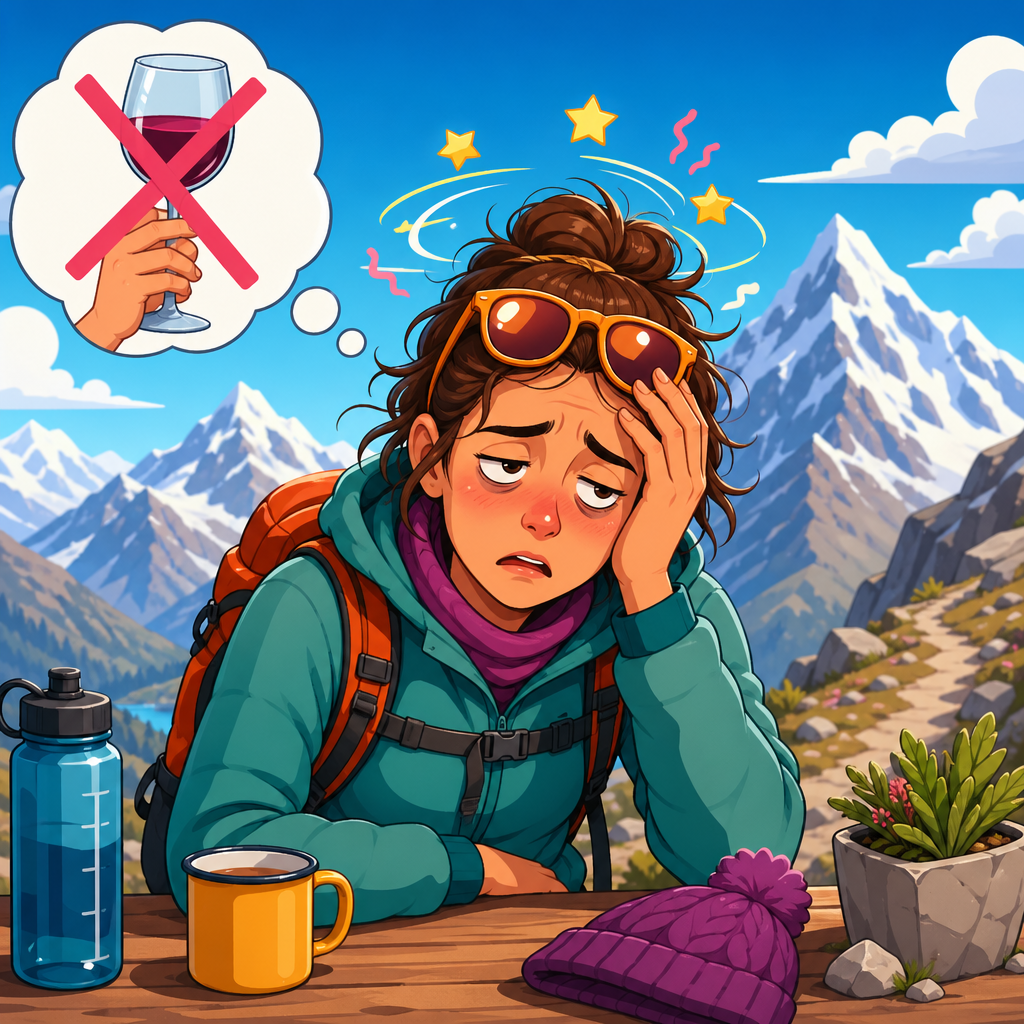
Why you feel hungover at altitude even when you did not drink is a question I hear constantly from hikers, skiers, climbers, and travelers who wake up in a mountain town with a pounding head, dry mouth, nausea, and brain fog after a perfectly sober night. That “hungover at altitude” feeling is real, and in many cases it is the earliest, most recognizable presentation of acute mountain sickness, usually called AMS. AMS is the common form of altitude illness that develops after ascending too high, too fast, typically above 8,000 feet or 2,500 meters, when the body has not yet acclimatized to lower oxygen pressure. The overlap with a hangover is striking because both can involve headache, fatigue, dizziness, poor sleep, loss of appetite, and nausea. The difference is cause: a hangover follows alcohol’s effects on hydration, sleep, blood vessels, and inflammation, while AMS is triggered by hypobaric hypoxia, meaning less available oxygen at altitude. Knowing the distinction matters because untreated AMS can progress, while a simple hangover usually resolves with time and fluids.
In practice, this topic sits at the center of understanding AMS symptoms and diagnosis. Many people do not realize they may have altitude illness because they assume they are dehydrated, jet-lagged, overexerted, or reacting to travel stress. I have seen this repeatedly in mountain clinics and trekking groups: the person who insists they “just need coffee” is often the same person who developed a headache after a rapid ascent, slept badly, skipped breakfast, and now feels too nauseated to move. Recognizing that pattern early is the key step in safe acclimatization. This article explains why altitude can mimic a hangover, how AMS is diagnosed, which symptoms matter most, what red flags suggest a more serious problem, and what actions help people recover safely.
Why altitude creates a hangover-like feeling
The fastest answer is that your brain and body are reacting to lower oxygen availability. At higher elevation, the percentage of oxygen in the air remains about 21 percent, but barometric pressure falls, so each breath delivers less oxygen to the bloodstream. In response, you breathe faster, lose more water through respiration, sleep less deeply, and place stress on the nervous system. That combination produces a familiar cluster of symptoms: headache, dry mouth, fatigue, lightheadedness, and a washed-out feeling that many people describe as exactly like a hangover.
Headache is the hallmark symptom because the brain is highly sensitive to oxygen changes. AMS headache is not fully explained by one mechanism, but it is linked to hypoxia-driven changes in cerebral blood flow, mild brain swelling, and altered fluid balance. Poor sleep adds another layer. At altitude, periodic breathing is common, meaning breathing waxes and wanes during sleep, sometimes with brief pauses followed by deeper breaths. People wake repeatedly without realizing it and feel unrefreshed in the morning. Add dehydration from dry air and increased ventilation, and the “hungover” description makes sense even in someone who has not touched alcohol.
Exertion amplifies the effect. A person may drive from sea level to a ski resort, carry luggage up stairs, eat lightly, and go to bed late. By morning, the combination of rapid ascent, physical effort, fluid loss, and fragmented sleep can trigger early AMS. That is why first-night symptoms are so common. The issue is not weakness or poor fitness. In fact, aerobically fit people sometimes ascend faster because they can, which raises risk.
What acute mountain sickness is and when it starts
AMS is the mild-to-moderate end of altitude illness. It usually appears within 6 to 12 hours after arrival at a new, higher sleeping elevation, though symptoms can begin earlier or later. Most cases occur above 2,500 meters, but susceptible people can develop symptoms lower, especially after a fast ascent. The standard clinical idea is straightforward: a recent gain in altitude plus headache plus at least one additional symptom such as nausea, fatigue, dizziness, or sleep disturbance strongly suggests AMS.
Symptoms often worsen overnight and during the first full day at altitude. This timing helps distinguish AMS from other causes. Viral illness can start anytime. A migraine may have a personal pattern. Carbon monoxide exposure affects everyone in the room. AMS, by contrast, follows ascent. That sequence is central to diagnosis. If you felt normal at lower elevation, went higher quickly, and now have the classic symptom cluster, altitude is the leading explanation until proven otherwise.
Most AMS improves with rest, hydration, pain control, and time for acclimatization, especially if the person avoids further ascent. However, continued climbing with worsening symptoms can lead to dangerous complications. That is why mountain medicine guidelines treat early recognition as the most important intervention. The mountain does not care whether symptoms are dismissed as a “weird travel day.” If the body is failing to adapt, the solution is to stop ascending and reassess.
Core AMS symptoms and how to recognize them
Headache is the anchor symptom. In the Lake Louise approach, which is widely used in mountain medicine, AMS is considered in someone at altitude who has headache and at least one other typical symptom. The headache is often diffuse, worse with bending over or exertion, and different from a person’s usual tension headache. It may be mild at first, then intensify with activity. A headache alone does not confirm AMS, but at altitude it deserves attention.
Nausea and appetite loss are also common. Many travelers say food suddenly seems unappealing, especially breakfast after the first night. Some feel vaguely queasy; others vomit. Fatigue is another major clue. This is not normal tiredness after exercise. People describe heavy limbs, low motivation, slowed thinking, and a striking drop in performance on easy tasks. Dizziness or lightheadedness can occur, particularly when standing. Sleep disturbance is frequent and often underappreciated because people assume any travel day disrupts sleep.
Symptoms exist on a spectrum. Mild AMS may mean a manageable headache and poor appetite with otherwise normal function. Moderate AMS can make walking, eating, and concentrating difficult. Severe symptoms are concerning even if the person still thinks they can push on. In real-world settings, the functional question matters: can the person drink, eat, converse clearly, and move without marked worsening? If not, the threshold for stopping ascent and descending should be low.
| Symptom | Typical AMS pattern | What else it can resemble | What to do first |
|---|---|---|---|
| Headache | Begins after ascent, worse with exertion or bending | Dehydration, migraine, tension headache | Rest, fluids, avoid ascent, reassess in hours |
| Nausea | Loss of appetite, queasiness, sometimes vomiting | Motion sickness, food illness, anxiety | Small sips, light food, monitor progression |
| Fatigue | Disproportionate exhaustion, low exercise tolerance | Jet lag, overtraining, poor sleep | Stop exertion, check for other AMS signs |
| Dizziness | Lightheadedness after rapid ascent | Dehydration, low blood sugar | Hydrate, eat, evaluate balance and coordination |
| Poor sleep | Frequent waking, unrefreshing sleep, periodic breathing | Travel stress, unfamiliar bed | Sleep lower next night if symptoms build |
How AMS is diagnosed in real settings
AMS is primarily a clinical diagnosis. There is no single blood test, scan, or oxygen saturation cutoff that confirms it. The diagnosis depends on three pieces of information: recent ascent, symptom pattern, and severity. In expeditions and clinics, the Lake Louise Scoring System remains the best-known standardized tool. It evaluates headache, gastrointestinal symptoms, fatigue or weakness, dizziness or lightheadedness, and sleep disturbance after a recent gain in altitude. Higher scores indicate greater likelihood and severity of AMS.
Pulse oximetry can support assessment, but it does not diagnose AMS by itself. At altitude, oxygen saturation normally drops, and values vary widely between individuals. I have seen patients with low saturations who felt fine and others with modestly reduced saturations who had clear AMS symptoms. That is why symptoms and function outrank the number on a fingertip monitor. Oximeters are useful for trends and for identifying more serious illness when interpreted in context, not as a stand-alone verdict.
Good assessment also includes simple questions: How fast did you ascend? What altitude did you sleep at last night? When did symptoms begin? Are you urinating normally? Can you keep fluids down? Are you getting worse at rest? On a trek, I also watch how someone walks and whether they can follow a conversation easily. Subtle slowing, irritability, poor balance, or unusual apathy can signal a shift from uncomplicated AMS toward something more serious.
When a “hangover” may be something more dangerous
The reason clinicians take AMS seriously is that it can progress to high-altitude cerebral edema, or HACE, and high-altitude pulmonary edema, or HAPE. HACE is a brain emergency characterized by worsening confusion, severe fatigue, poor coordination, altered behavior, and eventually decreased consciousness. HAPE is a lung emergency marked by shortness of breath at rest, cough, reduced exercise tolerance, chest tightness, and sometimes crackling sounds in the lungs. Both require immediate descent and urgent medical treatment.
Ataxia, meaning loss of coordination, is a major red flag for HACE. A person who cannot walk heel-to-toe, stumbles on flat ground, or seems mentally off is not just “tired.” Severe headache with vomiting, confusion, or bizarre behavior is equally concerning. For HAPE, the warning pattern is different: breathlessness out of proportion to exertion, worsening cough, trouble lying flat, blue lips, or a fast resting heart rate. These are not normal acclimatization symptoms.
The practical rule is simple. Mild symptoms can be watched at the same altitude if they are stable or improving. Worsening symptoms, neurological changes, or breathing problems require descent. Supplemental oxygen, portable hyperbaric treatment, dexamethasone for HACE risk, and nifedipine for HAPE in selected cases all have roles, but none replace getting lower. Early descent saves lives because altitude illness is driven by altitude itself.
Common conditions that mimic AMS
Not every headache at altitude is AMS. Dehydration is common because mountain air is dry and increased breathing causes greater insensible water loss. A dehydrated person may have headache and fatigue without true AMS. Migraine can also be triggered by travel, sleep change, bright light, or exertion. Viral infections, especially early influenza or COVID-like illness, can overlap with AMS symptoms. Food poisoning causes nausea and vomiting, sometimes with headache. Carbon monoxide exposure from heaters, stoves, or vehicle exhaust is another critical mimic, especially when multiple people in the same room feel ill.
The distinction comes from pattern and associated findings. Dehydration usually improves quickly with fluids and does not require recent ascent. Gastroenteritis often brings diarrhea and abdominal cramps. Carbon monoxide commonly causes headache in several people at once and may improve outdoors. AMS is more likely when symptoms follow an altitude gain, worsen with continued ascent, and fit the classic combination of headache plus nausea, fatigue, dizziness, or poor sleep.
Medication effects can also confuse the picture. Sedatives, sleep aids, opioids, and even alcohol itself can worsen ventilation during sleep and intensify symptoms. That is one reason experienced mountain guides discourage alcohol and sleeping pills on the first nights at altitude. They do not just mask symptoms; they can impair adaptation.
What helps, what does not, and when to seek care
The first treatment for suspected AMS is to stop ascending. Rest at the same altitude if symptoms are mild. Hydrate normally, but do not force excessive water, which will not cure AMS and can create other problems. Eat light, carbohydrate-rich meals if tolerated. Ibuprofen or acetaminophen can help headache. Antiemetics may reduce nausea. If symptoms are moderate, persistent, or limiting activity, descent is the most reliable treatment, even a few hundred to a thousand meters if terrain allows.
Acetazolamide is the most useful medication for prevention and can help treatment in some cases. It works by promoting a mild metabolic acidosis that stimulates ventilation, improving oxygenation and speeding acclimatization. It is not just a pill for elite climbers; it is often appropriate for travelers with a history of AMS or plans for rapid ascent. Dexamethasone can reduce symptoms but does not replace acclimatization, and it is generally reserved for treatment or specific prevention scenarios. Oxygen works quickly when available.
Medical evaluation is warranted if symptoms are severe, do not improve with rest, involve shortness of breath at rest, confusion, trouble walking, repeated vomiting, or dehydration. For travelers planning additional climbs, I advise treating this first episode as useful data. The body is telling you something about your ascent rate and your personal susceptibility. Learn from it, adjust your itinerary, and build acclimatization days into future trips.
The main lesson is that feeling hungover at altitude without drinking is not imaginary and should not be brushed off as a quirky side effect of mountain air. It is often the body’s early warning that acclimatization is lagging behind ascent. The classic AMS picture is recent altitude gain followed by headache plus symptoms such as nausea, fatigue, dizziness, and poor sleep. Diagnosis is clinical, with tools like the Lake Louise score helping organize symptom severity, while red flags such as confusion, ataxia, and breathlessness at rest point to emergencies that require descent.
For most people, the biggest benefit comes from recognizing the pattern early and responding correctly: stop ascending, rest, hydrate sensibly, treat symptoms, and go lower if things are not improving. That simple approach prevents many mild cases from becoming serious ones. If you are building an altitude plan, use this page as your hub for AMS symptoms and diagnosis, then review prevention, acclimatization schedules, and emergency warning signs before your next trip. The mountain rewards patience far more than toughness.
Frequently Asked Questions
Why do I feel hungover at altitude even if I did not drink alcohol?
That “hungover” feeling at altitude is usually not random, and it is often not dehydration alone. In many cases, it is the earliest and most familiar form of acute mountain sickness, or AMS. When you go to a higher elevation, the air still contains oxygen, but the pressure is lower, which means your body gets less oxygen with each breath. Your brain and the rest of your body notice that change quickly. The result can be a pounding headache, nausea, fatigue, poor sleep, dry mouth, dizziness, and brain fog that feels almost exactly like a morning after drinking. People often assume the problem is just the dry air or travel fatigue, but the body’s response to lower oxygen is a major reason those symptoms show up.
Altitude also tends to stack several stressors at once. You may be breathing faster, losing more fluid through respiration, sleeping worse than usual, and exerting yourself more than you realize just by walking around. Add a long travel day, sun exposure, a large meal, or mild dehydration, and the symptom picture becomes even more convincing. That is why hikers, skiers, climbers, and travelers commonly wake up in a mountain town feeling as if they drank too much the night before, even when they were completely sober. The key point is that the sensation is real, and it should be taken seriously because it may be your body’s first warning that it has not yet adjusted to the elevation.
Is feeling “hungover” at altitude the same thing as acute mountain sickness?
Often, yes. Acute mountain sickness is the most common form of altitude illness, and its classic symptoms overlap heavily with what most people describe as a hangover: headache, nausea, loss of appetite, unusual tiredness, lightheadedness, and mental sluggishness. Many people do not recognize AMS at first because the symptoms seem familiar and easy to explain away. They may blame dry cabin air, bad sleep, jet lag, too much coffee, or a salty dinner. But if symptoms begin after gaining elevation, especially above about 8,000 feet or 2,500 meters, AMS should be high on the list of possibilities.
That said, not every headache at altitude is AMS. Dehydration, viral illness, lack of sleep, caffeine withdrawal, overexertion, and alcohol can all mimic or worsen the same symptom pattern. What makes AMS more likely is the combination of recent ascent and a headache plus at least one of the following: nausea, dizziness, fatigue, or poor sleep. Symptoms often begin within several hours to a day after arriving at a higher elevation. Mild AMS can improve with rest, fluids, food, and avoiding further ascent. But if symptoms are getting worse instead of better, that is a sign to stop treating it like a harmless “mountain hangover” and start treating it like altitude illness.
What symptoms mean it is more than a normal altitude adjustment and could be dangerous?
Mild altitude symptoms are common, especially during the first day or two, but certain warning signs suggest a more serious problem. A mild headache, a little nausea, and some fatigue can happen while your body is acclimatizing. What raises concern is a severe or worsening headache, repeated vomiting, trouble walking in a straight line, unusual clumsiness, marked weakness, confusion, or shortness of breath when resting. If you or someone with you seems unusually drowsy, disoriented, or unable to do simple tasks normally, that is not something to brush off as “just altitude.”
The two major dangerous altitude complications are high-altitude cerebral edema, or HACE, and high-altitude pulmonary edema, or HAPE. HACE involves swelling affecting the brain and may show up as confusion, poor coordination, stumbling, and altered behavior. HAPE affects the lungs and can cause breathlessness at rest, a persistent cough, chest tightness, rapid heartbeat, and reduced exercise tolerance that seems out of proportion to the situation. Both are medical emergencies. The most important response is to descend to a lower altitude as soon as possible and seek medical care. Supplemental oxygen, if available, can help, but it is not a substitute for getting down. If the “hungover” feeling is intense, escalating, or paired with neurological or breathing symptoms, think beyond discomfort and act quickly.
How can I relieve that hungover-at-altitude feeling and recover faster?
The first step is to stop ascending until symptoms improve. If your body is struggling to adapt, going higher usually makes the problem worse. Rest, hydrate steadily, and eat light, carbohydrate-rich foods if you can tolerate them. Hydration helps because altitude increases fluid loss, but it is important not to think of water as a cure-all. You are not simply “dry”; you are also adapting to lower oxygen. Drink enough to maintain normal urine output and avoid making yourself sick by overdoing fluids. It can also help to avoid alcohol and sleeping pills, since both can worsen sleep quality and breathing at altitude.
For symptom relief, many people use ibuprofen or acetaminophen for headache and anti-nausea strategies such as small meals, bland foods, and rest. If symptoms are mild, staying put for 24 hours may be enough for acclimatization to catch up. If symptoms are moderate, persistent, or interfering with normal activity, descending is the most reliable treatment. Some travelers at known risk use acetazolamide preventively or at the first sign of trouble, but medication decisions are best made with a clinician, especially if you have other medical conditions. The practical rule is simple: mild symptoms may improve with rest and time, but worsening symptoms require descent, not stubbornness.
How can I prevent feeling hungover at altitude on future trips?
The most effective prevention is gradual ascent. Your body needs time to adapt to lower oxygen, and the faster you go up, the greater the chance of developing AMS. If possible, spend a night at a moderate elevation before going higher, and once above roughly 8,000 feet or 2,500 meters, increase your sleeping altitude slowly rather than jumping straight to a very high destination. Building in an extra acclimatization day is often far more useful than trying to power through symptoms later. This matters whether you are heading to a ski resort, a mountain lodge, or a high trailhead.
Other preventive steps are straightforward but important. Stay reasonably hydrated, eat regularly, pace your physical activity during the first day or two, and avoid treating the first evening at altitude like a normal sea-level night out. Heavy exercise, alcohol, and poor sleep can all make symptoms more likely or make early AMS harder to recognize. If you know from experience that you are sensitive to elevation, talk with a healthcare professional before your trip about whether preventive acetazolamide makes sense. Most importantly, listen to early symptoms. A headache, nausea, and foggy feeling at altitude are not signs of weakness; they are signals. Respecting those signals early is the best way to avoid a miserable trip and a potentially serious altitude illness.