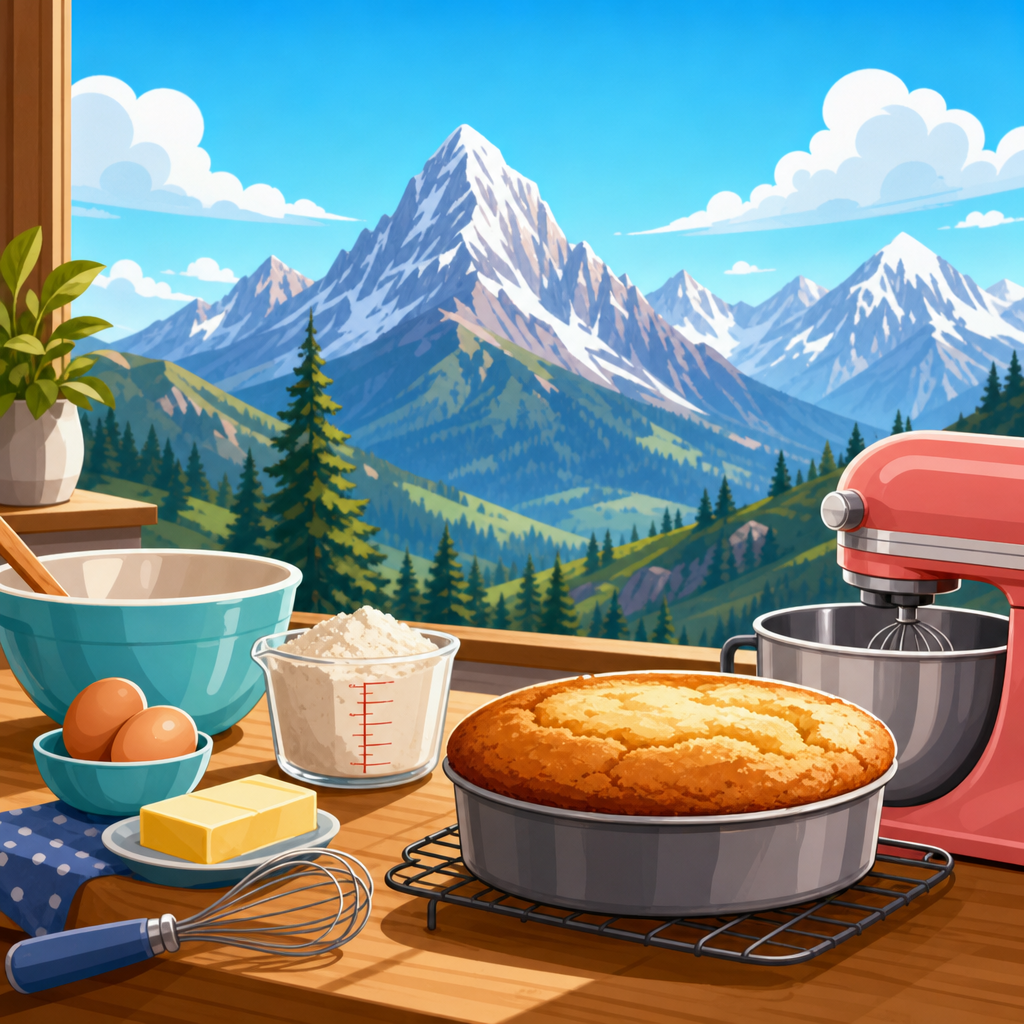
High altitude baking basics explain a simple truth: recipes that work perfectly at sea level often fail above 3,000 feet because lower air pressure changes how liquids evaporate, gases expand, sugars concentrate, and batters set. In practical terms, a cake that rises evenly in Chicago may collapse in Denver, cookies may spread too fast in Santa Fe, and muffins may dry out before the center finishes in Flagstaff. High altitude generally starts affecting baking around 3,000 feet, becomes much more noticeable above 5,000 feet, and demands consistent formula adjustments above 7,000 feet. Bakers need to understand pressure, moisture loss, leavening strength, oven temperature, and ingredient balance rather than relying on guesswork. I have tested the same quick bread, butter cake, and yeast roll formulas at multiple elevations, and the pattern is predictable: the higher you go, the more aggressively air bubbles expand and the faster water leaves the batter. That is why high altitude baking basics matter. Once you know the mechanics, failed recipes stop feeling random. You can diagnose sunken centers, peaked tops, tunneling, dryness, coarse crumb, weak structure, and overexpansion with confidence, then correct them using repeatable methods. This hub covers the baking fundamentals every altitude baker needs.
How altitude changes baking science
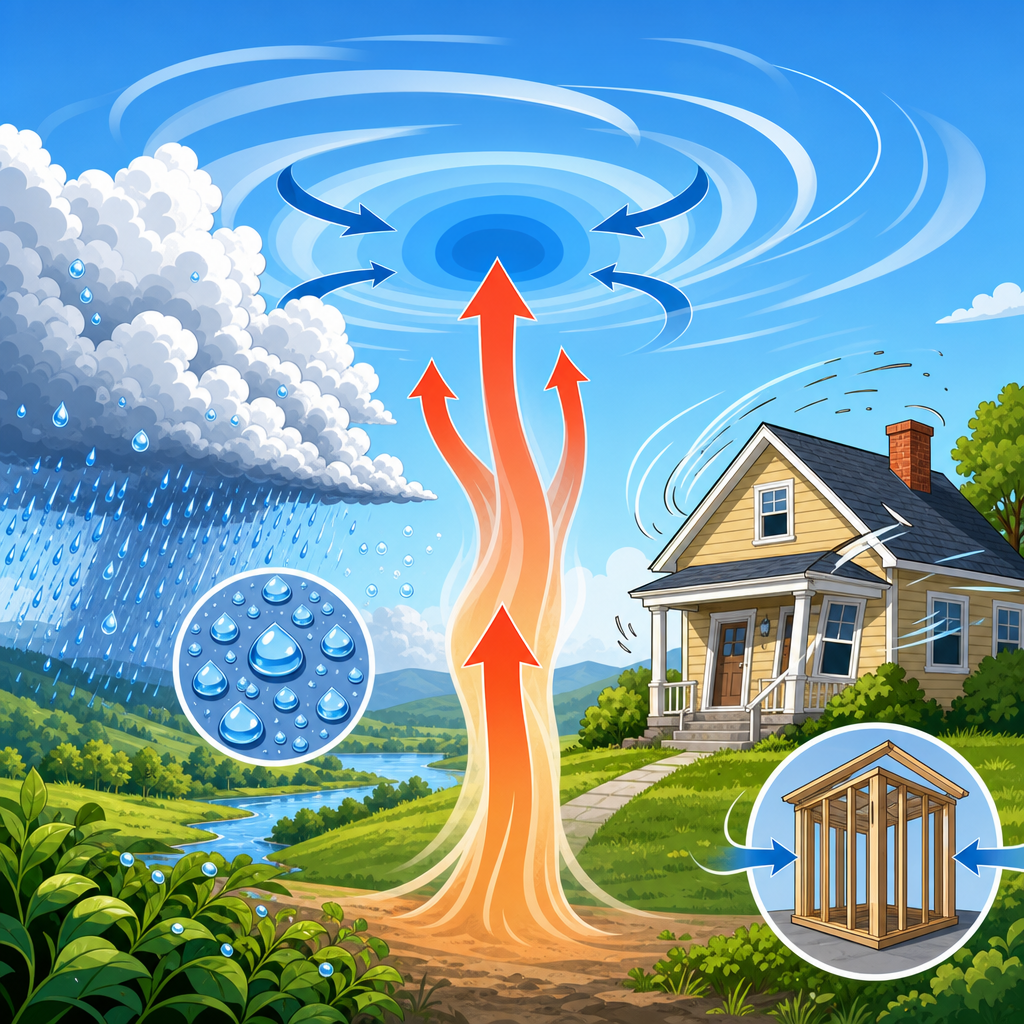
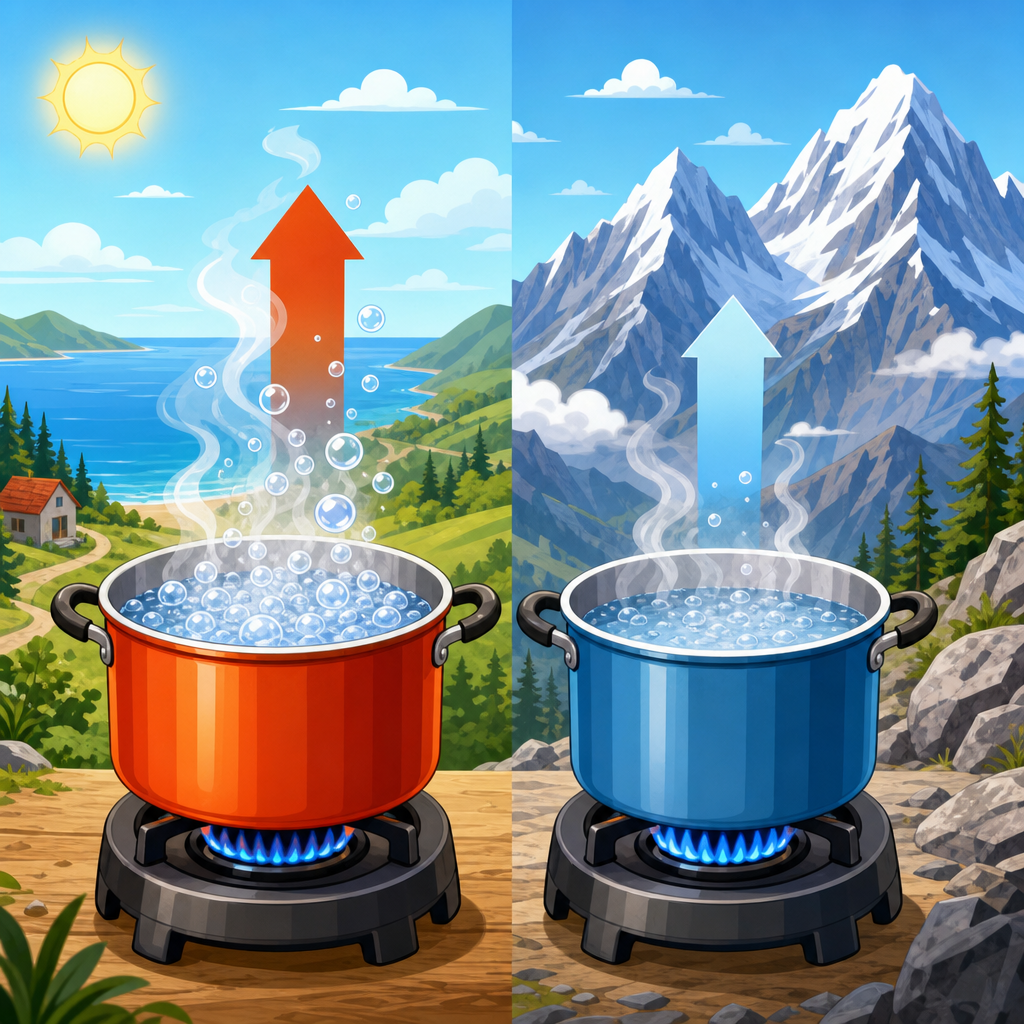
The core issue is atmospheric pressure. As elevation increases, air pressure drops, which lowers the boiling point of water and allows gases to expand more readily. At sea level, water boils at 212 degrees Fahrenheit. Around 5,000 feet, it boils closer to 203 degrees. That lower boiling point means moisture escapes earlier and faster during baking. Meanwhile, steam and carbon dioxide push upward with less resistance, so batters can overinflate before starches, proteins, and eggs have fully set the structure. The result is dramatic rise followed by collapse, especially in cakes and chemically leavened quick breads.
Sugar becomes more disruptive at altitude because concentrated sugar weakens structure and delays setting. Fat can also magnify problems by tenderizing the crumb so much that expanded cells cannot hold. Flour, eggs, and liquid become structural control points rather than passive ingredients. That is why high altitude baking basics focus on balancing strength against expansion. The common fixes—slightly more flour, a bit less sugar, more liquid, reduced baking powder or baking soda, and a modestly higher oven temperature—work because they counter the exact physical changes caused by altitude, not because of tradition or folklore.
Different products react differently. Cookies usually need modest changes because they are shallow and set quickly. Cakes are the most sensitive because they depend on a fragile foam and precise timing. Muffins and quick breads often dome too fast, then crack or tunnel. Pie crusts are less affected than pie fillings. Custards can overcook at the edges before gently setting in the middle. Bread dough rises faster and can overproof if you use sea-level timing. Understanding these patterns helps you troubleshoot by product category instead of making random changes to every recipe.
The most common reasons recipes fail above 3,000 feet
Most failures come from five causes. First, leavening is too strong for the lower pressure, so cakes and muffins rise rapidly, then fall. Second, liquid is too low, causing dryness, gummy centers surrounded by dry crumb, or a finished product that stales quickly. Third, oven temperature is too low, so the structure does not set before overexpansion. Fourth, sugar is too high, which weakens the batter and contributes to collapse or sticky surfaces. Fifth, mixing and proofing times are not adjusted, leading to overdeveloped gluten in quick breads or overproofed yeast doughs.
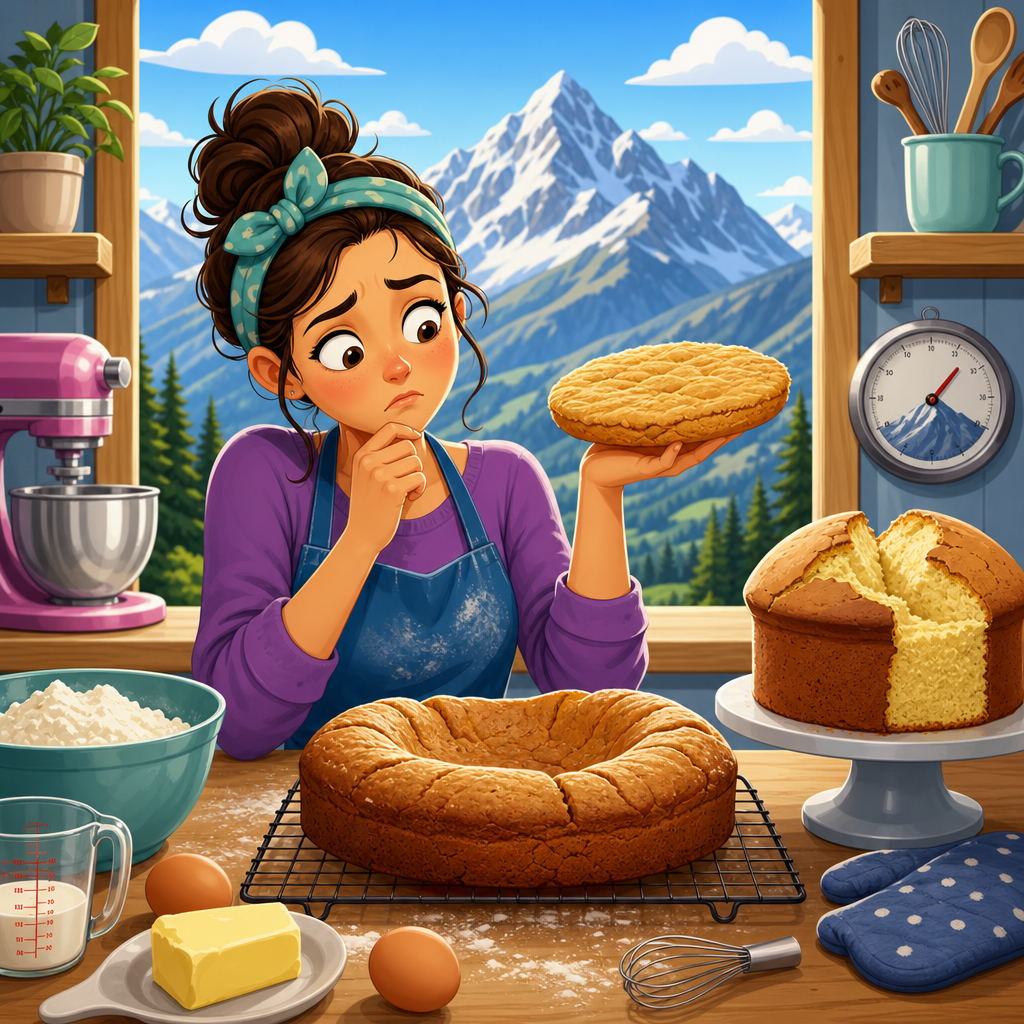
Classic symptoms tell you what happened. A sunken center usually points to too much leavening, too much sugar, too much liquid in relation to structure, underbaking, or too low an oven temperature. A cake with a coarse crumb and long tunnels usually expanded too fast, often from excess chemical leavening or overmixing. Dry, crumbly muffins suggest insufficient liquid or too long a bake in the drier environment. Cookies that spread thin may need more flour, colder dough, or a slight sugar reduction. Yeast bread that balloons then deflates was likely proofed by the clock instead of by dough volume and feel.
I have found that altitude magnifies small formula weaknesses that sea-level bakers never notice. A recipe written with an already generous amount of baking powder may still perform well near the coast, but at 5,500 feet it can become unstable immediately. Likewise, a chiffon cake with marginal protein support may look fine until the pan reaches the oven spring phase, then collapse on cooling. Altitude does not create bad formulas; it exposes them.
Core ingredient adjustments that solve most problems
High altitude baking basics start with measured, conservative changes. For many cakes and quick breads above 3,000 feet, reduce baking powder by about 1/8 teaspoon per teaspoon in the original formula, and reduce baking soda only when the recipe contains a clear excess relative to its acidic ingredients. Increase liquid by 1 to 2 tablespoons per cup at moderate altitude and more at higher elevations. Add 1 to 4 tablespoons of flour depending on the recipe size and product type. Reduce sugar slightly, often by 1 to 3 tablespoons per cup, especially in delicate cakes. Raise oven temperature by 15 to 25 degrees Fahrenheit so the batter sets sooner.
Eggs deserve special attention. Extra egg white can strengthen structure in sponge cakes, angel food cakes, and some butter cakes because albumen coagulates and supports the crumb. Whole eggs add both structure and emulsification. Flour selection also matters. All-purpose flour can work for many home recipes, but some layer cakes hold better with a slightly higher-protein flour blend. For cookies, a small flour increase usually matters more than changing flour type. For muffins and quick breads, the goal is controlled expansion, not toughness, so increases should be modest.
Chocolate and fruit formulas may need additional liquid because cocoa, melted chocolate, bran, and dried fruit all compete for available moisture. Whole grain baking is especially prone to dryness at altitude. In those recipes, resting the batter briefly before baking can improve hydration, but you still need formula changes. Salt rarely needs direct altitude adjustment, yet it remains important for dough strength, fermentation control, and flavor balance.
Practical adjustment guide by elevation
The exact numbers vary by formula, but a structured starting point saves time. Use this chart as a baseline for cakes, muffins, and quick breads, then refine one variable at a time in future tests.
| Elevation | Leavening | Liquid | Flour | Sugar | Oven Temp |
|---|---|---|---|---|---|
| 3,000 to 5,000 feet | Reduce slightly | Add 1 to 2 tbsp per cup | Add 1 to 2 tbsp | Reduce 1 tbsp per cup | Increase 15°F |
| 5,000 to 7,000 feet | Reduce moderately | Add 2 to 3 tbsp per cup | Add 2 to 4 tbsp | Reduce 1 to 2 tbsp per cup | Increase 15 to 25°F |
| Above 7,000 feet | Reduce more aggressively | Add 3 to 4 tbsp per cup | Add 3 to 4 tbsp or more | Reduce 2 to 3 tbsp per cup | Increase 25°F |
This framework aligns with guidance long used by extension programs and test kitchens in mountain states, including Colorado State University Extension and the University of Wyoming Extension. Their recommendations differ by product, but the direction is consistent: less leavening, more liquid, slightly less sugar, and faster structure setting.
How to adjust specific baking categories
Cakes need the most precision. Butter cakes often benefit from reduced baking powder, a slight sugar reduction, added liquid, and an oven temperature increase. Foam cakes rely heavily on egg proteins, so overbeating whites can be especially risky at altitude because the foam becomes dry and unstable before baking. Cheesecakes are less about leavening and more about moisture control and gentle heat; a water bath and careful doneness checks matter more than formula reduction.
Cookies usually need smaller changes. If they spread too much, chill the dough, increase flour slightly, reduce sugar a little, and check whether the butter is too warm. Bar cookies and brownies can dry out around the edges, so metal pan choice, parchment lining, and early doneness checks help. Brownies often succeed with little adjustment because a dense fudgy structure resists collapse better than a light cake crumb.
Muffins, scones, biscuits, and quick breads often show overexpansion through peaked tops, tunneling, and crumbly texture. Reduce leavening, avoid overmixing, and increase liquid. For banana bread, zucchini bread, and pumpkin bread, remember that vegetable and fruit purees vary in water content; a formula that works with one brand of pumpkin may need a different bake time or flour balance with another. Pie crust mostly follows standard methods, but fillings can boil earlier, so thickener balance and venting deserve attention. Yeast breads need shorter proofing and close observation. In my kitchen, dough temperature and volume increase matter far more than the printed rise time once I am above 4,000 feet.
Mixing, pans, and ovens matter more than you think
Altitude baking is not solved by ingredients alone. Method changes often determine success. Overmixing quick breads develops gluten and creates tunnels, which become more obvious when gas expansion is stronger. Undercreaming butter and sugar in cakes reduces aeration quality, while overcreaming can produce a batter that expands too readily. For meringues, clean bowls, gradual sugar addition, and stopping at glossy medium peaks improve stability. For yeast dough, a digital thermometer is invaluable because fermentation accelerates when dough is warm and pressure is lower.
Pan size and material affect setting speed. Dark pans absorb more heat and can overbrown crusts before interiors are ready. Glass bakes more slowly than light metal in many home ovens and can amplify edge overbaking. Shallow pans help batter set evenly; filling pans too full increases the risk of collapse. Bundt cakes can work well because the center tube improves heat transfer, but only if the formula has enough structure. Oven accuracy is another hidden variable. I regularly see home ovens off by 20 degrees Fahrenheit, enough to ruin a marginal high altitude cake. An inexpensive oven thermometer can solve weeks of confusion.
A reliable testing process for adapting any recipe
The fastest way to master high altitude baking basics is to test systematically. Change one or two variables at a time and keep notes on elevation, humidity, pan size, ingredient brands, batter consistency, oven temperature, bake time, and final texture. Start with the product category. For a butter cake at 5,000 feet, first reduce leavening slightly and raise oven temperature. If it still sinks, add a bit more flour and reduce sugar next. For cookies, start with flour and dough temperature before rewriting the entire formula.
Use sensory checkpoints, not just the clock. Cake batter should look slightly thicker than its sea-level version. Muffins should dome without tearing into deep tunnels. Bread dough should feel elastic and rise until roughly doubled, not necessarily until the recipe says an hour has passed. Internal temperature can help: enriched breads often finish around 190 to 200 degrees Fahrenheit, lean breads around 205 to 210, and many butter cakes are done near 200 to 210 in the center. A digital scale also improves consistency because cup measures become less reliable when flour settles differently in dry climates.
Building a strong high altitude baking foundation
The biggest lesson is that altitude is not a niche inconvenience; it is a real environmental variable that changes baking chemistry from the moment you cross roughly 3,000 feet. Lower pressure speeds evaporation, enlarges gas cells, and delays structural setting unless you intervene. That is why recipes fail above 3,000 feet, and it is also why they can be fixed. The most dependable corrections are straightforward: reduce leavening, add liquid, strengthen structure with a little more flour or egg, reduce sugar when needed, and raise oven temperature modestly.
As the hub for baking fundamentals within cooking and baking at altitude, this guide gives you the framework to approach cakes, cookies, muffins, quick breads, pies, and yeast breads with confidence. You do not need to memorize dozens of isolated tricks. You need a process grounded in pressure, moisture, and structure. Once you understand those three forces, troubleshooting becomes logical instead of frustrating.
Use this page as your starting point whenever a recipe sinks, dries out, spreads too much, or rises out of control. Then apply the category-specific adjustments, test carefully, and record what works in your kitchen and at your elevation. High altitude baking rewards observation and precision. Start with one favorite recipe this week, adapt it using these basics, and build your own dependable altitude baking playbook.
Frequently Asked Questions
Why do baking recipes start failing above 3,000 feet?
Recipes begin to behave differently above about 3,000 feet because air pressure drops as elevation increases. That lower pressure affects nearly every stage of baking. Liquids evaporate faster, which means batters and doughs can lose moisture before they are fully set. Gases expand more easily, so air bubbles formed by yeast, baking powder, baking soda, or whipped eggs grow larger and faster than they would at sea level. At the same time, the structure of baked goods has less external pressure supporting it, so a cake or muffin may rise too quickly and then collapse before the starches, proteins, and eggs have finished setting.
Altitude also changes how sugar and fats behave. Because moisture evaporates more readily, sugars can become more concentrated, which may weaken structure and affect tenderness. Cookies may spread too fast, cakes may sink in the center, and quick breads may look done on the outside while still underbaked in the middle. The higher the elevation, the more noticeable these effects become. A baker at 3,500 feet may need only small changes, while someone at 5,000 to 7,000 feet usually needs more deliberate recipe adjustments. That is why a sea-level recipe that is reliable in one city can be frustratingly inconsistent in places like Denver, Santa Fe, or Flagstaff.
What are the most important recipe adjustments for high altitude baking?
The most common high altitude fixes involve four areas: liquid, flour, leavening, and oven temperature. In many recipes, you need a little more liquid because moisture evaporates faster in the oven and sometimes even during mixing. Adding a small amount of water, milk, buttermilk, egg white, or another liquid helps the batter stay balanced long enough to set properly. Many bakers also increase flour slightly to strengthen structure, especially for cakes, muffins, and quick breads that otherwise rise too fast and then fall.
Leavening usually needs to be reduced, not increased. This surprises many people. At higher elevations, baking powder, baking soda, and even beaten egg foams can cause overexpansion because gases enlarge more readily in lower air pressure. If a batter rises too quickly, it often cannot hold itself up and collapses. Reducing chemical leaveners just a bit can produce a more controlled rise and a better final texture. Oven temperature is another major tool. A slightly higher baking temperature can help the structure set faster, before the batter overexpands and dries out. In some recipes, bakers also reduce sugar slightly because sugar can weaken structure and contribute to excess spreading or sinking.
The exact adjustment depends on the recipe and the elevation. Cakes, cookies, yeast breads, pie fillings, and custards all respond differently. For that reason, high altitude baking works best when you make one or two changes at a time, keep notes, and watch how the finished product behaves. Over time, you learn whether your kitchen needs more liquid, less leavening, a hotter oven, shorter baking time, or some combination of all four.
How does high altitude affect cakes, cookies, and muffins differently?
Each type of baked good reacts to altitude in its own way because each relies on a different balance of moisture, fat, sugar, flour, and leavening. Cakes are especially sensitive because they depend on a delicate structure. At high altitude, cake batters often rise too fast due to rapid gas expansion, then fall because the proteins and starches have not set firmly enough. The result may be a sunken center, coarse crumb, tunnels, dryness, or a fragile texture that breaks easily. Cakes often need less leavening, slightly more flour or liquid, and a somewhat higher baking temperature.
Cookies usually struggle in a different direction. Instead of collapsing after a dramatic rise, they often spread too quickly before the dough has a chance to set. Faster moisture loss and sugar concentration can make them thin, overly crisp, or unevenly browned. Depending on the recipe, reducing sugar slightly, adding a touch more flour, chilling the dough, or adjusting oven temperature can help control spread. Some cookie recipes are naturally more forgiving than cakes, but highly buttery or sugary doughs can become unpredictable at elevation.
Muffins and quick breads often show a mix of both problems. They may dome aggressively, then sink, or they may dry around the edges before the center is fully baked. Because they are usually mixed quickly and contain chemical leaveners, they can overrise easily at altitude. A modest reduction in baking powder or baking soda, a bit more liquid, and careful baking time can make a big difference. In practical terms, if your cake caves in, your cookies flatten, and your muffins bake up dry, that is not three unrelated problems. It is the same altitude issue showing up in three different recipe structures.
Do I need to adjust every recipe if I live above 3,000 feet?
Not every recipe needs major changes, but many recipes will need at least some attention once you are above 3,000 feet. The amount of adjustment depends on your exact elevation, the type of baked good, your ingredients, and even your kitchen environment. Recipes with a strong, sturdy structure, such as some rustic breads or dense bar cookies, may work with few or no changes at moderate altitude. Delicate cakes, chiffon cakes, angel food cakes, soufflés, meringues, and many quick breads tend to be more sensitive and usually benefit from adjustments much sooner.
It is also important to understand that altitude effects are cumulative. A recipe might look acceptable at 3,200 feet but become much less reliable at 5,000 or 7,000 feet. Local climate matters too. If you live in a dry region, moisture loss can become an even bigger factor. Oven calibration, pan size, and ingredient brands can all influence how dramatic the altitude problems appear. That is why one baker may say a recipe worked perfectly in a mountain town, while another had to make several corrections to get the same result.
A practical approach is to start with recipes already written for high altitude when possible, especially for cakes and muffins. If you are adapting a sea-level recipe, watch for warning signs such as too-fast rising, collapsing centers, dry texture, excessive spreading, or shortened baking times. Those clues tell you where the formula needs help. So no, you do not need to automatically rewrite every recipe from scratch, but above 3,000 feet, you should expect to evaluate recipes more actively than a sea-level baker would.
What are the clearest signs that a recipe needs more high altitude adjustment?
The finished bake usually tells you exactly what went wrong, if you know how to read it. A cake that rises beautifully and then sinks in the center often points to too much leavening, too much sugar, too little structure, or an oven that did not set the batter quickly enough. Muffins with peaked tops and tunnels may also be overleavened or overexpanded. If a product seems dry, crumbly, or bakes too fast on the outside, that often suggests it needs more liquid, a shorter bake, or a lower moisture loss overall through formula changes. If cookies spread into thin, greasy rounds, the dough may need more flour, less sugar, a cooler dough temperature, or stronger setting in the oven.
Texture is another clue. A coarse, open crumb in cake can indicate that gases expanded too aggressively. A gummy center with dry edges can mean the batter lost moisture too fast before the interior finished baking. A pale product that collapses may need a slightly hotter oven; one that browns too quickly may need a time and pan adjustment rather than simply more heat. Even frosting and fillings can behave differently at altitude, especially cooked sugar mixtures, because boiling points are lower and water evaporates faster.
The best way to improve results is to diagnose one symptom at a time and make measured changes. If a cake falls, reduce leavening first or strengthen the batter slightly. If it bakes dry, increase liquid. If cookies overspread, increase flour modestly or reduce sugar a little. Keeping simple notes on elevation, oven temperature, bake time, and each change you make is one of the fastest ways to master high altitude baking. Once you start recognizing the signs, failed recipes become much easier to fix.