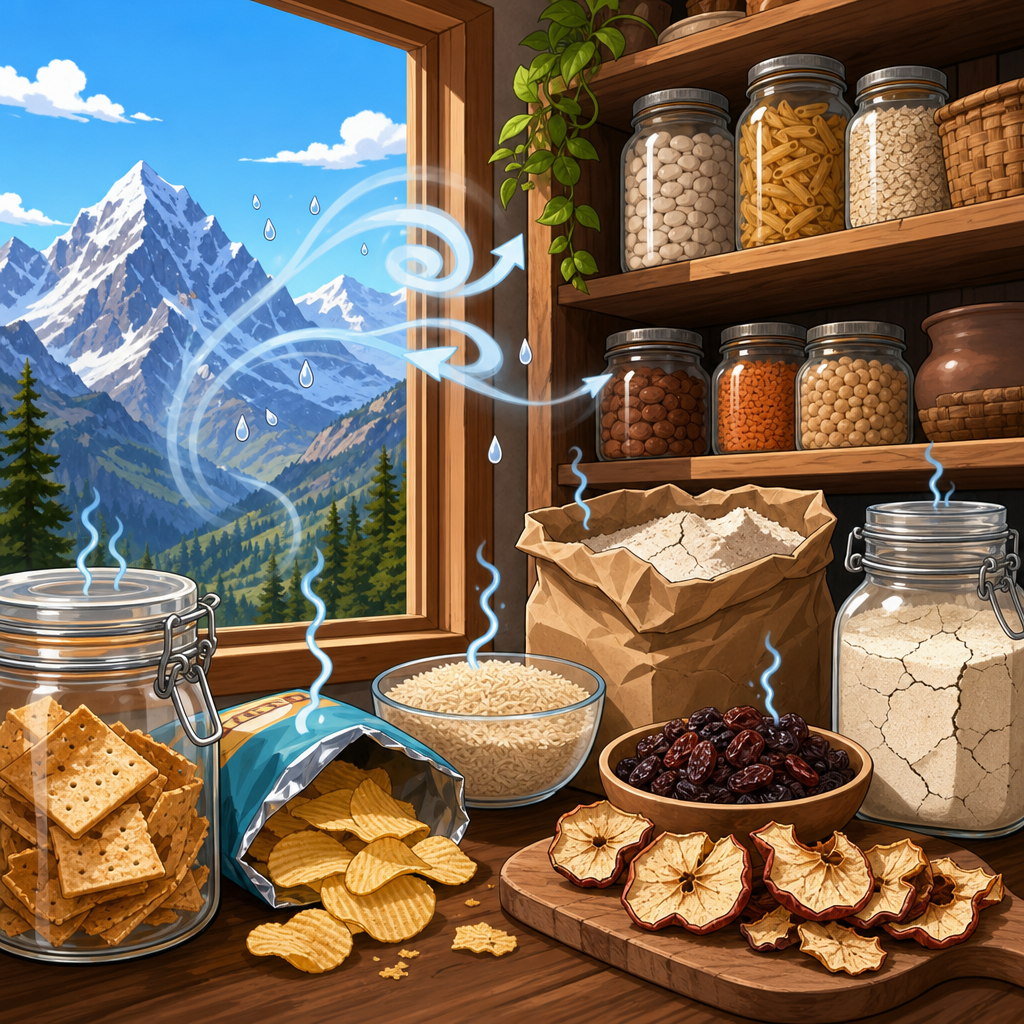
Groceries dry out faster in a mountain pantry because altitude changes how air holds moisture, how water evaporates, how packaging performs, and how quickly many foods lose texture, flavor, and shelf life. In practical terms, a pantry at 6,000 feet often behaves differently from one at sea level even when the room temperature looks the same on a thermostat. Relative humidity, vapor pressure, air leakage, and wider day to night temperature swings all influence what happens to bread, flour, cereal, spices, dried fruit, coffee, pet food, and even medications stored nearby. This matters for everyday health and comfort because food quality affects hydration, digestion, eye and skin comfort, budget, and household waste. I have worked with homeowners in dry inland climates and mountain towns, and the pattern is consistent: crackers go stale by drying instead of softening, brown sugar hardens quickly, potatoes shrivel, and pantry staples absorb odors while losing moisture faster than expected. Understanding the reason helps you store food more effectively and make the rest of the home feel better too.
The key terms are simple. Altitude is elevation above sea level. Relative humidity is how full the air is with moisture compared with the maximum it can hold at that temperature. Absolute humidity is the actual amount of water vapor in the air. At higher elevations, air pressure is lower, indoor air is often drier, and evaporation happens more readily. A mountain pantry is usually a cool, dark storage space, but cool alone does not preserve moisture. If the air is dry, foods release water until they reach equilibrium with the room. That single principle explains why groceries dry out faster in a mountain pantry and why solutions must focus on moisture control, barriers, and smart rotation rather than temperature alone.
How altitude changes pantry conditions
Higher elevation affects moisture in two direct ways. First, lower atmospheric pressure reduces the partial pressure around water at a food surface, making it easier for moisture to move from food into the air. Second, many mountain climates have low outdoor humidity for much of the year, especially in winter, so indoor air brought in through ventilation or leaks starts dry and becomes drier once heated. Heating cold outdoor air sharply lowers indoor relative humidity unless moisture is added back. In real homes, I often measure winter indoor humidity in mountain communities at 15 to 30 percent, a range where lips chap, eyes sting, wood shrinks, and unsealed groceries deteriorate quickly.
Temperature swings also matter. Mountain homes frequently experience sunny afternoons and cold nights. Pantry walls on exterior sides may cool overnight and warm during the day, creating subtle pressure changes in containers and repeated expansion and contraction in paperboard, plastic films, and jar lids. That cycling does not always ruin food, but it can accelerate moisture migration and reduce the performance of poor seals. If your cereal box sits near an exterior wall, the bag inside may slowly exchange air with the room every time the pantry warms and cools.
Another overlooked factor is air movement. Many mountain homes are built tight against weather, yet they still have strong localized drafts from exhaust fans, return grilles, attic bypasses, and stack effect. Stack effect is the upward movement of warm indoor air through a house, pulling replacement air in through lower leaks. In winter this can dry lower level storage spaces and constantly refresh pantry air with low humidity air. Dry moving air is more aggressive than still air at removing moisture from exposed foods.
Which groceries dry out first and why
Not every food reacts the same way. The foods that dry out fastest are those with moderate moisture, porous surfaces, or packaging that is designed for short retail display rather than long home storage. Bread is a classic example. People call it stale, but in a dry mountain pantry, part of that staling is simply moisture loss. Tortillas become brittle, bagels toughen, and sandwich loaves lose softness within a day or two if their bag clip is loose. Produce such as potatoes, onions, apples, and citrus can also lose mass steadily through transpiration, which is moisture escaping from plant tissues. Potatoes wrinkle, onions soften, and apples turn mealy sooner.
Dry goods are affected too. Brown sugar hardens because its small amount of retained moisture evaporates. Dried fruit becomes leathery. Marshmallows shrink. Whole bean coffee loses aromatic compounds and moisture balance after repeated exposure. Tea can flatten. Spices do not exactly dry out in a way you can see, but they lose volatile oils faster in warm, dry air, so flavor drops. Even pet kibble can become excessively dry and less palatable if stored in a thin bag left open in a low humidity pantry.
| Item | Common mountain-panry problem | Best fix |
|---|---|---|
| Bread and tortillas | Rapid drying and tough texture | Freeze extras; reseal tightly after each use |
| Brown sugar | Hard clumps from moisture loss | Use an airtight jar or gasket container |
| Potatoes and onions | Shriveling and weight loss | Store cool, dark, ventilated, away from drafts |
| Cereal and crackers | Texture changes and flavor fade | Move inner bag to a sealed container |
| Dried fruit and nuts | Leathery texture or rancidity | Use oxygen and moisture barriers; buy smaller packs |
| Coffee and tea | Aroma loss | Opaque airtight canisters, away from temperature swings |
Package type explains much of the variation. Paper bags, folding cartons, and twist ties slow contamination but are weak moisture barriers. Multi layer pouches, glass jars with intact gaskets, and rigid containers with compression seals perform much better. If a grocery item is sold in a package meant to move quickly off a supermarket shelf, assume it needs a better home container once opened in a dry climate.
The science of evaporation, water activity, and comfort
Water activity is the concept most people never hear but use every day. It describes how available water is in a food for microbial growth and chemical reactions, on a scale from 0 to 1. A cracker has low water activity; fresh bread has higher water activity. Moisture naturally moves from areas of higher availability to lower availability until balance is reached. In a mountain pantry with dry air, the surrounding environment keeps pulling that water outward. This is why a half used bag of flour may seem fine for months while a loaf of bread degrades quickly. The flour started drier and has less free water to lose.
From a health and comfort perspective, low indoor humidity does not only affect groceries. It increases transepidermal water loss from skin, contributes to irritated eyes by destabilizing the tear film, and can worsen the perception of cold because nasal passages and throat tissues dry out. Pantry problems are often the visible clue that the whole house is running too dry. When clients tell me their crackers are turning to dust and their hands are cracking, I usually find the same root cause: winter indoor humidity is chronically too low.
There is a balancing act. More humidity is not always better. If indoor relative humidity gets too high, especially in cool corners, condensation and mold can appear. The practical target used by many building professionals is often around 30 to 50 percent relative humidity, adjusted for outdoor temperature and window performance. In very cold spells, staying near the lower end can prevent window condensation. In milder weather, mid range humidity protects comfort and food texture better.
Packaging and storage methods that actually work
The best storage strategy in a mountain pantry is to reduce moisture exchange, limit oxygen exposure, and avoid temperature swings. Start with containers. Glass jars with clamp lids, high quality polypropylene or acrylic pantry bins with silicone gaskets, and metal canisters with well fitted seals outperform original packaging in dry climates. For flour, sugar, grains, cereal, and snacks, transferring opened goods into airtight containers immediately is the simplest upgrade. For bread products, freezing portions is more effective than trying to maintain softness at room temperature for a week.
Location matters just as much as the container. Keep pantry shelves away from heating ducts, water heaters, exterior walls with strong temperature swings, and any path of moving air. If your pantry has a louvered door and the rest of the house is very dry, a solid door can help. For produce, use separate zones. Potatoes prefer cool darkness and airflow, while onions need ventilation but should not be stored with potatoes because each releases compounds that shorten the other’s life. Apples release ethylene, which can accelerate ripening in nearby produce, so they deserve their own area.
Buying habits should change at altitude too. Smaller package sizes reduce the number of open containers cycling through dry air. Warehouse quantities only save money if you preserve quality after opening. I often recommend a simple rule: if a product texture matters, buy less per package unless you are prepared to repackage it the same day. This applies to chips, cereal, dried fruit, bakery goods, and specialty flours.
Managing household humidity without creating new problems
If groceries dry out faster in a mountain pantry, the instinct is to add a humidifier. Sometimes that is the right answer, but it should be done deliberately. Portable evaporative humidifiers can help in occupied rooms, yet they need cleaning to prevent mineral dust and microbial buildup. Whole home humidifiers attached to forced air systems are convenient, but they must be set seasonally and maintained to avoid over humidification. Steam humidifiers offer precise control but use more energy. The goal is not a tropical house. It is steady, moderate humidity that supports comfort and protects food, wood, and furnishings.
Use instruments, not guesswork. A few reliable digital hygrometers placed in the pantry, kitchen, and main living space reveal patterns quickly. If the pantry reads 18 percent while the kitchen reads 28 percent, you likely have an air leakage or location problem more than a whole house humidity problem. If the entire home sits below 25 percent for weeks, broader humidity control may be justified. Good decisions come from measured conditions.
Building maintenance supports pantry performance. Air sealing around attic penetrations, rim joists, recessed lights, and leaky doors reduces the dry air exchange driven by stack effect. Weatherstripping pantry doors and insulating cold exterior walls can stabilize conditions further. These upgrades improve comfort beyond food storage: less dry air intrusion often means fewer drafts, more stable skin moisture, and less overnight throat dryness.
Everyday health and comfort connections across the home
This topic sits inside everyday health and comfort because pantry dryness is part of a larger household pattern. The same low humidity that hardens brown sugar can increase static electricity, aggravate eczema, make contact lenses less comfortable, and leave nasal passages vulnerable. In homes with children, older adults, or anyone managing dry eye disease, dermatitis, or respiratory irritation, small moisture control improvements can have outsized benefits. Better pantry storage reduces food waste, but better indoor moisture balance also improves daily comfort in ways people notice within days.
There are sensible limits. Some foods should stay dry, and some homes cannot safely maintain higher humidity during severe cold without risking condensation on windows or inside wall assemblies. That is why the best approach combines targeted food storage with measured indoor humidity control and basic building science. If you live at altitude, assume original grocery packaging is temporary, track humidity with real instruments, and treat pantry changes as a clue to what the rest of the house is experiencing. Start by sealing opened foods, checking for drafts, and measuring relative humidity this week. Small adjustments can protect groceries, reduce waste, and make your whole home feel noticeably better every day.
Frequently Asked Questions
Why do groceries dry out faster at high altitude even if the pantry temperature seems normal?
At higher elevations, the air usually holds less moisture and often has a lower relative humidity indoors, especially in mountain climates where heating systems run frequently and outside air is naturally drier. That matters because food is constantly trying to reach balance with the air around it. If the surrounding air is dry, moisture moves out of the food more quickly. So even when your thermostat says the pantry is at a perfectly ordinary temperature, the moisture conditions can be very different from those at sea level.
Altitude also affects vapor pressure and evaporation. Water escapes from exposed or loosely packaged foods more readily, which can make bread go stale faster, crackers lose their ideal texture, cereals become dry and brittle, and baking ingredients like brown sugar harden sooner. In many mountain homes, day-to-night temperature swings and small drafts around doors, windows, and pantry walls add to the problem by repeatedly changing the air conditions around stored food. The result is that groceries can lose texture, flavor, and freshness noticeably faster than they would in a more humid, lower-elevation pantry.
Which foods are most likely to dry out in a mountain pantry?
The foods most vulnerable are the ones that either contain moderate moisture or depend on a specific texture to stay appealing. Bread is one of the most obvious examples because it stales quickly when moisture migrates out of the loaf. Tortillas, bagels, muffins, and other baked goods can also become tough, crumbly, or leathery sooner than expected. Open boxes of cereal, crackers, cookies, rice cakes, and snack foods may seem shelf-stable, but they can still lose their intended texture when dry air and small air leaks steadily affect them.
Staples such as flour, cornmeal, pancake mix, and baking mixes can also change in quality over time if they are stored in packaging that is not well sealed. Brown sugar is especially notorious in dry climates because it hardens as its moisture content drops. Dried fruit can become excessively tough, nuts may lose eating quality, and some spices and herbs can seem to fade faster because volatile aromatic compounds dissipate more readily when packaging is repeatedly opened in a dry environment. Even foods you do not normally think of as “moist,” like pasta or beans, can be affected indirectly if fluctuating pantry conditions shorten flavor life or alter cooking performance over long storage periods.
Does packaging behave differently at altitude, and can that make pantry foods go stale faster?
Yes. Packaging is a major part of the story. Many grocery packages are designed for ordinary retail conditions, but once they are opened, resealed casually, or stored in a dry mountain home, they may not protect food as well as people expect. Thin plastic bags, folded inner liners, cardboard boxes, and loosely clipped packages often allow ongoing air exchange. In a dry, high-altitude pantry, even a small gap can be enough to let moisture escape from food day after day.
There is also the issue of pressure changes and handling. Some factory-sealed packages puff or flex differently at elevation, and while that does not always indicate spoilage, it can affect how consumers perceive freshness or reseal the package after opening. More importantly, packaging that works “well enough” at sea level may be less forgiving in mountain conditions because the surrounding air is pulling moisture from the product more aggressively. That is why airtight containers with strong seals usually perform better than original packaging for cereals, flours, snacks, sugar, and baking supplies. Good packaging will not change the altitude, but it can significantly slow moisture loss, texture changes, and flavor decline.
How can I keep bread, flour, cereal, and other staples from drying out so quickly in a mountain pantry?
The most effective strategy is to reduce contact between food and the dry pantry air. Transfer vulnerable staples into truly airtight containers rather than relying on folded bags or box liners. For bread and other baked goods, use well-sealed bags and buy quantities you can finish quickly. If you will not eat a loaf within a few days, freezing part of it is often better than leaving it in the pantry where it can stale rapidly. Cereals, crackers, and snacks also benefit from rigid containers with gasket seals because they limit ongoing air exchange each time the pantry door opens and closes.
It also helps to manage the pantry environment itself. Keep groceries away from drafty exterior walls, sunny shelves, heating vents, and spots with strong day-to-night temperature changes. If your home is extremely dry, whole-house humidity control or a room humidifier used appropriately can improve conditions, though food still needs proper containers. Rotate stock more often than you would at lower elevation, especially for baking items and opened packages. Smaller package sizes can be smarter in mountain homes because they reduce the time food spends exposed after opening. In practical terms, better sealing, smarter placement, and faster turnover are the three biggest ways to protect texture and shelf life.
Is dry pantry air only a texture problem, or can it affect flavor and shelf life too?
It affects all three. Texture is simply the first thing most people notice. Bread becomes firm, cereal loses its intended bite, and brown sugar turns hard. But moisture loss can also change flavor perception. Foods that dry excessively may taste flat, stale, or less aromatic, even when they are still technically safe to eat. Herbs, spices, coffee, tea, snack foods, and grain products can all seem less vibrant when volatile compounds dissipate and repeated exposure to dry air accelerates quality loss.
Shelf life is affected because “freshness” is more than just spoilage prevention. A food can remain safe while becoming much less enjoyable. In a mountain pantry, dry air, air leakage, and temperature swings can shorten the period during which products retain their best flavor, aroma, and structure. That means you may need to rethink storage timelines compared with standard label expectations developed under more average conditions. If groceries routinely seem disappointing before their printed dates, the issue may not be the food itself but the high-altitude storage environment. Better sealing, more stable conditions, and quicker use often restore much of the quality people assume they have to give up in mountain homes.