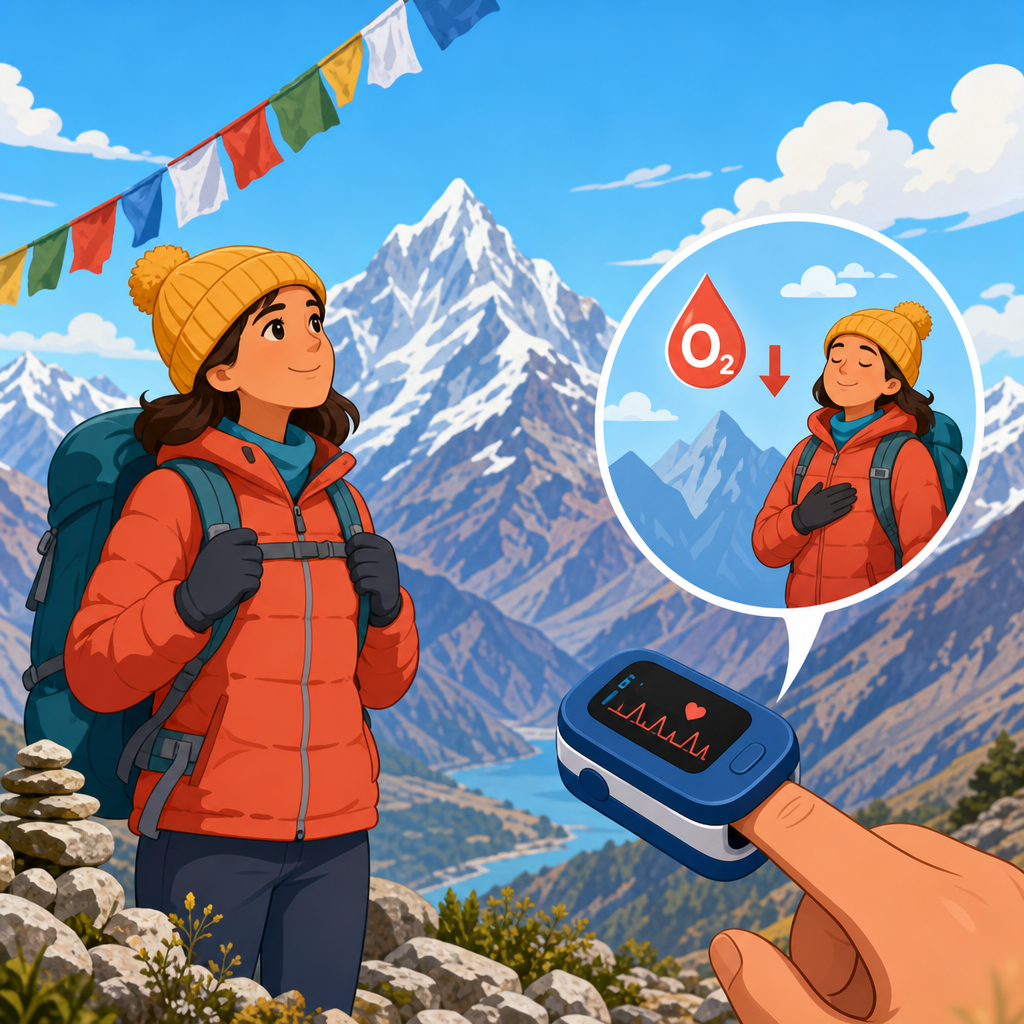
Low SpO2 at altitude without symptoms is common, confusing, and often less dangerous than the number alone suggests, but it still deserves careful interpretation. SpO2 means peripheral oxygen saturation, the percentage of hemoglobin carrying oxygen as estimated by a pulse oximeter. At sea level, healthy adults usually read about 95% to 100%. At altitude, lower barometric pressure reduces the oxygen available in each breath, so SpO2 falls even in well-acclimatized people. That drop can look alarming if you are used to sea-level values. I have seen trekkers at 3,500 meters panic over readings in the low 80s while walking, sleeping normally, and performing well the next day. The central question is not whether altitude lowers oxygen saturation; it does. The real question is whether a low reading without symptoms predicts impending altitude illness, poor acclimatization, or an immediate need to descend. This article explains how to think about pulse oximetry at altitude, what counts as normal versus concerning, how to use monitoring tools intelligently, and when numbers should change your decisions. As a hub for monitoring and decision tools, it also shows how oximetry fits alongside symptoms, ascent rate, sleep, heart rate, and structured scoring systems.
The reason this matters is simple: altitude decisions are time sensitive, and overreacting can be as costly as underreacting. Descending unnecessarily can end an expedition, but ignoring meaningful warning signs can allow acute mountain sickness, high-altitude pulmonary edema, or high-altitude cerebral edema to worsen. Pulse oximeters are cheap, portable, and widely used, yet they are frequently misunderstood. A single reading does not diagnose altitude illness. There is no universal SpO2 cutoff that applies to every altitude, every person, and every device. Understanding context is what turns a gadget into a useful decision aid.
What a low SpO2 reading at altitude actually means
A low SpO2 reading at altitude means your blood is carrying less oxygen than it would at lower elevation, but that fact alone does not tell you whether you are sick. Oxygen saturation falls because inspired oxygen pressure falls with altitude. Your body compensates through faster breathing, increased heart rate, changes in blood pH, and over time a series of acclimatization responses including increased ventilation drive and, later, red blood cell production. Because people acclimatize at different speeds, two hikers at the same camp can show different saturations and both be fine.
Numbers also fluctuate more than many users expect. SpO2 commonly drops during sleep because breathing becomes more periodic at altitude. It can rise after rest, food, warmth, or a slower breathing pattern. Readings can transiently fall after exertion, with cold fingers, or while the device struggles to detect a pulse. In practice, I treat isolated low numbers as prompts to reassess, not as stand-alone diagnoses. A trekker at 4,200 meters with an SpO2 of 78% who is eating, walking steadily, thinking clearly, and reporting no headache may simply be showing a typical acclimatization pattern for that elevation. The same number in someone with severe headache, vomiting, breathlessness at rest, or confusion is a very different story.
When asymptomatic low SpO2 is usually acceptable
At moderate to high altitude, many healthy people record oxygen saturations below sea-level norms without any harmful consequence. Population studies and field experience show broad normal ranges that depend heavily on elevation and acclimatization status. Roughly speaking, values in the high 80s may be common around 2,500 to 3,500 meters, and values in the low to mid 80s can be seen around 4,000 to 5,000 meters, especially during sleep or soon after arrival. Elite climbers at extreme altitude can function at saturations that would prompt urgent hospital evaluation at sea level.
Asymptomatic low SpO2 is more likely to be acceptable when several conditions are true: the person is otherwise well, symptoms are absent or improving, performance is stable, ascent has been gradual, hydration and caloric intake are adequate, and the reading matches the expected range for that altitude. It also helps if the trend is stable rather than falling day after day. One of the most reassuring patterns is a climber whose morning saturation improves slightly after a rest day while symptoms remain absent. That suggests acclimatization is catching up.
What about a very low number with no symptoms? That is where caution increases. A reading in the 70s at sleeping altitude may still occur in experienced climbers at high camps, but it should trigger a broader assessment: repeated measurement, symptom review, heart rate, respiratory rate, exam for cough or ataxia, and attention to exertional capacity. The lower the number, the less you should rely on the claim of “I feel fine” without checking for subtle changes.
Why pulse oximeters can mislead you
Pulse oximeters estimate saturation using light absorption, and they have well-known limitations. Consumer devices are often accurate enough for trend monitoring, but they are not laboratory instruments. Cold hands, vasoconstriction, nail polish, dark ambient light, motion, poor perfusion, and weak batteries can all produce false readings. Accuracy also worsens at lower saturations, which is exactly where altitude users most want certainty. Regulatory validation standards such as ISO 80601-2-61 focus largely on lower-altitude clinical settings, not remote mountain use in freezing wind.
Interpretation errors are even more common than device errors. Many people measure immediately after walking uphill, while shivering, or while breathing erratically from anxiety. That gives noisy data. I have repeatedly improved a reading by 4 to 8 percentage points simply by warming the hand, waiting five minutes, and ensuring a clean pulse signal. Device quality matters too. Models from Nonin, Masimo, and some medically oriented fingertip units generally perform better than unbranded bargain options, though no brand is perfect in the cold. If your device shows pulse waveform or perfusion index, use them. A saturation value without a reliable pulse signal should not drive a descent decision by itself.
How to use SpO2 as part of a monitoring system
The best way to use SpO2 at altitude is to make it one data point inside a structured monitoring routine. In the field, I recommend checking at the same times each day, usually morning at rest and evening after settling into camp. Record altitude, symptoms, heart rate, sleep quality, appetite, and any medications such as acetazolamide or dexamethasone. Trends are more informative than snapshots. A stable reading with stable function is less concerning than a declining reading paired with worsening headache and reduced pace.
For a practical hub framework, use pulse oximetry alongside four other decision tools: symptom scoring, exertional assessment, respiratory warning signs, and ascent history. Symptom scoring usually means the Lake Louise Score for acute mountain sickness, which captures headache plus symptoms such as gastrointestinal upset, fatigue, dizziness, and sleep disturbance. Exertional assessment asks whether the person can walk at their expected pace without unusual breathlessness. Respiratory warning signs include cough, crackles, chest tightness, or breathlessness at rest, which point toward high-altitude pulmonary edema. Ascent history asks how quickly the person gained sleeping elevation and whether they took rest days.
| Tool | What it tells you | Strong use case | Main limitation |
|---|---|---|---|
| SpO2 | Oxygenation trend at current altitude | Following changes over days | Wide normal range; device error |
| Lake Louise Score | Probability and severity of AMS symptoms | Structured symptom check | Subjective; depends on honest reporting |
| Resting heart rate | Physiologic stress, recovery, dehydration | Spotting deteriorating adaptation | Nonspecific; affected by caffeine and effort |
| Respiratory exam | Possible HAPE signs | Cough or breathlessness at rest | Requires observation skill |
| Ascent log | Risk context | Planning and prevention | Does not show current severity alone |
Decision thresholds: when to watch, when to stop, when to descend
There is no single saturation threshold that mandates descent at all altitudes, but there are reliable principles. First, symptoms outrank numbers. If a person has severe acute mountain sickness symptoms, ataxia, confusion, reduced consciousness, or breathlessness at rest, that is a descent problem even if SpO2 is not profoundly low. Second, unexpectedly low or falling saturations matter more when they are discordant with altitude and trend. A trekker at 3,000 meters repeatedly reading 74% while resting deserves more concern than a climber at 5,000 meters reading 78% after several days of acclimatization.
In practical terms, use three zones. Watch closely when saturation is lower than expected for altitude but the person is symptom free and functioning normally. Stop ascent when saturation is dropping over time, recovery from exertion is worsening, or mild symptoms are present. Descend or seek urgent treatment when low saturation accompanies red flags such as cough, crackles, cyanosis, severe fatigue, inability to keep pace, severe headache, vomiting, ataxia, or mental status change. If available, supplemental oxygen or a portable hyperbaric bag can buy time, but they do not replace descent for serious illness.
One important nuance: acetazolamide can improve acclimatization and sometimes improve saturation trends, but it does not make a dangerous situation safe on its own. Dexamethasone can blunt symptoms of cerebral edema while the underlying problem persists. If the person looks better because of medication but the clinical picture remains concerning, continue to prioritize descent.
Special situations that change the interpretation
Preexisting conditions and environmental factors can make low SpO2 more meaningful. People with chronic lung disease, sleep apnea, pulmonary hypertension, recent respiratory infection, or anemia may run lower saturations and have less reserve. In these groups, thresholds for caution should be lower, and pre-trip planning should include clinician advice, medication review, and if appropriate a hypoxic exercise test. Smokers can have falsely reassuring or distorted readings depending on carbon monoxide exposure because standard pulse oximeters do not reliably distinguish oxyhemoglobin from carboxyhemoglobin.
Children and older adults also require thoughtful interpretation. Children may report symptoms poorly, so behavioral changes, reduced play, poor feeding, or unusual sleepiness become more important. Older adults may attribute breathlessness or fatigue to age and underreport progression. Weather matters too. Cold increases vasoconstriction and degrades device performance, while dehydration and under-fueling can worsen fatigue and elevate heart rate, making the whole picture look more ominous. Nighttime readings are typically lower than daytime resting values, so compare like with like. A sleeping SpO2 should not be judged against a seated daytime baseline.
Finally, know the signs of high-altitude pulmonary edema and high-altitude cerebral edema because these are the illnesses pulse oximetry most often fails to diagnose early if used alone. HAPE often begins with reduced exercise capacity, unusually slow pace, cough, and rising breathlessness before dramatic findings appear. HACE is defined clinically by neurologic change, especially ataxia and altered mental status. In both cases, the patient may minimize symptoms. Objective observation by partners is essential.
Building a smarter altitude monitoring plan
A smart monitoring plan starts before the trip. Choose a reliable pulse oximeter, learn how to obtain a stable reading, and record a sea-level baseline if possible. During ascent, log sleeping altitude, resting morning SpO2, resting heart rate, Lake Louise symptoms, medications, fluid intake, and notable exertion. Build decisions around trends, not isolated values. If readings look unexpectedly low, repeat the measurement after warming the hand and resting quietly. If concern remains, compare with your partner’s device or your backup unit.
Most important, tie monitoring to actions. Decide in advance what will trigger a rest day, what will stop further ascent, and what will trigger descent. A simple rule set works well: no ascent with worsening symptoms; no sleeping elevation gain after a poor recovery day; immediate descent for neurologic symptoms or breathlessness at rest. This approach keeps pulse oximetry in its proper role: useful, objective, and supportive, but never the sole judge. If you are heading to altitude, use SpO2 to sharpen judgment, not replace it. That is the safest way to answer the original question. Low SpO2 at altitude without symptoms may not be a reason to worry, but it is always a reason to look carefully, think systematically, and respect the mountain.
Frequently Asked Questions
Is a low SpO2 reading at altitude dangerous if I feel completely fine?
Not necessarily. At altitude, a lower SpO2 reading is often a normal response to lower barometric pressure rather than a sign of immediate danger. SpO2, or peripheral oxygen saturation, estimates how much of your hemoglobin is carrying oxygen. At sea level, many healthy adults read around 95% to 100%, but those numbers commonly drop as elevation increases because there is less oxygen pressure in each breath. That means a pulse oximeter can show a number that would look worrisome at sea level even when a person is acclimatizing appropriately and has no symptoms.
The key point is that numbers do not exist in isolation. A low reading matters much more when it is paired with symptoms such as shortness of breath at rest, confusion, severe headache, poor coordination, chest pain, blue lips, worsening fatigue, or reduced exercise tolerance that is out of proportion to the altitude. If you feel well, are thinking clearly, walking normally, and your symptoms are stable or absent, the reading may simply reflect the altitude environment. Still, it deserves interpretation rather than dismissal. Trends, your elevation, how quickly you ascended, your medical history, and whether the reading is reproducible all matter more than a single number by itself.
Why does SpO2 drop at altitude even in healthy, acclimatized people?
SpO2 falls at altitude because the air pressure drops as you go higher, and that lowers the amount of oxygen available to move from your lungs into your bloodstream. Even though the percentage of oxygen in the air stays roughly the same, the partial pressure of oxygen decreases. That makes it harder for oxygen to load onto hemoglobin, so a pulse oximeter often shows a lower saturation. This is a basic physiology effect, not automatically a medical emergency.
Your body then starts adapting through acclimatization. You breathe faster and deeper, your kidneys adjust acid-base balance, and over time your body may increase red blood cell production. These changes improve oxygen delivery, but they do not always return SpO2 to sea-level values. In other words, a person can be acclimatized and still have an SpO2 that looks low compared with what they are used to at home. That is why altitude-specific context is so important. A reading that would trigger concern at sea level may be expected at higher elevations, especially during sleep, after exertion, or early in the acclimatization process.
Can pulse oximeter readings at altitude be misleading or inaccurate?
Yes, absolutely. Pulse oximeters are useful tools, but they are not perfect, and altitude can make interpretation trickier. A reading can be falsely low because of cold fingers, poor circulation, movement, nail polish, darker ambient lighting conditions, dehydration, or a low-quality device. At altitude, people often have cold hands and reduced peripheral perfusion, which makes bad readings more common. If the device is struggling to detect a strong pulse signal, the displayed number may not reflect your true oxygen status very well.
That is why it is smart to treat a pulse oximeter as one piece of information rather than the final verdict. If you get a low number, warm your hands, sit still, wait a minute or two, and repeat the measurement. Compare several readings rather than reacting to one isolated value. It can also help to check the reading when you are resting, not immediately after climbing stairs or hiking. If the number remains low but you feel well and have no concerning symptoms, it may simply be a true altitude-related reduction. If the reading is low and you also feel unwell, that combination is much more important than the device alone.
When should a low SpO2 at altitude make me worry, even if symptoms seem mild or absent?
You should be more cautious if the SpO2 is persistently low for your altitude, especially if it is trending downward, occurring after rapid ascent, or accompanied by even subtle warning signs. Mild symptoms can sometimes be easy to dismiss at altitude because fatigue, poor sleep, and shortness of breath with exertion are common. But worsening headache, nausea, unusual weakness, loss of appetite, dizziness, reduced coordination, new cough, or feeling breathless at rest deserve attention. These may signal altitude illness even before dramatic symptoms appear.
Context matters a lot. People with lung disease, heart disease, anemia, sleep apnea, or recent respiratory infections may have less reserve and may need a lower threshold for concern. A sudden mismatch between how you feel and how you usually perform is also important. If you are slowing down dramatically, struggling with basic tasks, becoming confused, or cannot recover your breath with rest, do not rely on reassurance from feeling “mostly okay.” Descent, rest, supplemental oxygen if available, and medical evaluation may be appropriate depending on the situation. The safest rule is this: worry less about one scary-looking number and more about persistent low readings plus any sign that your body is not coping well.
What should I do if my SpO2 looks low at altitude but I have no obvious symptoms?
Start by slowing down and checking the basics. Rest for a few minutes, warm your hands, repeat the pulse oximeter reading, and make sure the device is functioning properly. Consider whether you just exercised, whether you are cold, dehydrated, or anxious, and whether the reading improves when you are calm and still. Look at the trend over time rather than a single value. A stable reading in the expected range for your altitude, combined with feeling well, eating and drinking normally, thinking clearly, and sleeping reasonably, is generally less concerning than a sudden drop or a number that keeps falling.
From there, focus on conservative altitude safety. Avoid pushing harder that day, hydrate sensibly, eat, keep warm, and give your body time to acclimatize. If you recently ascended, consider pausing further ascent until you are sure you remain well. Monitor yourself for headache, nausea, breathlessness at rest, cough, confusion, or clumsiness. If any of those appear, or if the reading stays very low or continues dropping, take it more seriously. In practical terms, the best response to low SpO2 without symptoms is not panic, but careful observation, repeat measurement, and respect for altitude physiology. Numbers can be misleading, but they should never be ignored when the overall picture starts to change.