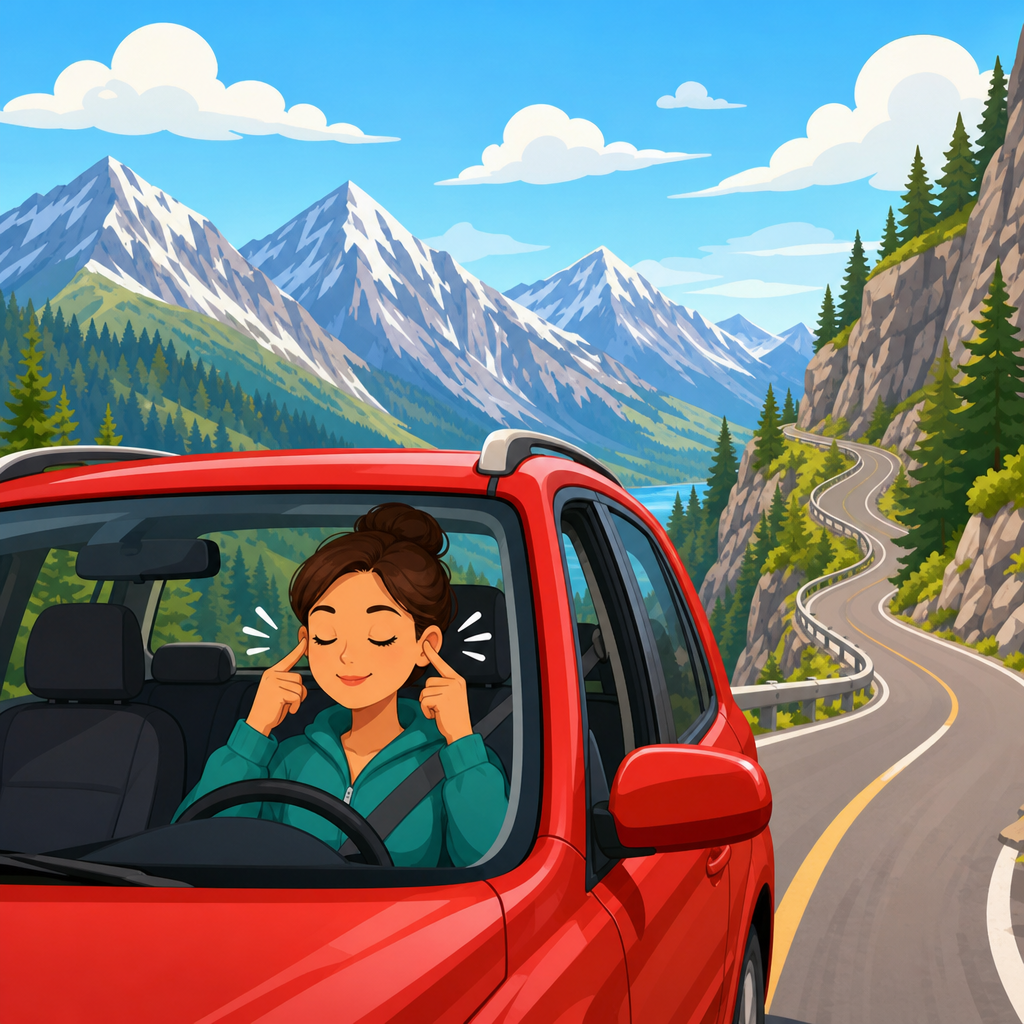
Ear pressure on mountain drives happens when altitude changes faster than your ears can equalize, creating fullness, muffled hearing, popping, or pain that can distract you behind the wheel. This hub explains how to relieve ear pressure on mountain drives, why it happens, who is most affected, and which remedies actually work in real driving conditions. In ear, nose, and throat care, the key structure is the Eustachian tube, a narrow passage linking the middle ear to the back of the nose and upper throat. Its job is to balance air pressure on both sides of the eardrum and drain normal secretions from the middle ear. When it opens properly, pressure equalizes and symptoms ease. When it stays blocked by inflammation, congestion, allergy swelling, or anatomy, pressure builds and discomfort follows.
Mountain driving creates a perfect setup for this problem because elevation can change hundreds or thousands of feet in a short time, especially on steep descents. Many people notice the worst symptoms going downhill, not uphill, because outside air pressure rises quickly while trapped air in the middle ear cannot adjust fast enough. I have seen this pattern repeatedly in families driving through passes, ski roads, and canyon routes: one passenger yawns and swallows with no issue, while another develops sharp unilateral ear pain by the second switchback. Understanding the mechanics matters because the safest relief methods depend on timing, underlying cause, and symptom severity. This article also serves as a hub for broader ENT and sensory issues, including congestion, sinus pressure, altitude-related discomfort, sound sensitivity, and when symptoms suggest infection or a more serious problem.
Why ear pressure happens on mountain drives
The middle ear is an air-filled space behind the eardrum. As you climb or descend, ambient air pressure changes. The Eustachian tube must open briefly to let air move in or out so the pressure in the middle ear matches the pressure outside. Swallowing, chewing, yawning, and certain pressure techniques activate the muscles that help open the tube. If that opening is delayed, the eardrum stretches inward or outward, causing fullness, crackling, reduced hearing, and pain. In children, the tube is shorter and more horizontal, which is one reason kids often struggle more during rapid elevation changes.
Common triggers include colds, seasonal allergies, sinus inflammation, enlarged adenoids in children, reflux irritation, and recent ear infections. Even mild nasal swelling can narrow the Eustachian tube enough to matter when a driver drops from a pass into a valley over thirty minutes. People often assume earwax is the main cause of pressure, but wax usually affects hearing in the outer ear canal rather than pressure regulation in the middle ear. Another frequent misconception is that popping always means damage. In most cases, popping is a sign that pressure is finally equalizing. The real concern is persistent severe pain, hearing loss that does not clear, dizziness, drainage, or symptoms that continue long after the drive.
Fastest ways to relieve ear pressure safely in the car
The quickest safe methods are swallowing, yawning, sipping water, chewing gum, and frequent gentle jaw movement before symptoms become intense. Prevention beats rescue. If you know a descent is coming, start swallowing and chewing before the pressure builds. I generally advise travelers to treat the first hint of fullness as the moment to act, not to wait for pain. For infants, bottle feeding or a pacifier can help because repetitive sucking promotes swallowing. For adults, taking small sips every minute or two often works better than one big gulp.
If basic swallowing does not help, try the Toynbee maneuver: pinch the nose closed and swallow. This can help draw the Eustachian tube open without generating excessive force. Another option is the Valsalva maneuver, performed by pinching the nose, closing the mouth, and blowing very gently as if trying to exhale through the nose. Gentle is the operative word. Forceful Valsalva can injure the ear, especially when the tissues are inflamed. Drivers should not perform any maneuver that takes attention off the road; passengers can do them more easily. If you are driving on a winding mountain route, the practical move is to use chewing, swallowing, and planned pull-offs rather than straining through pain.
| Method | How it works | Best use case | Important caution |
|---|---|---|---|
| Swallowing or sipping water | Activates muscles that open the Eustachian tube | First sign of fullness during ascent or descent | Use early and often for best effect |
| Chewing gum | Promotes repeated swallowing and jaw motion | Long descents and passengers prone to pressure | Not suitable for very young children |
| Yawning | Widens the tube opening through jaw movement | Mild pressure and muffled hearing | May need to repeat several times |
| Toynbee maneuver | Combines nose pinch with swallowing | When swallowing alone is not enough | Avoid if it causes sharp pain |
| Gentle Valsalva | Pushes air toward the middle ear | Short-term relief for stubborn pressure | Never blow forcefully |
| Stopping for a break | Slows the rate of altitude change and allows repeated equalization | Severe discomfort on steep descents | Choose a safe turnout, not a shoulder curve |
Medications and devices that can help
If congestion is the reason your ears will not equalize, medication can make a significant difference, but timing matters. A short-acting topical nasal decongestant such as oxymetazoline can reduce nasal swelling within minutes and may help when used shortly before a mountain descent. Because rebound congestion is a known risk, it should not be used for more than about three consecutive days. Oral decongestants such as pseudoephedrine may help some adults when taken in advance, but they are not appropriate for everyone. People with uncontrolled hypertension, certain heart conditions, arrhythmias, glaucoma, or medication interactions need medical guidance first. Antihistamines can be useful when allergy-driven swelling is the main factor, though some older products cause drowsiness and are a poor choice for drivers.
Pressure-regulating earplugs, often sold under travel-oriented brand names, aim to slow pressure changes at the eardrum so the middle ear has more time to catch up. Some travelers report meaningful relief on mountain descents, and the concept is similar to what helps during airplane landing. They are not magic, and they work best as part of a broader plan that includes hydration, swallowing, and congestion control. Saline nasal spray is another simple tool I recommend often because it moisturizes irritated nasal tissue without the rebound risk linked to medicated sprays. For people with recurrent problems, especially those who drive mountain roads weekly, an ENT evaluation may identify chronic Eustachian tube dysfunction, allergic rhinitis, septal deviation, or sinus disease that deserves more than occasional self-treatment.
What to do when congestion, allergies, or a cold are involved
Driving with an active cold is the most common setup for severe ear pressure. Inflamed nasal lining narrows the Eustachian tube opening, and thick mucus further interferes with normal function. In that situation, the best strategy starts before the drive: hydrate well, use saline spray, consider appropriate allergy or congestion medication, and avoid last-minute sprinting into cold dry air, which can worsen nasal irritation. If possible, postpone steep mountain travel when you have fever, heavy congestion, or ear pain already in progress. The problem can intensify quickly once the road drops in elevation.
Allergy sufferers benefit from control measures beyond medication. Keep windows closed during high pollen seasons, use the car cabin filter on recirculate when passing through dusty areas, and limit exposure to smoke or strong fragrance before the trip. Children with chronic mouth breathing, snoring, or frequent ear complaints may have enlarged adenoids or persistent nasal inflammation, and those patterns are worth discussing with a pediatrician or ENT. Adults with repeated pressure, facial pressure, and postnasal drainage may actually have chronic rhinitis or sinus disease rather than isolated ear trouble. Treating the upstream nasal problem often reduces the downstream ear symptoms dramatically.
When ear pressure is dangerous or needs medical care
Most altitude-related ear pressure is temporary, but there are clear red flags. Seek prompt medical care if ear pain is severe and does not improve after the trip, if hearing remains reduced for more than a day or two, if you develop ear drainage, fever, marked dizziness, spinning vertigo, or visible blood. These symptoms can indicate middle ear barotrauma, infection, eardrum injury, or an inner ear problem that should not be ignored. Sudden sensorineural hearing loss is uncommon, but it is an urgent diagnosis because early treatment matters. A sensation of fullness with abrupt major hearing loss or ringing in one ear deserves same-day evaluation.
Barotrauma ranges from mild eardrum retraction to fluid behind the eardrum and, rarely, perforation. Clinicians grade it based on the exam, symptoms, and hearing changes. Persistent symptoms after a mountain drive may require otoscopy, tympanometry, or audiometry. Recurrent episodes can justify referral for nasal endoscopy or allergy assessment. Some patients with chronic obstructive dysfunction benefit from medical therapy, pressure training, or procedures such as tympanostomy tubes in selected cases. Balloon dilation of the Eustachian tube is also used for carefully chosen adults with documented chronic dysfunction, though it is not a first-line fix for occasional road trip pressure.
Mountain drive prevention plan for adults, kids, and frequent travelers
The most effective prevention plan starts with timing and preparation. Eat and drink before the drive so swallowing comes naturally. Keep water accessible. If you are prone to symptoms, begin chewing gum or swallowing exercises before a major descent rather than after the pain starts. Plan rest stops on long grades. If you have allergies, start your regular controller medication consistently during the season instead of relying on rescue steps only on travel day. For recurrent symptoms, track which roads, elevations, and weather conditions trigger trouble. That pattern often reveals whether dryness, congestion, or rapid descent is the main issue.
For children, explain the popping sensation in simple terms so they do not panic. Offer drinks, snacks that encourage chewing, or a pacifier for infants when safe and age-appropriate. Avoid forcing pressure maneuvers in young children who do not understand them. For frequent mountain commuters, keep a small kit in the car with water, sugar-free gum, saline spray, and any clinician-approved medication. The wider ENT and sensory picture matters too. People who are also dealing with sinus pressure, tinnitus, motion sensitivity, sound sensitivity, or dry cabin air often experience symptoms together rather than in isolation. Treating the entire pattern makes travel far more comfortable.
Knowing how to relieve ear pressure on mountain drives comes down to understanding pressure equalization, acting early, and matching the remedy to the cause. Most cases improve with simple techniques like swallowing, chewing, yawning, and gentle pressure maneuvers used before discomfort becomes intense. When congestion or allergies are involved, saline, well-timed decongestants, and better baseline nasal control can prevent a miserable descent. When symptoms are severe, persistent, or paired with hearing loss, drainage, or vertigo, the right move is medical evaluation rather than tougher self-treatment.
As the hub for ENT and sensory issues within daily comfort, this guide points to a practical truth: ear pressure is rarely just an ear problem. Nasal inflammation, sinus health, hydration, altitude rate, child anatomy, and travel habits all shape what happens on the road. Build a prevention routine, carry a few proven tools, and pay attention to red flags. The benefit is simple but important: less pain, clearer hearing, and safer focus on mountain roads. Before your next drive, prepare early, equalize often, and address congestion before you hit the descent.
Frequently Asked Questions
Why do my ears feel blocked or painful when driving up or down a mountain?
Ear pressure on mountain drives happens because the air pressure around you changes quickly as elevation rises or falls. Your middle ear is an air-filled space behind the eardrum, and it has to stay balanced with the outside environment. That balancing job is handled by the Eustachian tube, a small passage connecting the middle ear to the back of the nose and upper throat. When it opens normally, air moves in or out of the middle ear and pressure equalizes. When it does not open fast enough, pressure builds across the eardrum, causing fullness, muffled hearing, popping, discomfort, or even sharp pain.
This is often more noticeable on mountain roads because altitude can change over a short stretch of driving, especially on steep descents. Going downhill tends to bother more people than going uphill because the middle ear may have a harder time adjusting as outside pressure increases. If you have allergies, a cold, sinus congestion, or recent ear inflammation, the Eustachian tube may already be swollen or partially blocked, making equalization slower and symptoms more intense. In practical terms, that means even a routine drive through a pass can produce distracting ear symptoms if your tubes are not working efficiently.
What is the fastest way to relieve ear pressure while I am driving in the mountains?
The safest and most effective first step is to encourage the Eustachian tube to open naturally. Swallowing, yawning, sipping water, chewing gum, or sucking on candy can all help by activating the muscles that assist the tube in opening. Many drivers notice relief after repeated swallowing or exaggerated yawning, especially if they start before discomfort becomes severe. If you are not actively driving through a demanding section of road, taking a few calm, deliberate swallows and loosening your jaw can make a meaningful difference.
If that is not enough, a gentle pressure-equalizing technique may help. Pinch your nose, close your mouth, and blow very lightly as if trying to exhale through your nose. This is commonly called the Valsalva maneuver. The key is to be gentle, not forceful. A hard blow can irritate the ear rather than help it. Another option is to pinch your nose and swallow, which some people find easier and more comfortable. If symptoms are building quickly, slowing your rate of elevation change can also help. Pulling over safely for a short break may give your ears time to catch up. The best approach is usually to start early, use simple swallowing or yawning techniques first, and avoid waiting until the pressure becomes painful.
Who is most likely to have trouble with ear pressure on mountain drives?
Anyone can experience pressure changes in the ears during rapid altitude shifts, but some people are much more prone to it. Drivers and passengers with seasonal allergies, colds, sinus infections, nasal congestion, or chronic Eustachian tube dysfunction often have the hardest time equalizing. Children can also be more sensitive because their Eustachian tubes are smaller and function somewhat differently than those of adults. People with a recent ear infection, recent upper respiratory illness, or inflamed nasal passages may notice symptoms sooner and more intensely than usual.
There are also situational risk factors. A very fast ascent or descent, winding roads with major elevation changes, dry air, and long drives without swallowing or drinking can all make symptoms more noticeable. People who already have hearing issues, a history of ear surgery, or frequent problems during flights may also be more likely to struggle on mountain drives. If you consistently get ear pain on hills or descents, that can be a clue that your Eustachian tubes are not equalizing efficiently even when you are otherwise healthy. In those cases, planning ahead matters more, and persistent or repeated symptoms may be worth discussing with a medical professional, especially an ear, nose, and throat specialist.
Do decongestants, nasal sprays, or earplugs actually help with mountain ear pressure?
They can help in some situations, but the right choice depends on the cause of the problem. If your ear pressure is being made worse by congestion from allergies or a cold, reducing swelling in the nose and around the Eustachian tube opening may improve equalization. Some people use an oral decongestant before travel, while others benefit from a nasal decongestant spray or a steroid nasal spray if allergies are the main issue. However, these are not one-size-fits-all solutions. Oral decongestants can raise heart rate or blood pressure and may not be appropriate for everyone. Short-acting nasal decongestant sprays can be effective for temporary relief, but overuse can lead to rebound congestion. Steroid nasal sprays usually work best when used consistently over time rather than as a last-minute fix right before a drive.
Pressure-regulating earplugs may also help some travelers because they slow how quickly pressure changes reach the ear, giving the Eustachian tube more time to adapt. They are not magical, but they can reduce symptom intensity for certain people, especially during predictable elevation changes. What they do not do is treat an underlying blockage. If you are already congested, the best results usually come from combining prevention with active equalization strategies such as swallowing and yawning. Because medications are not appropriate for everyone, it is smart to check labels carefully and consider your personal health conditions before using them. If you are unsure, ask a pharmacist or clinician which option makes sense for mountain driving rather than assuming any over-the-counter product will work the same way.
When should ear pressure on a mountain drive be taken seriously?
Most ear pressure from elevation change is temporary and improves soon after your ears equalize, but there are times when it deserves more attention. You should be cautious if you have severe pain, symptoms that last for hours after the drive, noticeable hearing loss that does not clear, dizziness, ringing that is new or intense, drainage from the ear, or symptoms affecting only one side in a significant way. Those signs can point to more than simple pressure imbalance, including infection, fluid buildup, or barotrauma, which is injury from pressure change.
It is also worth paying attention if mountain drives repeatedly cause major discomfort even when you are not sick, or if the problem is distracting enough to affect safe driving. Ongoing difficulty equalizing may signal chronic Eustachian tube dysfunction or another ear, nose, and throat issue that should be evaluated. If you are driving and pain becomes intense, do not try to push through it while distracted. Pull over safely, try gentle equalization methods, and give your ears time to recover. Seek medical care promptly if symptoms are severe, sudden, or accompanied by vertigo, fever, ear discharge, or persistent hearing changes. In short, ordinary popping and brief fullness are common, but severe, prolonged, or recurring symptoms should not be ignored.